Main Facts: Rebuilding a Dormant Panel on New Terms
The Department of Health and Human Services (HHS) under the Trump administration has launched a formal search to fill every seat on the National Vaccine Advisory Committee (NVAC), an influential federal advisory body that has sat completely dormant since late 2024. The effort follows a quiet, sweeping revision of the committee’s statutory charter, signaling a profound shift in how the federal government approaches immunization policy, infectious disease prevention, and public health guidance.
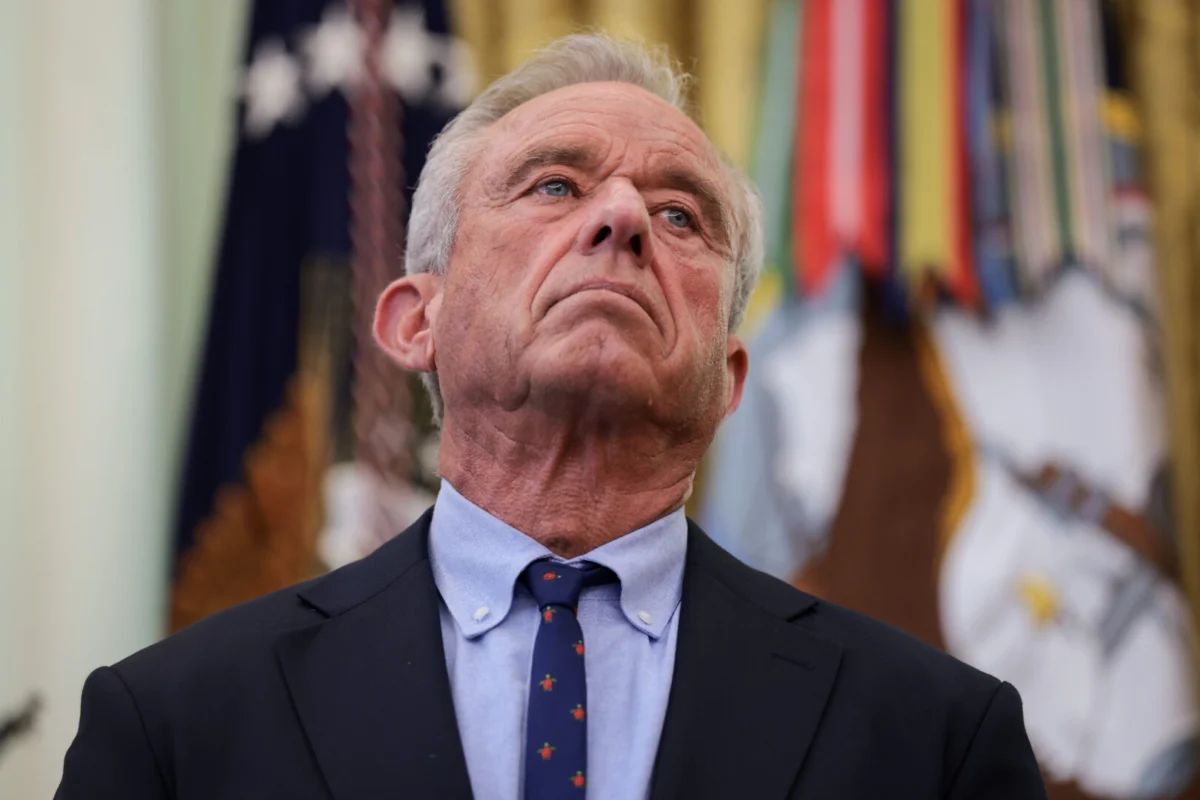
According to a solicitation notice published in the Federal Register on August 12, 2026, HHS is officially seeking nominations for new voting members to serve on the NVAC. Because the terms of all previous committee members have expired, HHS Secretary Robert F. Kennedy Jr. and Assistant Secretary for Health Brian Christine possess unprecedented latitude to handpick an entirely new slate of advisors without inheriting legacy appointments from previous administrations.
The recruitment drive comes on the heels of a subtle yet significant alteration to the committee’s core mandate. In July 2026, HHS quietly updated the NVAC charter to explicitly mandate the consideration of "non-immunization strategies" for individuals who either cannot or choose not to receive vaccines. According to the revised language, the advisory body will now be tasked with evaluating alternative approaches, including:
- Lifestyle and Wellness Initiatives: Healthy lifestyle and wellness programs aimed at disease prevention.
- Off-Label Pharmaceutical Repurposing: The off-label use of existing Food and Drug Administration (FDA)-approved medications to mitigate infectious disease risks.
- Dietary Supplements: The therapeutic deployment of vitamins and dietary supplements known or claimed to support immune function.
This shift expands the panel’s scope far beyond its traditional purview of vaccine safety, development, equity, and distribution, sparking intense concern among public health experts, clinical advocacy groups, and policy analysts who warn that federal advisory bodies are being repurposed to promote untested alternative therapies at the expense of established scientific consensus.
Chronology: The Transformation of Federal Vaccine Policy (2024–2026)
To understand the restructuring of the NVAC, it is necessary to examine the timeline of administrative decisions and structural changes across federal health agencies over the past two years.
[September 2024] ─── Last active NVAC meeting under Assistant Secretary Rachel Levine
        │
[Late 2024–2025] ── NVAC becomes dormant; all member terms gradually expire
        │
[2025] ───────────── HHS Secretary Robert F. Kennedy Jr. fires all CDC ACIP members;
                     appoints critics and non-specialists to panel
        │
[July 2026] ──────── HHS quietly revises NVAC charter to include "non-immunization strategies"
        │
[August 10, 2026] ── President Trump signs Executive Order to stagger childhood vaccines
        │
[August 12, 2026] ── HHS publishes Federal Register notice soliciting new NVAC nominees
        │
[August 14, 2026] ── Public health organizations voice growing concerns over charter expansion
September 2024: The Last Standard Session
The NVAC convened its final meeting under the Biden administration in September 2024, presided over by then-HHS Assistant Secretary for Health Rachel Levine. At that time, the committee’s agenda focused on standard public health priorities, including improving adult vaccine access, addressing post-pandemic immunization disparities, and securing federal grants for school-based vaccination clinics. Following this meeting, as administration shifts approached, normal appointment renewals stalled, and the committee lapsed into dormancy as member terms expired.
2025: Overhaul of the CDC’s Advisory Body
Following the inauguration of President Donald Trump and the confirmation of Robert F. Kennedy Jr. as HHS Secretary, the administration moved aggressively to remake federal health boards. In 2025, Kennedy removed all sitting members of the Centers for Disease Control and Prevention’s (CDC) Advisory Committee on Immunization Practices (ACIP)—the body responsible for setting national vaccine recommendations. In their place, Kennedy appointed non-specialists, holistic health practitioners, and prominent critics of baseline COVID-19 and pediatric vaccine policies.
July 2026: The Silent Charter Modification
Without public hearings or announcement, HHS formally amended the NVAC charter in July 2026. The revision altered the committee’s mission statement from focusing strictly on immunization technologies and access to incorporating alternative wellness protocols, dietary supplements, and off-label therapeutics into national infectious disease planning.
August 10, 2026: Executive Order on Pediatric Schedules
President Donald Trump signed an executive order directing federal health agencies to alter national guidance regarding childhood immunizations. The order specifically called for pediatric vaccine doses to be spaced out across separate medical visits, discouraging the long-standing practice of administering multiple immunizations during a single checkup.
August 12–14, 2026: NVAC Reconstitution and Public Notice
HHS published its formal request for NVAC nominations in the Federal Register on August 12, 2026. By August 14, public health advocacy groups began raising alarms over the vacant status of the board, the nature of the amended charter, and the absence of traditional scientific vetting processes for upcoming appointments.
Supporting Data: Historical Context and Administrative Shifts
Established by Congress under the National Childhood Vaccine Injury Act of 1986 and operationalized in 1987, the NVAC was designed to serve as an overarching coordinator for federal vaccine policy. Operating under the Office of the Assistant Secretary for Health (OASH), the committee’s primary purpose historically was to advise HHS on optimizing vaccine development, preventing shortages, ensuring equitable distribution, and maintaining rigorous safety monitoring.
Traditional vs. Revised NVAC Mandate
| Operational Parameter | Historical Standard (1987–2024) | Revised Charter (2026–Present) |
|---|---|---|
| Primary Scope | Immunization access, safety monitoring, research, supply chain equity | Immunization access alongside non-immunization and alternative strategies |
| Evaluated Interventions | FDA-licensed vaccines, clinical trial protocols, infrastructure funding | Vaccines, off-label repurposed drugs, dietary supplements, lifestyle modifications |
| Membership Structure | Staggered 4-year terms across administrations to preserve neutrality | Complete turnover; blank-slate appointment by current HHS leadership |
| Pediatric Recommendations | 17 universally recommended childhood vaccines (as of 2024) | Reduced to 11 recommended childhood vaccines; mandatory spacing of doses |
Historically, membership on the NVAC was carefully structured to protect the body from political pressures. Voting members served staggered four-year terms, ensuring that no single presidential administration could instantly overturn the advisory panel’s institutional memory or scientific consensus.
Under previous administrations—both Republican and Democratic—the committee provided critical guidance during national health emergencies. During the first Trump administration, for example, then-Assistant Secretary for Health Brett Giroir utilized the NVAC to identify structural bottlenecks in vaccine distribution networks and streamline research funding during the initial push for COVID-19 vaccines under Operation Warp Speed.
However, the structural landscape in 2026 reflects a fundamental break from these traditions. In addition to the total vacancy of the NVAC, the broader pediatric immunization framework has been drastically scaled back. Between 2024 and mid-2026, the number of vaccines recommended for routine pediatric care was cut from 17 to 11. The combination of reduced official recommendations, mandatory visit spacing under the August 10 Executive Order, and a reshaped advisory board underscores a total realignment of federal health policy.
Official Responses and Backlash
The decision to rewrite the NVAC charter and reconstitute the vacant panel with alternative medicine protocols has drawn sharp criticism from public health officials, policy experts, and patient advocacy coalitions.
Experts Question Loss of Continuity
Claire Hannon, Executive Director of the Association of Immunization Managers (AIM) and a long-time nonvoting member of the NVAC, expressed deep concern over the complete erasure of staggered terms and historical continuity on the committee.
"You had continuity, and you had members who served through multiple administrations giving their expertise," Hannon noted. "It’s clearly not political. We don’t have that now."
Hannon emphasized that major structural policy shifts—such as reducing the pediatric schedule from 17 to 11 vaccines or issuing executive orders to stagger clinical visits—normally undergo months of public deliberation and rigorous review by an active NVAC prior to implementation.
"The committee was very critical during the pandemic. [Former Assistant Secretary for Health] Brett Giroir really had an interest in ensuring that vaccines were accessible," Hannon added, pointing out that bypassing open advisory meetings deprives the medical community and the public of transparent scientific debate.
Concerns Over Statutory Authority
Representative voices from adult immunization and patient advocacy organizations have questioned whether HHS is exceeding its legislative authority by expanding the committee’s scope into unproven, non-immunization therapies.
Santiago Gonzalez, Policy Manager at the Adult Vaccine Access Coalition (AVAC), issued a formal statement expressing apprehension over the administration’s direction:
"We are concerned about changes to the charter that seek to expand its work beyond vaccines and immunization," Gonzalez stated. "Federal advisory bodies work best when they stay within the responsibilities Congress established for them."
HHS Silence
Despite mounting inquiries from public health organizations, media outlets, and medical associations regarding the criteria for new nominees or the scientific rationale behind substituting dietary supplements and repurposed drugs for vaccines, the Department of Health and Human Services did not respond to requests for official comment.
Systemic Implications for Public Health and Federal Policy
The restructuring of the National Vaccine Advisory Committee represents a turning point in American health governance, with consequences extending across regulatory agencies, state health departments, insurance coverage, and public trust.
1. Confusion in State Mandates and Insurance Coverage
Federal vaccine recommendations created by CDC advisory bodies and vetted by the NVAC traditionally form the baseline for state-level school entry requirements and mandatory insurance coverage under the Affordable Care Act (ACA). By pivoting federal guidance toward off-label drugs, dietary supplements, and spaced-out vaccine visits, the federal government creates significant regulatory friction with state public health departments. State health officials may now face complex legal and administrative battles over whether insurance plans should be required to cover unproven alternative therapies or if state school-entry immunization laws remain enforceable without federal alignment.
2. Operational Challenges for Pediatric Practice
The combination of a reduced pediatric schedule and the August 10 Executive Order mandating separate doctor visits for individual shots poses immediate operational challenges for healthcare systems. Pediatric practices across the nation report logistical strains, as spacing out vaccinations requires families to schedule double or triple the number of annual well-child visits. Public health economists warn that requiring additional clinical visits increases transportation burdens, time off work, and co-pay expenses for lower-income families, paradoxically decreasing overall childhood vaccination rates through administrative friction rather than direct refusal.
3. Normalization of Unproven Infectious Disease Interventions
By enshrining "off-label repurposed FDA drugs" and "dietary supplements" into the official charter of a national vaccine advisory body, HHS elevates non-evidence-based treatments to the same administrative platform as rigorously tested biological immunizations. While repurposing existing drugs remains a standard avenue of pharmacological research, integrating unverified dietary supplements into national prevention frameworks threatens to erode the rigorous, evidence-based standards historically maintained by federal public health agencies.
4. Breakdown of Institutional Safeguards
The decision to allow the terms of all sitting NVAC members to expire—followed by a total administrative overhaul—sets a precedent for federal advisory bodies. Future presidential administrations could leverage this model to systematically disband advisory panels across the FDA, Environmental Protection Agency (EPA), or National Institutes of Health (NIH), replacing independent, career experts with ideological allies whenever administrative priorities shift.
As HHS opens the application window for the new National Vaccine Advisory Committee, the medical community remains on high alert. The upcoming appointments will provide a clear signal of whether federal public health guidance will remain rooted in traditional epidemiological science or complete a total transition toward alternative medicine paradigms.