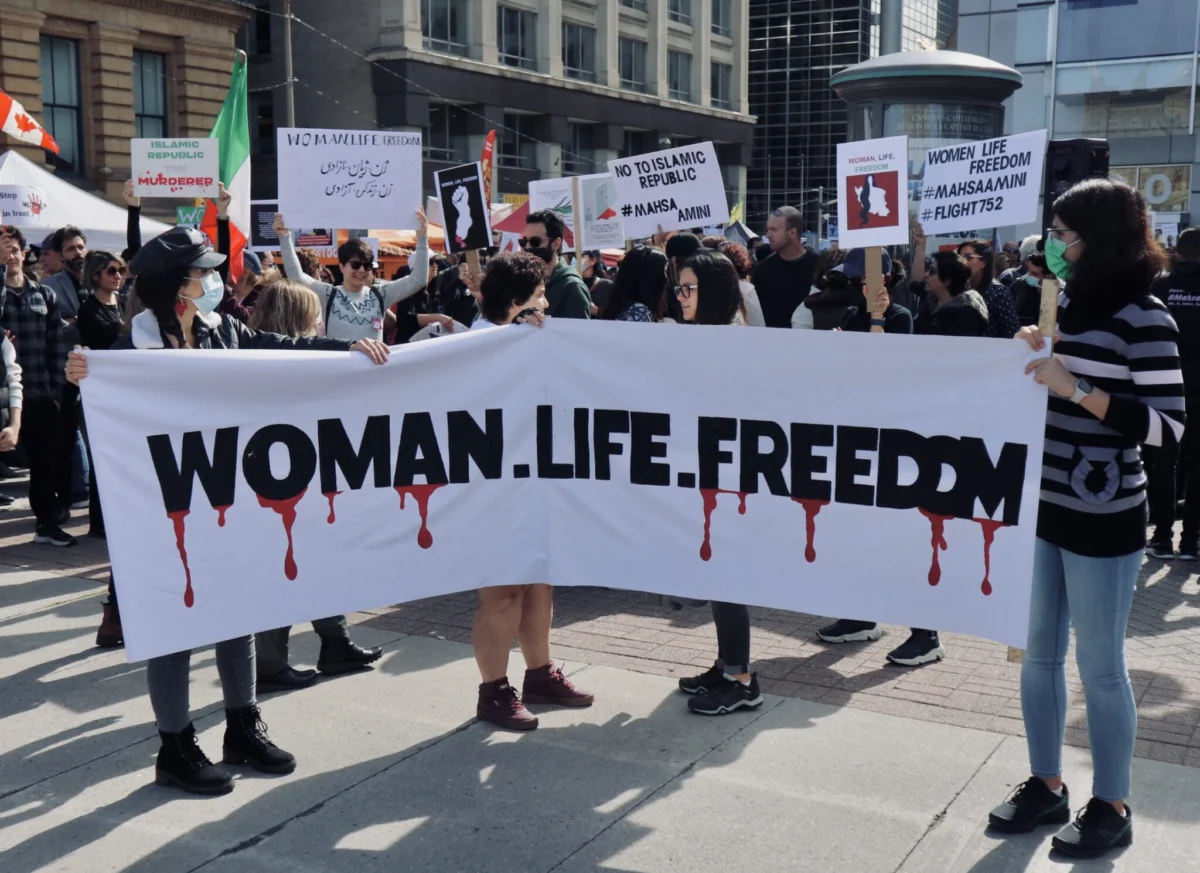
In a staggering indictment of the Iranian state’s security apparatus, Amnesty International released a monumental 1,161-page report on Wednesday, titled Architects of Atrocities. The document formally names 87 high-ranking Iranian security and interior ministry officials, asserting that they bear individual criminal responsibility for crimes against humanity committed during the brutal 2022 “Woman, Life, Freedom” crackdown.
The report marks a significant escalation in the international legal pressure on Tehran, as Amnesty explicitly calls upon the United Nations Security Council to refer the situation in Iran to the International Criminal Court (ICC). By grounding its findings in the Rome Statute, the human rights organization seeks to pierce the veil of domestic impunity that has shielded Iranian commanders from accountability for years.
The Weight of Evidence: Main Facts and Findings
The Architects of Atrocities report is the result of an exhaustive, years-long investigation that synthesized evidence from 270 direct witness interviews and a forensic analysis of more than 2,000 video files. The data paints a harrowing picture of a state mobilized against its own citizenry.
Amnesty’s findings confirm 377 fatalities during the period between September and December 2022. Perhaps most damning is the demographic breakdown of these casualties: 56 of those killed were children. Furthermore, the report highlights a systemic targeting of ethnic minorities. While Balochi and Kurdish Iranians represent approximately 5% and 10–15% of Iran’s total population, respectively, they accounted for 62% of the recorded deaths during the protests.
The patterns of abuse documented go far beyond lethal force. The report details widespread and systematic use of torture, state-sanctioned rape, enforced disappearances, and the arbitrary imprisonment of thousands of civilians. Amnesty argues that these acts were not isolated incidents of overzealous policing, but a coordinated state strategy designed to crush a popular uprising through terror.
Legal Architecture: The Theory of Responsibility
Amnesty International has meticulously categorized the 87 named officials based on established principles of international criminal law, specifically utilizing the framework of the Rome Statute.
Superior Responsibility (Article 28)
The report identifies 62 individuals as "security commanders," including senior figures within the Islamic Revolutionary Guard Corps (IRGC) and the national police force (FARAJA). Amnesty analyzes their conduct under the theory of "superior responsibility," arguing that these commanders either ordered the suppression tactics or failed to prevent their subordinates from committing atrocities despite having the authority to do so.
Aiding and Abetting (Article 25(3)(c))
The remaining 25 officials—primarily from the interior ministry, including provincial governors—are analyzed under the theory of "aiding and abetting." The report posits that these civil authorities provided the logistical, political, and administrative support necessary to facilitate the security forces’ crackdown, thereby rendering them complicit in the resulting crimes against humanity.
A Changing Landscape: The 2026 Context
The release of the report occurs against a radically different political backdrop than that of 2022. The geopolitical landscape of the region has been upended by the airstrikes that commenced on February 28, 2026.
A somber footnote in the report notes that six of the 87 individuals named have since perished. Among these are high-profile figures, including the then-Supreme Leader Ali Khamenei and the Chief of the Armed Forces, Mohammad Bagheri, both of whom were killed during the 2026 US and Israeli airstrike campaign.
Despite these changes at the top of the hierarchy, Amnesty warns that the culture of impunity remains entrenched. “Iranian authorities committed crimes against humanity to crush the 2022 Woman, Life, Freedom uprising,” stated Amnesty International Secretary General Agnès Callamard. “The officials named remain beyond the reach of justice in Iran, and this impunity has only emboldened further violence.”
Chronology of Impunity: From 2022 to 2026
To understand the current crisis, one must view the 2022 crackdown not as an end, but as a precursor to a deepening cycle of state violence.
- September–December 2022: The "Woman, Life, Freedom" protests erupt following the death of Mahsa Amini. The state responds with a systematic campaign of suppression, resulting in hundreds of deaths and widespread human rights violations.
- September 2023: On the anniversary of Amini’s death, the Iranian government intensifies crackdowns on dissenters, signaling a refusal to engage in meaningful reform.
- January 2026: A new wave of nationwide protests, fueled by worsening economic conditions, results in thousands of deaths over a mere 48-hour period. Human rights monitors suggest the lack of accountability for the 2022 atrocities directly emboldened security forces to employ even more lethal tactics.
- February 28, 2026: The commencement of foreign airstrikes leads to the deaths of several key figures in the Iranian leadership, including the Supreme Leader.
- September 2026: Human Rights Watch reports that at least 59 men have been executed on national security charges, with a significant portion linked to the 2026 protests and the earlier 2022 movement.
Official Responses and the Void of Accountability
Amnesty International confirms that it attempted to adhere to the highest standards of due process before publishing its findings. Last month, the organization sent formal correspondence to the Iranian Supreme Leader, the commanders of FARAJA, and the interior minister. The letters invited these officials to provide their perspective and offered them a formal "right of reply."
As of the date of publication, the organization has received zero response from the Iranian government. This silence is viewed by human rights observers as a continuation of the state’s long-standing policy of total denial regarding human rights abuses.
Implications: The Path to International Justice
The release of Architects of Atrocities places significant pressure on the international community to move beyond rhetoric and toward tangible legal action.
The ICC and the Security Council
Amnesty’s primary demand is for the UN Security Council to refer the situation in Iran to the International Criminal Court. While such a move has historically been blocked by diplomatic stalemates, the sheer volume of evidence provided by this report may force member states to reconsider their positions.
A New Mechanism
In addition to the ICC referral, Amnesty is lobbying the UN General Assembly to create a new, dedicated international criminal justice mechanism for Iran. Such a body would be tasked with gathering, preserving, and analyzing evidence of violations to prepare for future prosecutions, ensuring that even if domestic courts remain closed, the records of these atrocities remain preserved for history.
The Upcoming Dialogue
The findings are set to be the centerpiece of an interactive dialogue at the UN Human Rights Council on September 21, 2026. As the international community gathers to discuss the report of the Independent International Fact-Finding Mission on Iran, the 1,161 pages of evidence compiled by Amnesty will serve as a stark reminder that the cost of inaction is the continued suffering of the Iranian people.
As the report concludes, the transition from a state of impunity to one of accountability is a slow and arduous process. However, by naming the architects of these atrocities, Amnesty International has effectively stripped them of the anonymity that once protected them, ensuring that their roles in the 2022 crackdown are now part of an permanent, public, and legal record. Whether the global community has the political will to translate this record into justice remains the defining question for the remainder of the year.