Introduction: A Decade of Despair
The humanitarian landscape in Yemen, already defined by a decade of systemic collapse, has taken a harrowing turn. UNICEF issued an urgent warning this Thursday, reporting that a surge in violent confrontations across the nation has forcibly displaced more than 57,000 children in a matter of weeks. This latest wave of instability strikes at a population already reeling from the compounded effects of a protracted civil war, economic disintegration, climate-induced shocks, and a healthcare infrastructure that has effectively ceased to function in many regions.
For the children of Yemen, the concept of "stability" has become an abstract memory. They are a generation born into the crossfire, having known little else but the sound of artillery, the scarcity of food, and the constant threat of displacement. As the conflict intensifies, the international community faces the sobering reality that the progress of a nation’s youth is being systematically erased by the mechanics of modern warfare.
The Chronology of Conflict: From Arab Spring to Proxy War
To understand the current crisis, one must trace the historical trajectory that dismantled the Yemeni state.
The Seeds of Unrest (2011–2012)
The collapse began during the Arab Spring of 2011, when widespread protests erupted across Yemen. Citizens, exhausted by decades of authoritarian rule under President Ali Abdullah Saleh and fueled by deep-seated wealth inequality, demanded systemic change. By February 2012, the pressure forced a transition, but the power vacuum left behind was quickly exploited.
The Rise of the Houthis (2014)
The Houthi movement—a Zaydi Shia minority group that had engaged in six distinct wars against the central government between 2004 and 2010—felt sidelined during the post-Saleh transitional process. In September 2014, the Houthis launched a strategic military offensive, effectively seizing control of large swaths of the country, including the capital, Sana’a.
Regional Intervention (2015–Present)
The conflict reached a point of no return on March 21, 2015, when a coalition led by Saudi Arabia and the United Arab Emirates intervened to restore the internationally recognized government. What began as an internal struggle quickly transformed into a full-scale regional proxy war. Since then, the country has become the site of one of the world’s worst humanitarian disasters, marked by aerial bombardments, ground offensives, and a suffocating blockade.
Supporting Data: The Cost of War in Numbers
The statistics provided by UNICEF and humanitarian observers paint a grim portrait of a society under siege.
Casualties and Displacement
Since the conflict’s escalation in 2015, approximately 11,500 children have been verified as either killed or wounded. The most recent surge in violence has only accelerated this trend; since early September, at least nine children have been killed, twelve injured, and three remain missing. These numbers, while devastating, are likely significant undercounts due to the difficulty of reporting in active conflict zones.
The Erosion of Education and Health
The war has decimated the pillars of child development:
- Healthcare: 26 UNICEF-supported healthcare facilities have been forced to cease operations or have suffered severe disruptions, leaving thousands without access to basic medicine or emergency care.
- Education: 243 schools are currently shuttered or operating at limited capacity. This disruption has hindered the learning progress of at least 137,000 students, effectively consigning a generation to illiteracy and lack of vocational opportunity.
Official Responses and Humanitarian Efforts
Edouard Beigbeder, UNICEF Regional Director for the Middle East and North Africa, expressed deep concern over the current trajectory. "Children in Yemen were already living through one of the world’s most grave humanitarian crises," Beigbeder stated. "Now, tens of thousands of families have been forced from their homes in just two weeks, many fleeing only with what they can carry. For children who have already endured years of hunger, displacement, and disrupted schooling, this latest violence is eroding what little stability they had left."
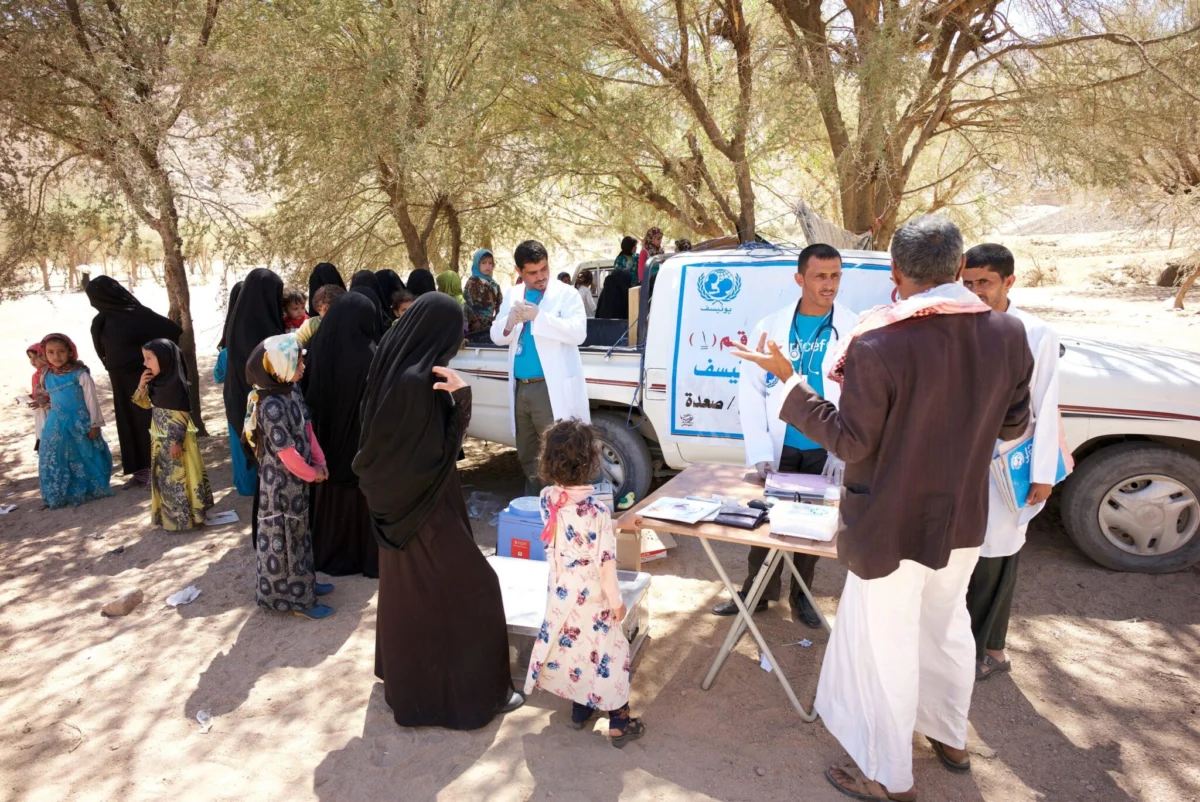
UNICEF has mobilized to provide essential relief, including sanitation support, hygiene kits, and emergency water tanks. However, aid agencies emphasize that logistical barriers—including the destruction of roads and the risks posed by active hostilities—make the delivery of these goods increasingly difficult.
Implications: The Perils of Migration
The desperation of Yemeni families has led to a precarious exodus. Scores of children have fled across the Bab el-Mandeb Strait, seeking safety in Djibouti. However, this journey is fraught with life-threatening risks.
The Journey to Djibouti
The maritime route from Yemen to the Horn of Africa is notoriously dangerous. UNHCR has highlighted that children fleeing the conflict are at high risk of:
- Exploitation: Vulnerability to human trafficking syndicates that operate in the porous border regions.
- Health Crises: Overcrowding in refugee settlements has led to outbreaks of communicable diseases, most notably scabies.
- Physical Hazards: The use of unseaworthy vessels frequently results in drowning incidents during the crossing.
Environmental Dangers
Perhaps the most silent killer is the environment itself. During summer months, temperatures in the region can soar to 122°F (50°C), while surface water temperatures consistently remain above 68°F annually. Many children succumb to heatstroke and dehydration long before they ever reach the coastline or transit the Strait.
Ethical and Legal Violations
The conflict in Yemen has repeatedly breached the norms of international law. A major point of contention has been the recruitment and utilization of child soldiers. Human Rights Watch and other global monitors have documented the Houthi rebels’ practice of coercing children into combat roles.
This practice is a direct violation of international humanitarian law, specifically:
- Article 77 of Additional Protocol I to the Geneva Conventions.
- Article 38 of the UN Convention on the Rights of the Child (CRC).
The recruitment of children is not merely a tactical maneuver; it is a crime that strips youth of their innocence and forces them into a cycle of violence that is difficult to escape. By involving children in the machinery of war, the various warring factions are effectively ensuring that the conflict will produce long-term trauma and social instability for decades to come.
Conclusion: The Urgency of Protection
The crisis in Yemen is not merely a localized conflict; it is a profound moral failure of the international community. The combination of economic collapse, the systemic targeting of children, and the erosion of essential services creates a vacuum where extremism and despair can thrive.
As the violence intensifies, the protection of Yemen’s children must move from rhetoric to reality. This requires not only immediate humanitarian aid but a sustained diplomatic push to hold all warring parties accountable for the violation of international laws. Without an immediate ceasefire and a commitment to the restoration of essential services, the future of Yemen’s youth—and indeed the future of the nation itself—remains in peril. The international community is not just witnessing a humanitarian crisis; it is witnessing the slow erasure of a generation, a tragedy that will echo through the Middle East for generations to follow.