In the cinematic landscape of 2022, few films captured the collective consciousness quite like Everything Everywhere All at Once. A kaleidoscopic collision of martial arts, science fiction, family drama, and absurdist humor, the film served as a mirror for a generation grappling with existential dread in an increasingly chaotic world. Yet, for many viewers, the film’s significance transcended mere entertainment; it became a catalyst for deep self-reflection.
For many, the film’s core question—"If nothing matters, why bother?"—is not merely a plot point, but a deeply personal inquiry. When one moves past the nihilism often associated with the multiverse, a more empowering realization emerges: if the universe is truly indifferent, then the individual is the sole architect of their own meaning. This philosophy is the bridge between the high-concept cinema of the A24 hit and the practical, rigorous application of "Life Design," a framework popularized by Stanford University experts Bill Burnett and Dave Evans.
The Existential Catalyst: Why the Multiverse Matters
The plot of Everything Everywhere All at Once follows Evelyn Wang, a beleaguered laundromat owner struggling with an IRS audit, a failing marriage, and a strained relationship with her daughter. When she is thrust into a conflict spanning infinite parallel universes, she is forced to confront the "what ifs" of her own life.
For the viewer, this is not just sci-fi; it is a profound exploration of choice and regret. Like the protagonist in Matt Haig’s novel The Midnight Library, Evelyn discovers that her current reality is but one iteration of many possible lives. While this realization can initially lead to a "nihilistic nadir," the film pivots toward a message of agency: we are not trapped by our current timeline. We have the power to create a reality that aligns with our core values.
The Architecture of Life Design
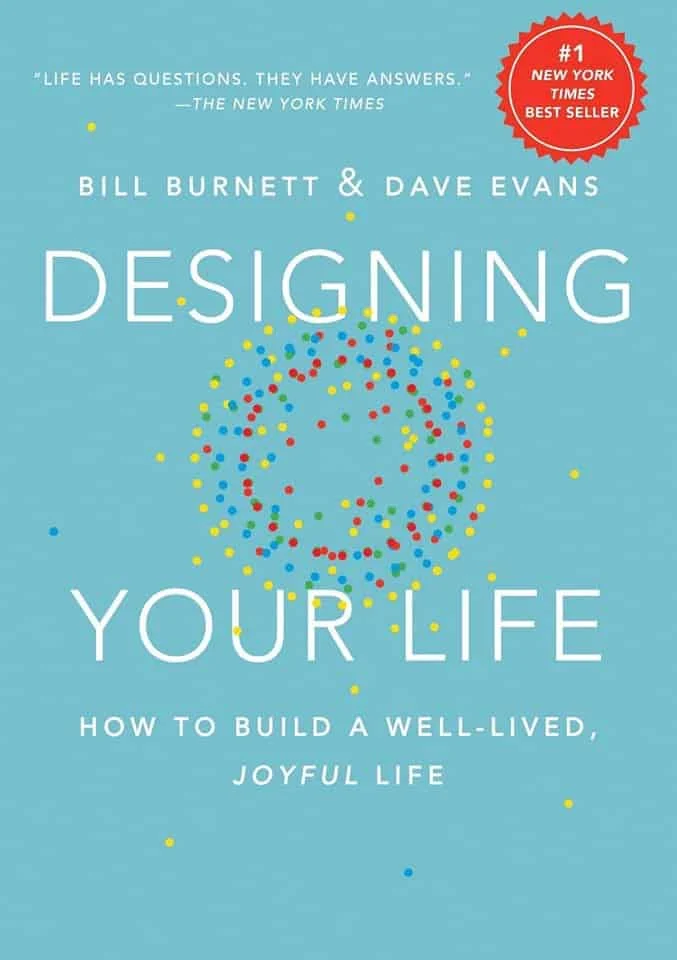
While the multiverse remains a theoretical construct in physics and a narrative device in film, the concept of "multiple lives" is a practical tool in the realm of personal development. Bill Burnett and Dave Evans, through their seminal book Designing Your Life, suggest that we are all "designers" of our own existence.
Design thinking—a methodology traditionally used to solve complex engineering and product problems—can be repurposed to address the "wicked problem" of finding a career and a lifestyle that fits. The authors define a "well-designed life" as one of coherence: a state where who you are, what you believe, and what you do are in perfect alignment.
The Five Disciplines of a Coherent Life
To reach this state of coherence, the authors advocate for five core mindsets:
- Be Curious: Approach your life as a prototype. Ask questions, explore interests, and never assume you have all the answers.
- Try Stuff: Don’t just think; act. Use "prototyping" (small experiments) to test new paths before committing to a total life overhaul.
- Reframe Problems: Stop obsessing over "dysfunctional beliefs"—the limiting stories we tell ourselves—and shift toward a growth-oriented perspective.
- Know It’s a Process: Understand that life design is iterative. There is no final "perfect" version of you, only the current version in progress.
- Ask for Help: Radical collaboration is key. The best designers know that they cannot innovate in a vacuum.
The Odyssey Plan: Mapping Your Infinite Potential
The most compelling exercise in the Designing Your Life curriculum is the "Odyssey Plan." This requires the individual to draft three distinct, five-year visions of their future. This exercise serves as a hedge against the paralysis of choice, proving that there are multiple, viable, and fulfilling ways to live.
Future #1: The Path of Continuity
The first plan is the "life you are currently living," but refined. It assumes your current trajectory is successful. For an individual focused on professional growth, this might mean doubling down on existing business goals, optimizing systems, and increasing output. It is the path of optimization—taking what you already love and pushing it to its highest expression.
Future #2: The Contingency Plan
The second plan explores what you would do if your current life path were suddenly removed. If your job, your industry, or your primary source of income vanished overnight, where would your skills go? This exercise forces a deep dive into transferable passions. For many, this leads to altruistic or legacy-focused work—helping others tell their life stories, pivoting into hospice care, or teaching. It reveals that our identity is not bound to our job title, but to our fundamental talents.
Future #3: The "What If" Pipe Dream
The third plan is the "money is no object" scenario. If social status, financial judgment, and fear of failure were removed, what would you do? This is the domain of pure passion. It might involve going to art school, starting a creative venture, or mastering a completely new craft. This plan is essential because it highlights the "latent dreams" that we often dismiss as impractical. By acknowledging them, we often find ways to integrate elements of them into our current reality.
The Implications of Intentional Living
The synthesis of pop-culture existentialism and rigorous design methodology creates a powerful framework for change. The implications for the individual are clear:
- Reduced Anxiety: By creating multiple plans, we remove the pressure to find the "one right path." We realize that several versions of us can succeed, which lowers the stakes of any single decision.
- Increased Clarity: Writing a "Workview" and a "Lifeview" forces us to articulate what we value. When we see where our current work clashes with our values, the path to change becomes obvious.
- Actionable Prototyping: Instead of waiting for a "life-changing moment," we can start today by engaging in low-stakes experiments—talking to people in a desired field, taking a class, or starting a small project.
Critical Analysis: A Tool for the Modern Age
While the Designing Your Life approach is widely lauded, it is not without its critics. Some argue that the design-thinking framework, when applied to human life, can feel slightly clinical or overly "corporate." Furthermore, the lack of an index in the original text—a common point of contention among readers—can hinder the ability to reference specific exercises during the iterative process.
However, the efficacy of the program is evident in its roots. Derived from Stanford’s legendary design courses, it has moved thousands of students from a state of paralysis to active experimentation. The "sticky" nature of these ideas—the concept of "coherence" and the "Odyssey Plan"—provides a mental scaffolding that remains useful long after the book is closed.
Conclusion: The Universe is Waiting
The journey from the absurdity of Everything Everywhere All at Once to the pragmatic exercises of Designing Your Life is shorter than it appears. Both urge us to reject the notion that we are mere spectators in our own stories.
Whether you are in the midst of a mid-life pivot, a career transition, or simply a period of quiet reflection, the lesson remains the same: you are not trapped by your current timeline. You possess the agency to iterate, to design, and to act. As the authors of Designing Your Life note, "The plain and simple truth is that you will live many different lives in this lifetime."
The multiverse isn’t just in the movies. It is right in front of you, waiting for you to choose which version of your future you want to bring into existence. Message received, Universe. It’s time to get to work.