The global horror community is turning its eyes toward Toronto this season as the Toronto International Film Festival (TIFF) prepares to host the world premiere of Inherit, the latest psychological descent from acclaimed Thai director Banjong Pisanthanakun. Reuniting the filmmaker with his Pee Mak muse, Davika Hoorne, the film promises to be a masterclass in atmospheric dread, blending centuries-old folklore with the high-stakes tension of modern family dynamics.
The Premise: Secrets Beneath the Surface
At the heart of Inherit lies the Manasvanich family, a clan defined by their opulence, rigid social polish, and a rotting foundation of buried secrets. The narrative, adapted from the Thai horror novel Tayard Asoon (known in English as The Demon’s Heir), shifts into high gear when an unexpected relative arrives at their doorstep, unraveling the family’s carefully curated reality.
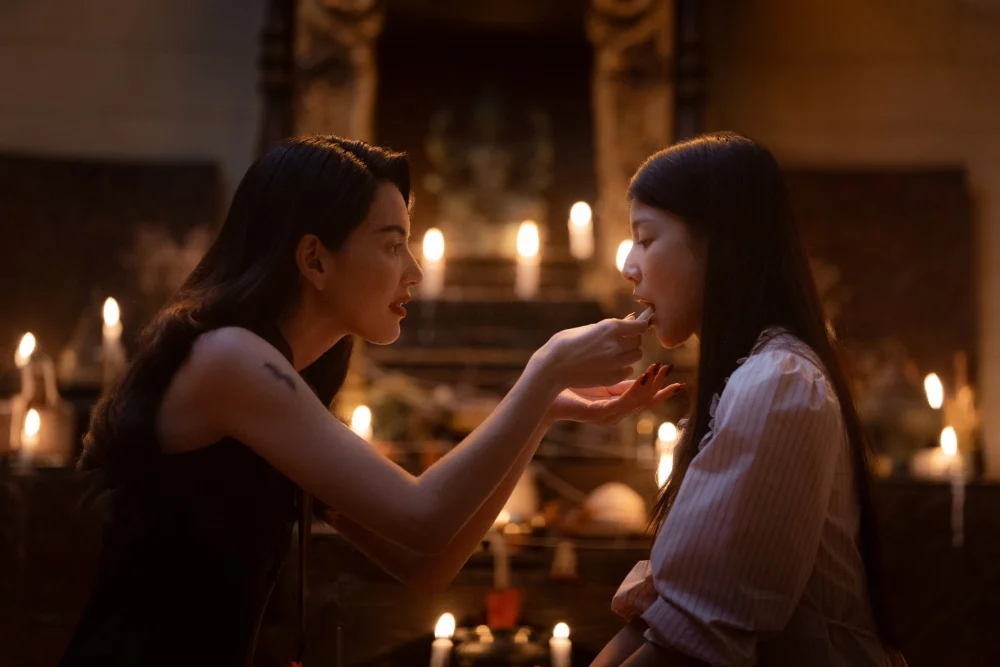
Davika Hoorne stars as Woranart, a matriarch whose octogenarian persona is merely a vessel for a darker, more ancient entity: a centipede spirit. This parasitic force is not merely haunting the halls; it is actively hunting for a new host. Its gaze eventually settles on Oui, the family’s youngest member, played by Baipor Thitiya Jirapornsilp. As the line between the grandmother’s human memories and the demon’s predatory instincts blurs, the mansion transforms into a claustrophobic cage of psychological terror.
A Chronology of Collaboration and Craft
The partnership between Pisanthanakun and Hoorne is one of the most successful in the history of Southeast Asian cinema. Their creative history dates back to 2013, with the release of Pee Mak. The film, a comedic and horrifying reimagining of a classic Thai ghost legend, became a cultural phenomenon, shattering box office records to become the highest-grossing Thai film in history.
Following the success of Pee Mak, both artists charted distinct paths. Pisanthanakun gained international acclaim for his prowess in the horror genre—a reputation solidified years earlier with the 2004 seminal hit Shutter. Meanwhile, Hoorne continued to evolve as an actress, culminating in her acclaimed performance in A Useful Ghost, which secured the Critics’ Week Grand Prix at the 2025 Cannes Film Festival.
The development of Inherit marks a deliberate pivot for both. After years of exploring various genres, the pair felt the time was right to return to their roots, albeit with a more nuanced, character-driven approach. The project moved from concept to screen through a meticulous production process, with Pisanthanakun emphasizing that the "soul" of the film resided in the architecture of the Manasvanich estate.
The Architecture of Dread: Production Insights
For Pisanthanakun, the setting of Inherit is as much a character as the demon itself. In modern horror, where CGI often creates a sense of detachment, Pisanthanakun insists on physical, tangible environments.
"It’s extremely important," Pisanthanakun noted in recent discussions regarding the film’s production design. "I feel that fresh visuals and unique atmospheres are essential for making horror movies these days, so I pay a lot of attention to locations and settings."
To construct the claustrophobic grandeur of the Manasvanich mansion, the production team took an unconventional route. Rather than relying on a single historic site, they meticulously stitched together three distinct physical locations, augmented by an expansive sound stage. This hybrid approach allowed the director to control the lighting, the geometry of the hallways, and the "weight" of the air, ensuring that the mansion felt like a sentient, suffocating entity rather than a mere backdrop.
Performance as Possession: Davika Hoorne’s Transformation
For Davika Hoorne, the role of Woranart was an exercise in restraint and psychological stamina. While she is no stranger to the horror genre, she notes that Inherit required a fundamental shift in her approach to acting.
"Horror isn’t new to me, but Inherit was a real shift," Hoorne explained. "Playing this centuries-old demon matriarch felt much more layered. I had to capture the weight of her memories, not just her scare factor. It became all about subtle signals—a glance, a pause. It was demanding, but immensely rewarding."
To embody a character that is essentially two souls occupying one body, Hoorne spent weeks analyzing the physicality of aging, contrasting it with the erratic, predatory movements associated with the centipede spirit. Her performance is expected to be a highlight of the Centrepiece program at TIFF, marking a maturation in her career that moves beyond the jump-scare aesthetics of her earlier work.
Cultural Heritage and the Thai Ghost Narrative
The resurgence of Thai horror on the international stage is not a coincidence, according to Pisanthanakun. He attributes this to a deep-seated cultural obsession with the supernatural that is woven into the fabric of daily life in Thailand.
"Thai people are obsessed with ghost stories," Pisanthanakun said. "It seems in our DNA. If Japan has manga and Korea has webtoons, Thailand has call-in ghost stories programs. It’s really become our modern cultural heritage."
This cultural fluency allows Thai filmmakers to tap into a unique vocabulary of fear. However, Pisanthanakun is quick to note that Thai cinema is currently undergoing a renaissance that extends far beyond the supernatural. He points to a wave of diverse domestic successes that are changing the international perception of the industry:
- How to Make Millions Before Grandma Dies: A heartfelt, family-centric drama that has resonated globally.
- Bad Genius: A high-octane thriller that showcased the industry’s ability to handle complex, high-stakes narratives.
- Death Whisperer: A horror-action hybrid that proved Thai genre films could compete with global blockbusters.
These films, alongside Inherit, suggest that the Thai film industry is no longer content with being categorized solely by its ghost stories. Instead, it is leveraging the discipline and narrative tension honed in the horror genre to tell a broader spectrum of stories.
The Implications of ‘Inherit’
As Inherit heads to Toronto, the implications for the industry are significant. The film is a test case for whether the "Thai horror" brand can successfully evolve into a "prestige horror" category—a shift that has been successfully navigated by filmmakers like Ari Aster or Robert Eggers in the West.
By focusing on the psychological erosion of a family, Pisanthanakun is challenging audiences to look past the gore and engage with the underlying trauma of legacy. If Inherit succeeds, it could pave the way for increased international investment in Thai productions, further cementing the country’s status as a powerhouse of genre storytelling.
Furthermore, the film serves as a testament to the longevity of the Pisanthanakun-Hoorne partnership. In an industry defined by fleeting trends and transient collaborations, their ability to evolve together over a decade suggests a rare creative synergy.
Conclusion
As the lights dim at the Toronto Film Festival, the anticipation surrounding Inherit is palpable. It is a film that promises to disturb, not just through the visual manifestations of a centipede spirit, but through the chilling realization that the most dangerous demons are often the ones we inherit from our own kin.
With its world premiere, Inherit does more than introduce a new horror icon; it reaffirms the power of the Thai film industry to captivate, challenge, and terrify global audiences. For Pisanthanakun, it is another chapter in a storied career; for Hoorne, it is a career-defining performance; and for the audience, it is a reminder that in the world of Thai cinema, the ghosts of the past are never truly gone—they are only waiting for the right host.