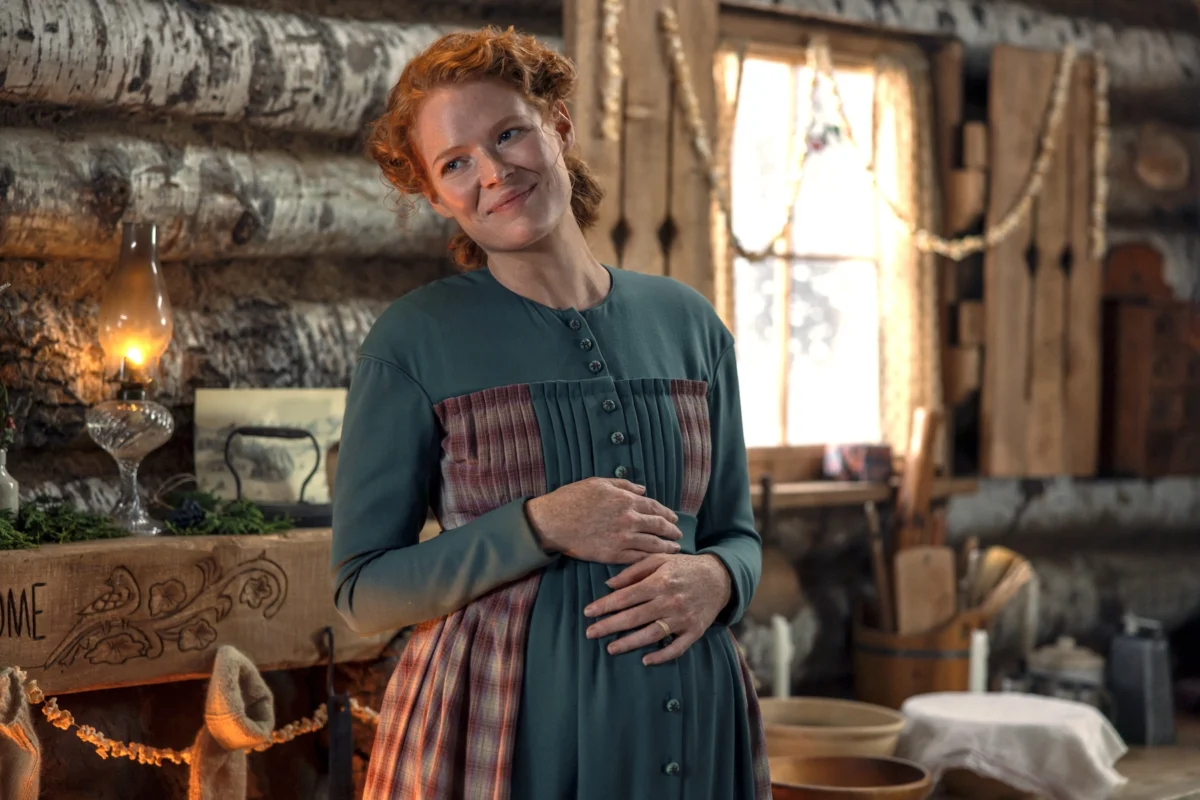
On July 9, 2026, the streaming landscape witnessed the culmination of a decade-long professional ambition. Rebecca Sonnenshine, the acclaimed writer behind the dark, genre-bending hit The Boys and the eerie, immersive Archive 81, officially debuted her ambitious reimagining of Little House on the Prairie on Netflix. For Sonnenshine, the project was not merely a career milestone; it was a return to the source material that first ignited her imagination as a ten-year-old reader.
While the original NBC series starring Melissa Gilbert remains a pillar of television history, Sonnenshine’s adaptation promises a more expansive, nuanced, and historically grounded perspective on the frontier experience. With a second season already greenlit and currently in production, the series has moved quickly from a high-stakes pitch to a burgeoning franchise, proving that the frontier remains a fertile ground for modern storytelling.
A Genre Writer’s Unexpected Pivot
Sonnenshine’s path to the Kansas plains was anything but conventional. Having spent her career mastering the mechanics of supernatural horror and suspense, her transition to a quintessential piece of Americana initially raised eyebrows among industry executives.

“I think they were a little skeptical, but also had been thinking, ‘Oh, maybe we should look for a genre writer to give this some shape,’” Sonnenshine told Variety. Her deep, encyclopedic knowledge of Laura Ingalls Wilder’s books ultimately won over the skeptics. During her pitch meeting, she demonstrated that her connection to the material was visceral; she didn’t need to revisit the texts because, as she put it, the stories were already hard-wired into her brain.
The producers realized that her background in genre—with its focus on building tension, world-building, and high-stakes character dynamics—was exactly what the series needed to feel fresh for a 21st-century audience. Her pitch wasn’t just a remake; it was an expansion of the scale and gravity of the original narrative.
Chronology: From Concept to Cultural Flashpoint
The journey of this Little House reboot has been marked by rapid development and high-profile public discourse:

- January 2025: News of the Netflix reboot breaks, immediately triggering a wave of online scrutiny. Critics, including media personality Megyn Kelly, vocalized concerns regarding the potential "woke-ification" of the classic series.
- January 2025 (Immediate Response): Original star Melissa Gilbert provides a definitive defense of the project on Threads, reminding audiences that the 1970s series was, in fact, a pioneer in addressing "woke" topics—tackling racism, addiction, misogyny, and systemic injustice decades before the term became a political lightning rod.
- July 2026: The series premieres on Netflix to global audiences, accompanied by critical analysis of its focus on Indigenous perspectives.
- Post-Premiere: Netflix confirms that a second season is already in production, signaling strong viewership and long-term confidence in the project’s direction.
Expanding the Narrative: The Osage and the Mitchell Family
The most significant departure from previous adaptations is the show’s shift in scope. While the Ingalls family—Charles (Luke Bracey), Caroline (Crosby Fitzgerald), Mary (Skywalker Hughes), and young Laura (Alice Halsey)—remains at the heart of the story, the series places equal weight on the experiences of the Indigenous people living on the land the pioneers occupied.
Sonnenshine recognized that the original books, while cherished, often relegated the Osage people to the background. "As an adult, everything is different. Especially Little House on the Prairie, it’s all about the Osage," she explains. "The Osage are all over that book, but we don’t know them at all."
To address this, Sonnenshine and her team, guided by story consultant Robert Warrior, introduced the Mitchell family. This mixed-race Osage family, led by William (Meegwun Fairbrother) and White Sun (Alyssa Wapanatâhk), serves as a narrative parallel to the Ingalls. By grounding the story in the reality of the Indigenous experience in 1870s Kansas, the series provides a more honest and historically complex portrayal of the American West.

Official Responses and the "Woke" Debate
The discourse surrounding the reboot has been defined by a fundamental misunderstanding of what the series aims to achieve. When asked about the criticism leveled by figures like Megyn Kelly, who warned against "ruining" the project, Sonnenshine offered a calm, measured rebuttal.
"I’m not even sure what ‘woke’ means to people anymore, to be honest," she said. "I know what I think it means, which is the definition of it being aware and alert to social injustice and prejudice… If I had to sum it up, what people are afraid of is that something from their childhood will be portrayed in a way that scares them."
Sonnenshine maintains that the fears regarding the show’s content are unfounded. She believes that the themes of resilience and the exploration of Indigenous history are not polarizing, but rather compelling human stories that transcend political divides. She notes that early audience interest in the Mitchell family has been widespread, suggesting that the "controversy" may be more a product of online noise than the actual viewing experience.

The Aesthetic of the Frontier: Beyond "Tradwife" Discourse
A unique element of this adaptation is its juxtaposition of survivalist grit with the "cottage-core" aesthetic that has seen a massive resurgence in recent years. While the show depicts the harsh realities of frontier death and struggle, it also celebrates the tactile, "do-it-yourself" spirit of the era—sewing, baking, gardening, and building.
Sonnenshine is wary of letting this aesthetic be co-opted by the "tradwife" movement. "I am a non-tradwife," she asserts, noting that her upbringing was defined by her parents’ practical skills. Her father, a carpenter and mechanic, and her mother, who sewed and preserved food, modeled a life of utility that Sonnenshine views as universal, not ideological.
"Anybody can pick up a book and learn how to bake something, or draw something, or plant a garden," she says. "Those things are not the exclusive landscape of tradwives or influencers. I think what I want for people to just think about is, what little things would interest me that I could do with my hands and incorporate into everyday life?"

Implications for the Future
The success of this Little House on the Prairie reboot suggests a shift in how streamers approach legacy intellectual property. By hiring genre-savvy showrunners and providing them the space to modernize the historical context without losing the "cozy" appeal of the original, Netflix has created a blueprint for success.
The implications of this approach are twofold:
- Historical Reconciliation: The industry is increasingly comfortable with revisiting beloved classics through a more inclusive lens, ensuring that forgotten or marginalized histories are given their rightful place in the spotlight.
- Genre Versatility: The success of a creator like Sonnenshine in this space proves that television writers are not limited by their past credits. A strong storyteller, regardless of their background in horror or suspense, can find the heart in any genre if they approach the source material with genuine curiosity and respect.
As season two enters production, the focus for the creative team remains on deepening the connections between the two families and further exploring the landscape of the Kansas prairie. For Rebecca Sonnenshine, the mission remains simple: to invite a new generation into the world that shaped her, and to show them that while the prairie is indeed a "little house," it is large enough to hold everyone’s stories.