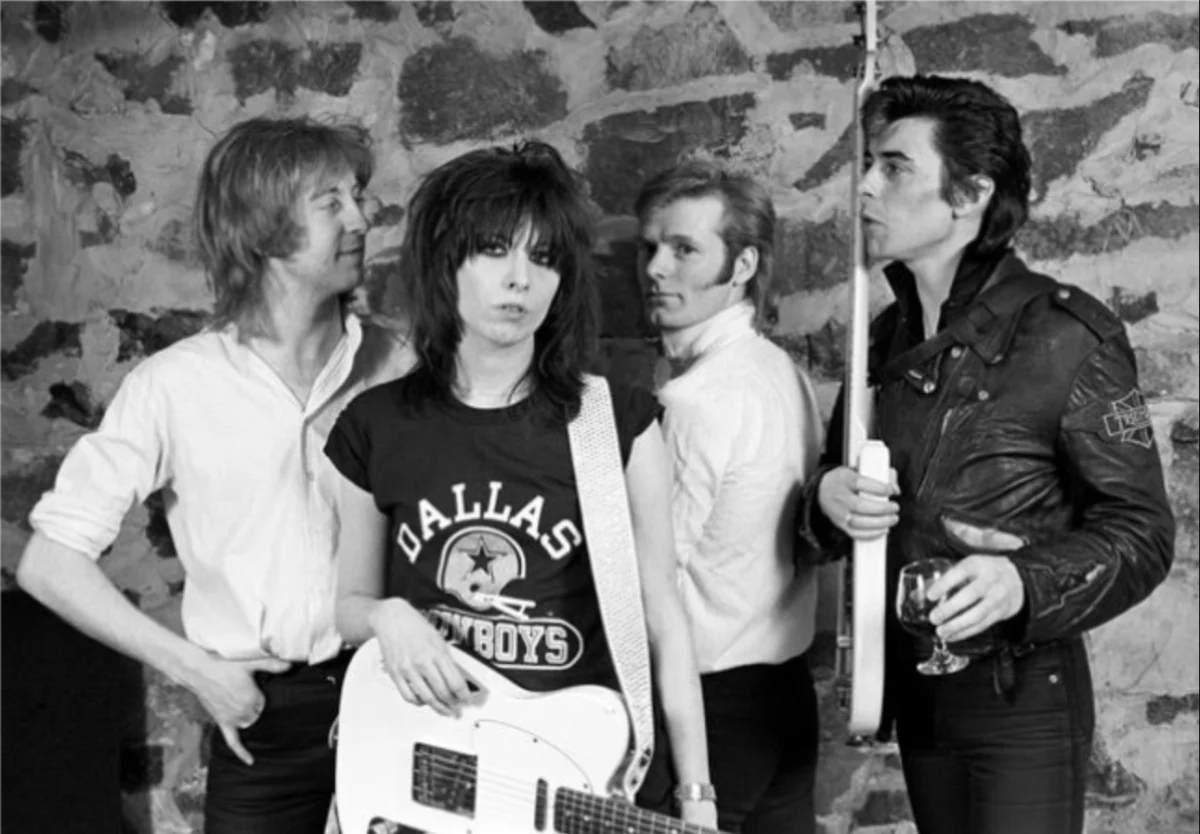
As a cultural icon, Chrissie Hynde has always occupied a space defined by contradiction: she is gnarly yet cerebral, ferociously independent yet deeply guarded. Joss Crowley’s revelatory music documentary, Pretenders, peels back the layers of this enigma, exposing the fundamental paradox built into the heart of one of rock’s most influential bands. Far more than a standard biographical retrospective, the film captures the lightning-in-a-bottle moment when punk’s nihilism collided with a newfound, shimmering melodicism, forever altering the landscape of modern music.
The Genesis of a Punk Iconoclast
Born in 1951 in Akron, Ohio, Hynde grew up in the prototypical "cookie-cutter" environment of the American postwar era. To the young Hynde, the suburban domesticity of her parents felt alien, a constraint that ignited a lifelong need to break free. Her early exposure to the chaos of the late 1960s—including her proximity to the tragic Kent State University shootings in 1970—acted as a catalyst for her migration to London.
Arriving in the UK during the early 1970s, Hynde immersed herself in the burgeoning punk scene. She was a woman in a landscape dominated by testosterone-fueled aggression, yet she refused to be a sidekick or a "doll." Her early career was marked by a relentless, often fruitless, pursuit of a musical home. She dabbled in rock criticism for the New Musical Express, writing scathing reviews, and attempted to collaborate with luminaries like Mick Jones (before he formed The Clash) and the members of The Damned. She even joined the infamous, mask-wearing ensemble The Moors Murders.
Despite the professional setbacks, her creative vision remained crystalline. Demos from 1976, such as an early iteration of "Precious," demonstrate that the Hynde mystique—the gutter-snarl, the ice-cold defiance, and the "fuck-it-all" attitude—was fully formed long before she found the right collaborators.
Chronology: From Akron to Global Stardom
- 1951: Chrissie Hynde is born in Akron, Ohio.
- 1970: Witnessing the Kent State shootings, Hynde is galvanized toward a life of rebellion and artistic expression.
- 1973–1977: Hynde navigates the London underground, writing for the NME and searching for a band.
- 1978: The Pretenders are officially formed, featuring Hynde, bassist Pete Farndon, guitarist James Honeyman-Scott, and drummer Martin Chambers.
- 1980: The band releases their self-titled debut album, featuring the chart-topping hit "Brass in Pocket."
- 1982: Tragedy strikes. Following the firing of bassist Pete Farndon for heroin addiction, guitarist James Honeyman-Scott dies of heart failure at 25, effectively ending the original incarnation of the group.
- Present Day: Hynde continues to tour and record, remaining an uncompromising figure in rock, largely uninterested in the trappings of legacy or the "role model" label.
The Musical Architecture: Beyond the Punk Aesthetic
While the documentary rightfully highlights Hynde’s punk roots, the true magic of the Pretenders lies in their unexpected tunefulness. In an era when critics were obsessed with labeling the "jangly guitar" sound, James Honeyman-Scott emerged as a visionary. His playing didn’t just rattle; it rang.
Hynde, meanwhile, brought a romanticism that was largely absent from the nihilistic punk scene. This was not the syrupy sentimentality of love songs, but a "majestic romanticism of life." Tracks like "Kid" exemplify this dual nature—simultaneously joyful and melancholy, possessing a sophistication that rivals the Beatles.
The band’s cover of The Kinks’ "Stop Your Sobbing" is a testament to this transformative power. Where the original was a quaint, country-tinged relic, Hynde’s version was accusatory and grand, echoing the wall-of-sound depth of a Phil Spector production. It established the Pretenders’ signature vantage point: a grounded, yearning search for a "higher love" amidst the imperfections of the human experience.
Supporting Data: The Paradox of the Frontwoman
Chrissie Hynde’s career serves as a masterclass in breaking barriers without acknowledging the walls. When the band formed, the sight of a woman leading a rock band with a guitar slung over her shoulder was a radical visual. Yet, Hynde performed with such effortless, ruffian verve that she made it seem as though she had always been there.
Crowley’s documentary highlights another layer of the Hynde paradox: her strict ethical code. A vegetarian since age 17, she has spent decades advocating for animal rights. Yet, this compassionate side exists alongside a genuine attraction to danger. She openly admits to gravitating toward the company of biker gangs—men she describes as "homicidal"—finding in their chaotic, antisocial energy a spirit that resonated with her punk ethos. She was not playing at being a rebel; she was living it.
Furthermore, her songwriting process remains one of the great mysteries of the era. Songs like "Brass in Pocket" were nearly sidelined, yet they became defining anthems of the decade. The track serves as a cinematic exploration of desire and confidence, capturing the universal feeling of a teenager—or anyone—demanding to be seen.
Official Perspectives and Personal Reflection
In Pretenders, Hynde is presented as a straight-shooter—prickly, defensive, and deeply skeptical of the media industry. At 75, she remains a formidable figure, draped in her trademark black leather, yet she remains allergic to the labels often thrust upon her. She rejects the titles of "feminist" or "groundbreaker," viewing them as restrictive boxes that diminish the authenticity of her work.
She confesses to the camera that she never took "pride" in her performances in the traditional sense; she viewed her success as a form of artful evasion, a feeling of "getting away with something." This admission provides a profound insight into her moniker: The Pretender. Is the rock star a persona, or is the persona the only place where she can be truly real?
Implications: The High Cost of the Dream
The documentary does not shy away from the darker elements of the band’s history. The mid-career collapse of the original lineup remains a "devastating" chapter in rock history. The combination of fame and substance abuse created a toxic environment that claimed two of the band’s four members in quick succession.
The firing of Pete Farndon, followed just two days later by the sudden death of James Honeyman-Scott from a cocaine-induced heart attack, marked the end of an era. The impact of these losses was not merely professional; it was a profound human trauma that fundamentally altered the trajectory of Hynde’s life and music.
Conclusion: A Timeless Resonance
Pretenders succeeds because it treats the music as a living entity, rather than a museum piece. The archival footage, coupled with candid interviews, illustrates that the band was creating something "shimmering in its timelessness." Whether it was her unique slow vibrato—which could pack a lifetime of heartbreak into a single note—or her ability to write lyrics that feel like intimate confessions, Hynde’s legacy is defined by her refusal to conform to the expectations of her gender, her era, or her critics.
As we look back at the career of Chrissie Hynde, we see an artist who smashed the glass ceiling of rock ‘n’ roll not through political activism, but through the sheer force of her own stubborn, undeniable talent. She remains, as ever, a paradox—a woman who spent her life pretending to be a rock star, only to prove that she was the most real thing on the stage.