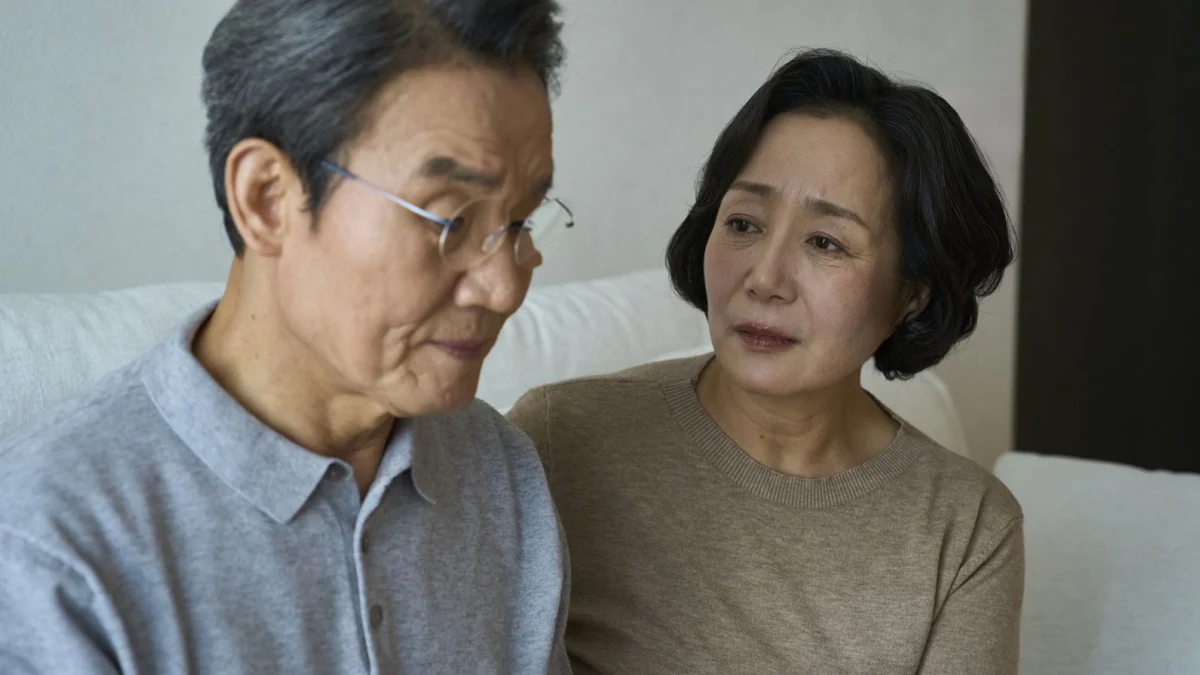
In a career spanning decades, attorney H. Dennis Beaver has encountered countless legal disputes, but few calls have carried the emotional weight of the one he received from “Lisa” and “Michael.” The two siblings, both in their mid-40s, reached out with a desperate inquiry that cut to the core of family dynamics, aging, and the hidden traps of grief: “What can we do to prevent our mother from going forward with plans that will effectively destroy our father’s quality of life?”
The situation, as described by the children, involves their father—a long-serving, respected pediatrician—and their mother, whose entire identity has been tethered to her social status as the wife of a pillar of the community. With the father’s recent Alzheimer’s diagnosis forcing the closure of his practice, the mother’s response has not been one of caretaking, but of profound social shame and an impulsive, potentially catastrophic, desire to flee.
The Chronology of a Crisis: From Diagnosis to Impulsive Flight
The crisis began with the inevitable decline of the father’s cognitive health. For years, the pediatrician was a fixture in their local community, a man whose medical expertise and gentle demeanor defined the family’s social standing. To the mother, however, this wasn’t just a husband—it was an identity. She viewed herself primarily as "Dr. Y’s wife," a title that provided her with a sense of importance and social hierarchy.
When the diagnosis of Alzheimer’s disease arrived, the mother’s initial reaction was total denial. She clashed with neurologists and insisted that her husband was simply suffering from exhaustion, refusing to accept the reality of his condition. As the disease progressed and the necessity of closing the medical practice became unavoidable, the mother’s world shifted from pride to perceived humiliation.
Instead of seeking community support, she internalized the diagnosis as a personal failure and a social embarrassment. In her mind, the loss of her husband’s career meant the loss of her own status. Distressed by the idea of being seen as the wife of a patient with dementia rather than a thriving doctor, she made an executive decision: the family would move hundreds of miles away to a place where they were unknown. She proceeded to place a down payment on a new home, effectively planning to isolate her husband from the very support network—friends, long-time patients, and community resources—that would be essential for his wellbeing.
Supporting Data: The "Flight" Response in Dementia Care
The siblings’ struggle is far from an isolated incident. Data on migration patterns following a dementia diagnosis reveal a troubling trend: approximately 22% of individuals move to a different county shortly after receiving such a diagnosis. This rate is significantly higher than that of individuals facing other major, non-cognitive health events.
Experts suggest that this "flight" response is often a manifestation of the caregivers’ unprocessed grief and trauma. When a spouse receives a life-altering diagnosis, the partner is often hit with a "fight-or-flight" survival instinct. For many, the urge to "run away" is a psychological defense mechanism designed to escape the daily reminders of the disease. However, as the research indicates, this move often triggers a rapid acceleration in the decline of the patient. The loss of a familiar environment, a consistent routine, and a known support system can cause significant disorientation, increasing the risk of wandering, behavioral outbursts, and a decline in physical health.
Expert Analysis: The Role of Aging Life Care Management
To provide clarity on how the siblings might intervene, legal experts turned to the insights of Jill Poser, founder of Life Care Concierge of South Florida. As an expert in aging life care management and a certified dementia care partner, Poser emphasizes that a dementia diagnosis is not just a medical milestone; it is a relational earthquake.
1. Addressing the Root of Identity Loss
Poser argues that the mother’s behavior is not necessarily malicious, but rather an expression of deep, unaddressed grief. "A diagnosis of Alzheimer’s or another form of dementia severely impacts a couple’s relationship, often causing a deep loss of identity," she explains. To de-escalate the situation, the children must avoid accusatory language. Telling the mother, "You are being selfish," or "You are killing him," will likely only increase her defensiveness. Instead, the children are encouraged to use empathetic, open-ended questions: "We see how much you love Dad. What are your biggest fears about staying here? How can we best support you through this?"
2. Reframing the "Dr. Y’s Wife" Identity
The mother needs a way to feel valued that does not rely on her husband’s active medical practice. Poser suggests helping the mother find new ways to leverage her social position to give back. By creating scholarships or supporting local charities in both their names, the mother can maintain her sense of purpose and status in the community. This allows her to continue being a "somebody" while staying in an environment where her husband has the necessary support to thrive.
3. Emphasizing Stability for the Patient
For the father, the environment is the medicine. Routine and familiarity are critical for those with cognitive decline. The siblings must clearly communicate that moving the father is a medical risk. By framing the decision through the lens of his health needs—rather than the mother’s desires—they can highlight the dangers of isolation. They should emphasize that the current community provides a safety net that is impossible to replicate in a new city where they have no connections.
4. The Need for Professional Mediation
Often, family members are too close to the conflict to resolve it objectively. Hiring a care manager can change the dynamic. A professional can act as a neutral party to evaluate the father’s care needs, provide counseling for the mother, and facilitate the difficult conversations that lead to long-term estate and health planning.
Legal Implications and Intervention Strategies
When empathy and family discussion fail, the legal system may become the final recourse. In many jurisdictions, if a spouse with cognitive decline is being placed in a position of harm or isolation, adult children may have grounds to seek intervention.
The Role of Elder Law Attorneys
Attorney Beaver suggests that the children consult with an elder law attorney or a potential conservator. While this is a "nuclear" option, it is a necessary one if the mother’s actions constitute a failure to provide adequate care or if they are actively endangering the father’s wellbeing. A judge can evaluate whether a move is in the best interest of the incapacitated individual. If the court finds that the move would be detrimental, they may issue orders to prevent the relocation or appoint a guardian to oversee the father’s living arrangements.
Protecting the Vulnerable
The legal framework surrounding aging adults is designed to balance the autonomy of the spouse with the safety of the patient. If the father is still capable of expressing his wishes, his voice should be the primary consideration. If he is not, the court will look to medical experts to determine whether the proposed move would accelerate his decline.
Moving Forward: The Duty of the Next Generation
The case of "Lisa" and "Michael" serves as a poignant reminder of the evolving roles within families. As Jill Poser aptly summarizes, "Growing up, our parents protect us. Growing older, we protect them."
The process of protecting aging parents is rarely straightforward. It requires a delicate balance of emotional intelligence, strategic planning, and, when necessary, firm legal boundaries. For the siblings in this case, the path forward involves a three-pronged approach:
- Immediate Engagement: Pivot from a stance of confrontation to one of partnership. By validating their mother’s feelings while firmly advocating for their father’s need for stability, they create a bridge for negotiation.
- Professional Support: Bring in third-party care managers to provide the expert, objective guidance that families often lack.
- Legal Preparedness: Do not wait until the moving truck is packed. Consult with legal professionals to understand the scope of their rights as children of an aging parent, ensuring they are prepared to seek court protection if the situation continues to deteriorate.
The tragedy of the mother’s "flight" is that it is born out of a love for the life she once had. By helping her grieve that loss and find a new way to exist within her community, the siblings have a fighting chance to keep their father in the home and the community he served for so many years. In the end, the goal is not to win an argument, but to ensure that the final chapters of their father’s life are lived with the dignity and support he has earned.