WASHINGTON — As Congress reconvenes following the traditional August state-work period, Capitol Hill faces a familiar yet dangerous high-wire act: funding the federal government before the midnight deadline on September 30 or facing a partial government shutdown.
With only a handful of legislative days remaining before Fiscal Year 2027 begins on October 1, congressional leaders in both chambers are scrambling to formulate a strategy that reconciles deep partisan divides, election-year political posturing, and differing spending priorities between the House and Senate.
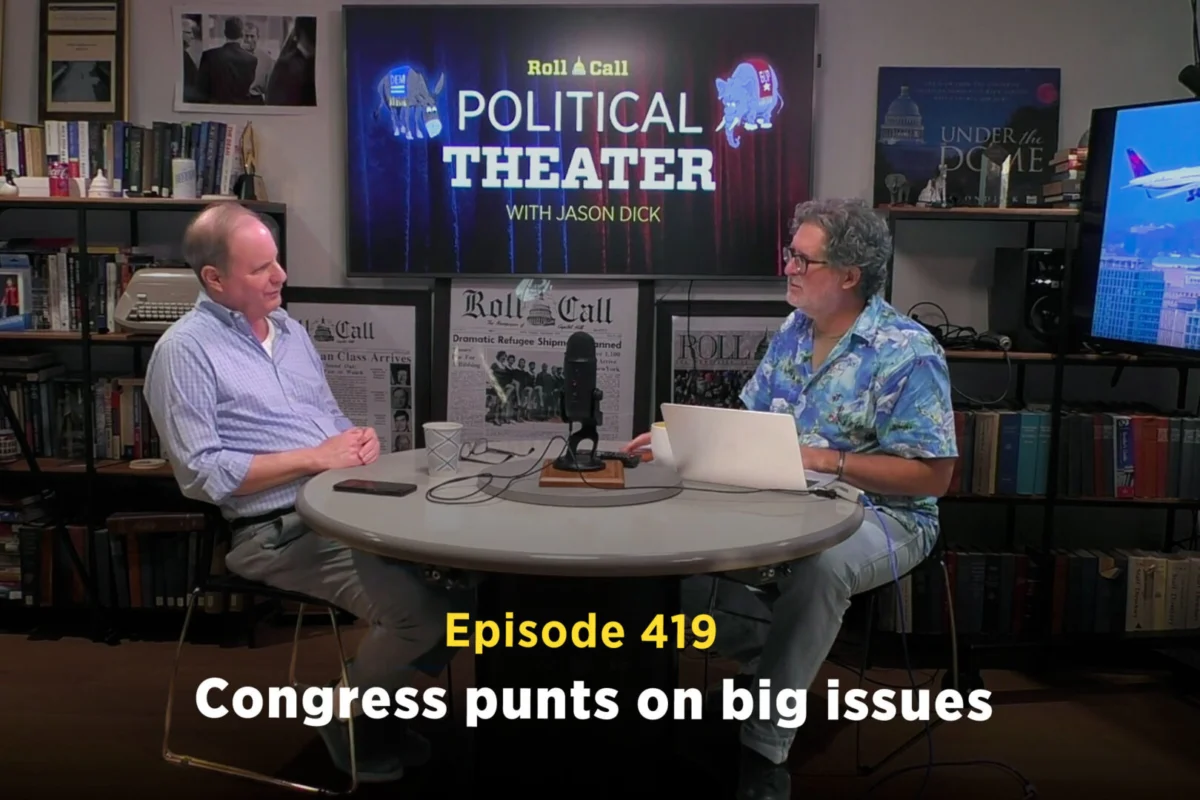
In a joint podcast featuring CQ Budget Editor David Lerman and CQ Roll Call Editor-in-Chief Jason Dick, veteran congressional observers laid out the daunting landscape facing lawmakers. The discussion highlighted the tight timeline, the contentious policy "riders" threatening passage of essential funding measures, and the growing likelihood that a stopgap measure—a Continuing Resolution (CR)—will be the only viable mechanism to prevent a federal shutdown.
Main Facts: The September Fiscal Crucible
The core challenge confronting the 119th Congress is the stark disparity between the spending visions crafted by the House and the Senate, alongside the rapidly diminishing calendar.
       +-------------------------------------------------------+
       |           SEPTEMBER FISCAL DEADLINE TIMELINE           |
       +-------------------------------------------------------+
       |                                                       |
       |  Sept 8:   Congress reconvenes post-August recess    |
       |  Sept 15:  Target for drafting Continuing Resolution  |
       |  Sept 25:  Final votes required in House and Senate   |
       |  Sept 30:  Fiscal Year 2026 ends at midnight           |
       |  Oct 1:    Fiscal Year 2027 begins / Shutdown risk    |
       |                                                       |
       +-------------------------------------------------------+
Key Highlights of the Current Legislative Standoff
- Deadline Urgency: Federal funding expires at 11:59 p.m. on September 30, 2026. Without enacted appropriations or a Continuing Resolution signed into law, non-essential government operations will halt on October 1.
- Bicameral Divergence: The House has pursued individual spending bills crafted under lower top-line spending limits with conservative policy conservative amendments. Conversely, the Senate Appropriations Committee has maintained a bipartisan approach, advancing spending packages aligned with broader discretionary targets negotiated in previous fiscal frameworks.
- The Policy Rider Battle: Conservative lawmakers are insisting on including stringent policy provisions concerning border enforcement, spending cuts, and administrative oversight. Senate leaders and the White House have categorized these riders as "poison pills" that cannot clear the 60-vote threshold in the upper chamber.
- Stopgap Necessity: Both CQ analysts emphasized that passing all 12 individual annual appropriations bills before October 1 is mathematically and politically impossible. Consequently, negotiations have shifted toward the duration and terms of a Continuing Resolution.
Chronology of the Fiscal Battle
The current showdown is the culmination of months of stalled negotiations, procedural maneuvering, and divergent legislative strategies that began early in the calendar year.
+-----------------------------------------------------------------------------------+
|                        CHRONOLOGY OF FY 2027 APPROPRIATIONS                       |
+-----------------------------------------------------------------------------------+
| MAR 2026   | Executive Branch submits annual budget request to Capitol Hill.      |
| APR-MAY    | House and Senate Appropriations Subcommittees hold oversight hearings. |
| JUN 2026   | House drafts 12 spending bills at lower baseline levels.             |
| JUL 2026   | Senate passes bipartisan bills; House passes partial appropriations.  |
| AUG 2026   | Congressional Recess; fiscal negotiations stall.                     |
| SEP 8 2026 | Congress reconvenes with under 15 legislative days remaining.        |
+-----------------------------------------------------------------------------------+
1. Spring 2026: Budget Proposals and Initial Drafts
- March 2026: The Administration submits its formal budget proposal, outlining discretionary spending priorities with an emphasis on domestic investments, climate resilience, and defense modernization.
- April–May 2026: House and Senate Appropriations Committees begin drafting their respective bills. In the House, conservative members demand deep cuts to non-defense spending, below statutory ceilings, forcing House leadership to adjust top-line figures downward.
2. Summer 2026: Legislative Gridlock and Floor Action
- June 2026: The House Appropriations Committee advances several individual bills along party-line votes. Conservative policy riders regarding social issues and federal agency funding are appended during markup sessions.
- July 2026: The Senate Appropriations Committee, operating under a bipartisan agreement, advances its bills with strong majority support, setting top-line spending figures notably higher than those in the House versions.
- Late July 2026: House leadership struggles to pass full spending bills on the floor due to internal divisions between moderate Republicans and conservative caucuses over spending levels and controversial policy provisions.
3. September 2026: The Return to Washington
- September 8, 2026: Congress returns from the August recess. Lawmakers face fewer than 15 working days where both chambers are simultaneously in session.
- Mid-September Forecast: Leaders begin informal negotiations on the structure of a Continuing Resolution aimed at extending funding into late November or December 2026, setting up a potential "lame-duck" fiscal omnibus battle.
Supporting Data and Economic Metrics
Understanding the scale of the current federal funding battle requires examining discretionary spending allocations, the fiscal impact of government shutdowns, and the status of individual appropriations measures.
Status of Discretionary Appropriations (FY 2027)
| Appropriations Bill | House Status | Senate Status | Key Disagreements |
|---|---|---|---|
| Agriculture & FDA | Passed Committee | Passed Committee | Rural development funding, SNAP restrictions |
| Commerce, Justice, Science | Stalled in Committee | Passed Committee | DOJ oversight provisions, climate research |
| Defense | Passed House Floor | Passed Committee | Top-line defense spending, military policy riders |
| Energy & Water | Passed House Floor | Passed Committee | Renewable energy vs. fossil fuel investments |
| Financial Services | Stalled on Floor | Passed Committee | IRS enforcement funding, regulatory rollbacks |
| Homeland Security | Passed Committee | Passed Committee | Border wall funding, ICE detention capacity |
| Interior & Environment | Passed Committee | Passed Committee | EPA spending reductions, public lands drilling |
| Labor, HHS, Education | Stalled in Committee | Passed Committee | Title I education cuts, public health program funding |
| Legislative Branch | Passed House Floor | Passed Committee | Agency administrative operations funding |
| Military Construction & VA | Passed House Floor | Passed Committee | Veteran healthcare spending formulas |
| State & Foreign Operations | Passed Committee | Passed Committee | Foreign assistance caps, international relief |
| Transportation & HUD | Stalled on Floor | Passed Committee | Mass transit grants, affordable housing subsidies |
Discretionary Spending Targets (In Billions USD)
       +-------------------------------------------------------------+
       |   COMPARISON OF DISCRETIONARY SPENDING PROPOSALS (FY 2027)   |
       +-------------------------------------------------------------+
       |                                                             |
       |  House GOP Target  |  Defense: $895B   | Non-Def: $710B     |
       |  Senate Target     |  Defense: $895B   | Non-Def: $775B     |
       |  White House Draft |  Defense: $895B   | Non-Def: $790B     |
       |                                                             |
+-------------------------------------------------------------+- National Debt Context: Total U.S. national debt exceeds $35 trillion, driving fiscal hawkishness among House conservatives seeking spending offsets for any emergency spending packages.
- Economic Cost of a Shutdown: According to historical data from major financial rating agencies (S&P Global, Fitch Ratings):
- A full government shutdown reduces real GDP growth by approximately 0.1 to 0.2 percentage points for every week it lasts.
- Direct administrative costs associated with shutting down and restarting federal agency operations average roughly $1.2 billion per week in lost productivity and administrative overhead.
- More than 800,000 federal civilian employees would face potential furloughs, while an estimated 1.3 million active-duty military personnel and critical law enforcement staff would work without immediate pay.
Official Responses and Stakeholder Positions
As the September deadline approaches, major political actors on Capitol Hill and within the Executive Branch have defined their bargaining positions, setting up a complex, multi-party negotiation.
       +---------------------------------------------------------+
       |              STAKEHOLDER POSITIONS ON FY 2027           |
       +---------------------------------------------------------+
       |                                                         |
       |  House Leadership: Demands lower non-defense caps &     |
       |                    conservative policy riders.          |
       |                                                         |
       |  Senate Bipartisan Leadership: Pushes clean CR &        |
       |                    full-year omnibus consistency.       |
       |                                                         |
       |  White House: Vows veto on bills containing social      |
       |               riders or deep domestic agency cuts.      |
       |                                                         |
       +---------------------------------------------------------+
House Leadership and Conservative Caucuses
House Republican leaders maintain that Congress must address spending levels to curb inflation and national debt. Members of the House Freedom Caucus have warned leadership against bringing a "clean" stopgap measure to the floor without spending reductions or border security measures attached.
"We cannot continue to fund the federal government on autopilot with clean CRs that kick the fiscal can down the road," noted conservative members during leadership conferences. "Any short-term funding measure must include meaningful policy reforms."
Senate Leadership and Appropriations Committee
Senate leaders from both parties have stressed the necessity of avoiding a crisis that disrupts government operations and undermines economic stability. Senate Appropriations leadership advocates for a clean, short-term Continuing Resolution to grant negotiators more time to bridge differences.
"A government shutdown is fundamentally irresponsible and financially wasteful," stated members of the Senate Appropriations panel. "The only realistic path forward before October 1 is a clean, temporary extension that keeps government open while we negotiate a full-year package."
The Executive Branch
The White House and Office of Management and Budget (OMB) have begun routine administrative preparations for potential funding lapses—a standard procedure when deadlines near—while issuing formal policy statements opposing conservative riders.
"The Administration urges Congress to pass a short-term Continuing Resolution without ideological policy riders," OMB noted in official guidance. "A shutdown would delay essential services, jeopardize public safety, and create unnecessary financial hardship for American families."
Analysis from Press and Budget Observers
In their CQ Roll Call analysis, David Lerman and Jason Dick noted that internal party mechanics in the House severely constrain leadership options.
- David Lerman (CQ Budget Editor): Highlighted that the math in the House leaves leadership with a narrow margin for error. Relying on minority-party votes to pass a clean CR risks alienating conservative members, whereas attempting to pass a conservative-only CR risks failure on the floor or immediate rejection in the Senate.
- Jason Dick (CQ Roll Call Editor-in-Chief): Emphasized the overarching political environment of an election season. Disagreements over discretionary funding are amplified by campaign-trail messaging, making compromise harder to achieve prior to election deadlines.
Implications and Long-Term Outlook
The outcome of the September spending clash carries immediate administrative, economic, and political consequences for the federal government and the broader nation.
+-----------------------------------------------------------------------------------+
|                        POTENTIAL SCENARIOS FOR OCTOBER 1                          |
+-----------------------------------------------------------------------------------+
| SCENARIO A: Clean Short-Term CR (Highest Probability)                             |
| Extends funding to Nov/Dec 2026. Avoids immediate shutdown; defers decisions.     |
+-----------------------------------------------------------------------------------+
| SCENARIO B: Partisan Standoff / Partial Shutdown (Moderate Risk)                  |
| House and Senate fail to agree on CR text. Brief or extended shutdown ensues.     |
+-----------------------------------------------------------------------------------+
| SCENARIO C: Full-Year Appropriations Enacted (Extremely Unlikely)                 |
| All 12 bills cleared before Oct 1. Calendar limits make this scenario improbable.|
+-----------------------------------------------------------------------------------+
1. Short-Term Administrative Uncertainty
Even if Congress passes a Continuing Resolution, operating under stopgap funding creates significant planning challenges for federal agencies:
- Procurement Delays: Agencies are generally prohibited from launching new programs or entering into multi-year contracts under a standard CR.
- Defense Readiness: The Department of Defense faces restrictions on adjusting production rates for defense systems or starting new military construction projects until full-year funding is secured.
- State and Local Impact: Federal grant distributions to state and local governments for infrastructure, education, and public health may experience processing delays.
2. The Setup for a Lame-Duck Session
If lawmakers enact a Continuing Resolution extending into November or December 2026, the ultimate funding decisions will be deferred to a post-election "lame-duck" legislative session.
- Omnibus vs. Minibus Strategy: Congressional leaders may attempt to combine the 12 spending bills into a single comprehensive "Omnibus" package or a series of smaller "Minibus" bundles.
- Supplemental Funding Requests: A year-end package would likely serve as the vehicle for emergency supplemental funding, including disaster relief appropriations for FEMA, emergency defense support, and international aid.
3. Economic and Political Fallout
The risk of a federal shutdown introduces volatility into financial markets and consumer confidence. For lawmakers, the fiscal battle serves as a primary narrative point on the campaign trail.
As Capitol Hill enters this critical September window, the fundamental tension remains unchanged: reconciling two divergent visions of federal spending before the clock runs out on September 30, or managing the immediate consequences of a government closure.