WASHINGTON — With less than four weeks remaining before the end of the fiscal year on September 30, 2026, the United States Senate faces a severe legislative impasse that threatens to paralyze the federal government. Negotiations within the Senate Appropriations Committee have broken down, leaving lawmakers without a clear legislative path to enact the 12 mandatory annual spending bills.
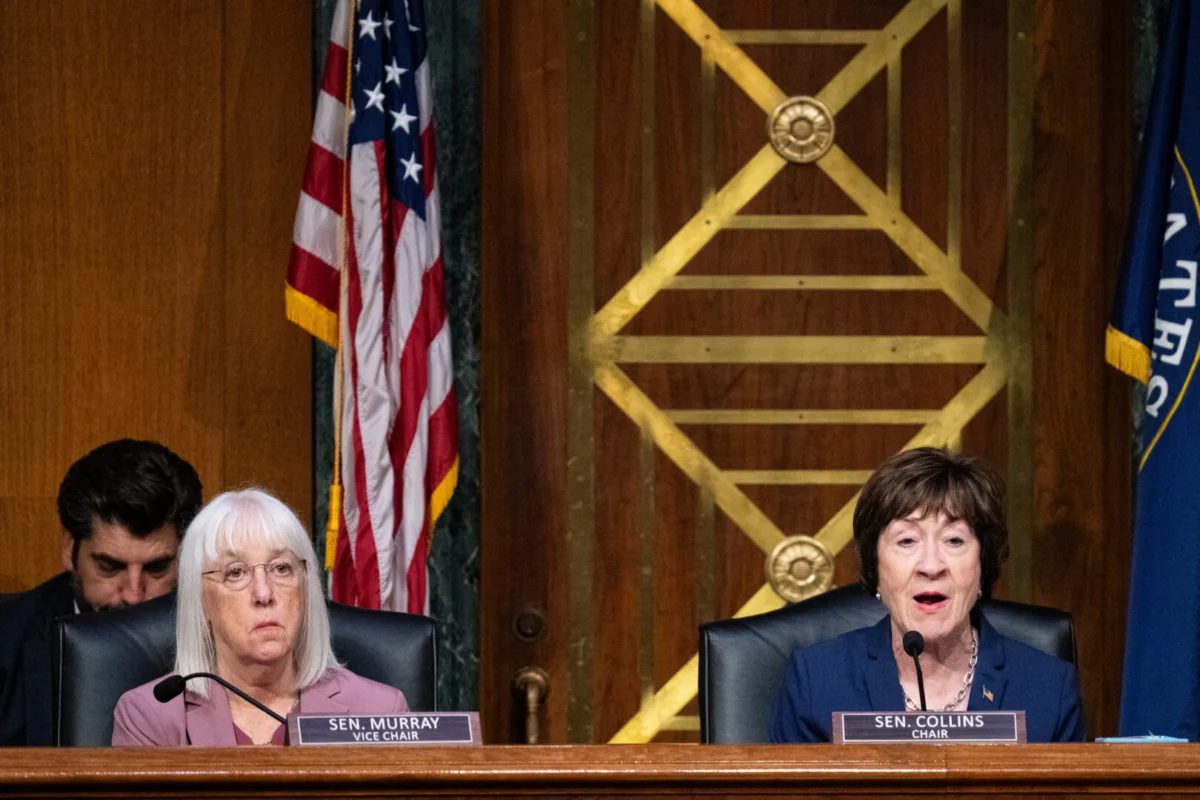
Senate Appropriations Committee Chair Susan Collins, R-Maine, and Ranking Democrat Patty Murray of Washington—who previously forged a reputation for bipartisan pragmatism—have reached a complete standstill. Disagreements over overall discretionary spending levels, statutory spending caps, and a contentious array of policy riders have stalled the committee’s work, raising the immediate prospect of a federal government shutdown on October 1 or an emergency stopgap measure that freezes funding at current levels.
Main Facts: Deepening Rift Escalates Shutdown Risk
The central driver of the current deadlock is a fundamental failure to reach consensus on top-line discretionary budget totals and the division of funds between defense and non-defense programs. While the Senate Appropriations Committee entered the current legislative cycle with explicit promises to return to "regular order"—the process of individually marking up, debating, and passing all 12 appropriations bills through committee and onto the Senate floor—the effort has collapsed under intense partisan pressure.
At the heart of the divide are several high-stakes disputes:
- Defense vs. Non-Defense Spending Allocations: Senate Republicans, led by Chair Collins, have sought to prioritize national defense and border security enhancements, arguing that growing geopolitical tensions demand elevated military spending. Conversely, Ranking Member Murray and Senate Democrats insist on dollar-for-dollar parity, demanding that any increases in defense discretionary funding be matched by equivalent investments in domestic programs, healthcare, education, and climate initiatives.
- Contentious Policy Riders: Negotiations have stalled over conservative policy amendments attached to funding measures. Key sticking points include restriction provisions on reproductive healthcare access, the defunding of federal diversity, equity, and inclusion (DEI) mandates, rolled-back environmental regulations, and stricter immigration enforcement mandates.
- Discretionary Budget Caps: Divergent interpretations of long-term spending constraints have complicated negotiations over 302(b) allocations—the suballocations that assign specific spending limits to each of the 12 individual appropriations subcommittees.
Without an agreement in committee, the Senate has been unable to report the majority of its annual spending packages to the full chamber floor. As a result, Congress is running out of calendar days to avoid a fiscal crisis.
Chronology of the Impasse: How Regular Order Unraveled
The breakdown in the Senate Appropriations Committee represents a dramatic reversal from the optimism expressed by committee leadership at the beginning of the 119th Congress cycle.
+-----------------------------------------------------------------------------------+
|                            FY 2027 APPROPRIATIONS TIMELINE                        |
+-----------------------------------------------------------------------------------+
|  FEB 2026   | White House Submits FY2027 Budget Request                           |
|  MAR 2026   | Collins & Murray Pledge Commitment to "Regular Order"              |
|  MAY 2026   | Preliminary Committee Hearing Phase Begins                          |
|  JUN 2026   | Friction Emerges Over 302(b) Top-Line Allocations                   |
|  JUL 2026   | Markup Schedule Falters; Ideological Policy Riders Stall Progress  |
|  AUG 2026   | Senate Recess; Staff-Level Negotiations Collapse Behind Closed Doors |
|  SEP 4, 2026| Formal Gridlock Acknowledged; Senate Facing Looming Shutdown Window |
+-----------------------------------------------------------------------------------+
Spring 2026: Early Promises of Bipartisanship
In early spring, following the formal release of the administration’s budget request, Collins and Murray issued a joint mandate pledging to restore committee norms. Both leaders publicly committed to advancing all 12 appropriations bills individually, avoiding the massive, last-minute "omnibus" packages that have drawn widespread criticism in recent years. Initial hearings proceeded smoothly, with Cabinet officials testifying across subcommittees on agency needs for Fiscal Year 2027.
June 2026: The Top-Line Split Widens
Friction began to emerge during the establishment of 302(b) subcommittee allocations. As economic data pointed to lingering inflationary pressures and rising federal deficit figures, Senate Republicans called for strict spending discipline on non-defense discretionary programs. House Republicans simultaneously drafted spending bills with steep cuts to domestic agencies, emboldening Senate conservatives to press Collins for a tougher negotiating posture. Murray and committee Democrats countered that non-defense programs had already absorbed deep real-dollar cuts in prior fiscal cycles and refused to advance bills containing domestic funding reductions.
July 2026: Markup Schedule Collapses
By mid-summer, the markup process ground to a halt. While lower-profile, less controversial packages—such as the Military Construction-Veterans Affairs and Agriculture bills—saw preliminary draft discussions, major bills covering Defense, Labor-HHS-Education, and State-Foreign Operations stalled entirely. Democratic members balked at conservative policy riders introduced during preliminary staff markups, while Republican members refused to advance spending bills that did not include strict border enforcement mechanisms and spending reductions.
August–September 2026: Recess Deadlock and Formal Impasse
During the August congressional recess, staff-level negotiations intended to bridge the ideological divide produced negligible results. Upon returning to Washington in early September, the committee leadership conceded that markups could not proceed without a high-level political settlement on top-line figures and policy riders. On September 4, 2026, committee activities remained entirely frozen, leaving the Senate without a single fully approved funding bill on the legislative calendar just weeks before the end of the fiscal year.
Supporting Data and Budget Breakdown
The magnitude of the legislative stalemate is reflected in the numbers governing federal discretionary spending. The top-line discretionary budget for the upcoming fiscal year stands at approximately $1.71 trillion, representing the core operational funds for federal departments, law enforcement, national defense, and social programs.
Discretionary Top-Line Comparison (FY 2027 Proposed)
| Category | Proposed Allocation Target | Year-over-Year Delta Demand | Primary Point of Friction |
|---|---|---|---|
| Defense Discretionary | ~$895 Billion | +3.5% to +5.0% | Inflation adjustments, procurement, border defense missions |
| Non-Defense Discretionary | ~$815 Billion | Flat to -2.0% (GOP) / +3.5% (DEM) | Social safety net cuts, climate initiatives, federal payrolls |
| Total Discretionary Pool | ~$1.71 Trillion | Net Neutral Target | Dispute over parity and policy riders |
Key Legislative Indicators:
- 0 of 12: The number of FY2027 spending bills passed by the full Senate into law as of early September.
- Fewer than 15: The total number of working legislative days remaining on the Senate calendar before the midnight deadline on September 30, 2026.
- $115 Billion Gap: The total financial discrepancy between proposed domestic spending baselines advocated by Senate Democrats and proposed statutory caps favored by conservative fiscal hawks.
- 2.2 Million: The estimated total of active civilian federal employees whose pay and operational status would be disrupted immediately in the event of a lapse in appropriations.
Official Responses and Political Reaction
The mounting pressure has sparked sharp exchanges between committee leaders, party leadership, and the White House, with each faction attempting to frame the narrative surrounding the potential shutdown.
Senate Appropriations Leadership
Chair Susan Collins (R-Maine) defended the committee’s conservative fiscal framework, arguing that spending constraints are a mandatory response to national debt pressures:
"Our national debt has exceeded sustainable thresholds, and Congress cannot continue to operate as if financial boundaries do not exist. We have provided sensible, robust support for our national defense and border security while demanding fiscal responsibility in domestic spending. It is disappointing that our Democratic colleagues are refusing to advance crucial funding packages simply because they resist necessary fiscal discipline."
Ranking Member Patty Murray (D-Wash.) blamed the standoff on partisan political demands and far-right policy riders:
"We entered this cycle with a clear understanding that bipartisan agreement was the only way to fund the government. Unfortunately, Republicans have chosen to abandon that commitment by attempting to jam extreme, partisan policy riders into routine spending bills and forcing unnecessary cuts on working families, public health, and education. We stand ready to pass balanced, bipartisan bills, but we will not accept measures that harm American communities."
                                  PARTY POSITIONS

         SENATE REPUBLICANS                              SENATE DEMOCRATS
     (Chair Susan Collins)                            (Ranking Patty Murray)
  +--------------------------+                     +--------------------------+
  | - Prioritize Defense     |                     | - Equal Parity (Def/Dom) |
  | - Enforce Fiscal Caps    |   <=== DEADLOCK ===>| - Preserve Domestic Base |
  | - Include Border/Policy  |                     | - Reject Social Riders   |
  |   Riders                 |                     | - Maintain Clean Bills   |
  +--------------------------+                     +--------------------------+
Congressional Leadership and Executive Branch
- Senate Republican Leadership emphasized that time remains to pass a temporary Continuing Resolution (CR), but warned that any stopgap measure must be accompanied by border security conditions or statutory spending adjustments.
- Senate Democratic Leadership insisted that a "clean" Continuing Resolution free of political riders is the only viable path to avoid a midnight shutdown on October 1, warning that conservative demands risk severe economic instability.
- The White House Office of Management and Budget (OMB) issued formal guidance advising federal departments to review their contingency plans for an orderly shutdown, while calling on Senate leadership to isolate appropriations from ideological policymaking.
Broader Implications for Federal Operations and the Economy
The failure of the Senate Appropriations Committee to advance regular spending bills carries severe downstream consequences for government stability, national defense, and macro-economic health.
+-----------------------------------------------------------------------------------+
|                        CONSEQUENCES OF APPROPRIATIONS FAILURE                     |
+-----------------------------------------------------------------------------------+
|  GOVERNMENT OPERATIONS  | Furloughs for non-essential staff; delayed processing    |
|                         | of permits, loans, and federal benefit claims.           |
+-------------------------+---------------------------------------------------------+
|  NATIONAL DEFENSE       | Freeze on new procurement contracts; disruption to     |
|                         | military training and maintenance schedules.            |
+-------------------------+---------------------------------------------------------+
|  ECONOMIC IMPACT        | Reduced GDP growth; billions lost in contractor         |
|                         | productivity; erosion of market confidence.             |
+-------------------------+---------------------------------------------------------+
|  LEGISLATIVE INSTITUTION| Collapse of "regular order"; increased reliance on     |
|                         | mega-omnibus packages and fiscal cliff bargaining.      |
+-------------------------+---------------------------------------------------------+
Operational Paralysis and Federal Agencies
If Congress fails to pass either the 12 regular appropriations bills or a short-term Continuing Resolution by October 1, non-exempt federal functions will immediately halt. Hundreds of thousands of federal personnel face administrative furloughs, while essential employees—including law enforcement officers, air traffic controllers, and active-duty military personnel—would be forced to work without immediate pay until funding is restored. Key economic data releases, small business loan approvals, and environmental permitting assessments would ground to a halt.
Defense Procurement and Readiness Strains
Even if a short-term Continuing Resolution is enacted to prevent an immediate shutdown, defense experts warn that operating under temporary stopgap measures creates profound inefficiencies. Under a standard CR, federal agencies are legally restricted from initiating new programs, entering into multi-year procurement contracts, or increasing production rates for critical munitions. Defense officials have repeatedly cautioned that prolonged reliance on CRs undermines long-term strategic readiness and weakens supply chain stability.
Economic and Financial Market Fallout
A prolonged government shutdown risks denting U.S. economic growth entering the fourth quarter. Credit rating agencies have previously warned that recurring fiscal brinkmanship and institutional paralysis threaten the assessment of U.S. sovereign debt governance. Furthermore, federal contractors—who lack the statutory back-pay guarantees afforded to civil service employees—face immediate financial disruption, impacting local economies heavily reliant on federal installations.
Breakdown of Congressional Governance
Beyond immediate economic and operational threats, the stalemate between Collins and Murray marks a worrisome institutional breakdown. The Senate Appropriations Committee was long considered one of the final bastions of functional bipartisanship in Capitol Hill’s highly polarized environment. The inability of two of the Senate’s most experienced negotiators to shepherd regular appropriations bills through committee highlights the growing influence of ideological politics over basic legislative administration, signaling that crisis-driven budgeting will likely dominate the federal outlook for the foreseeable future.