Executive Summary
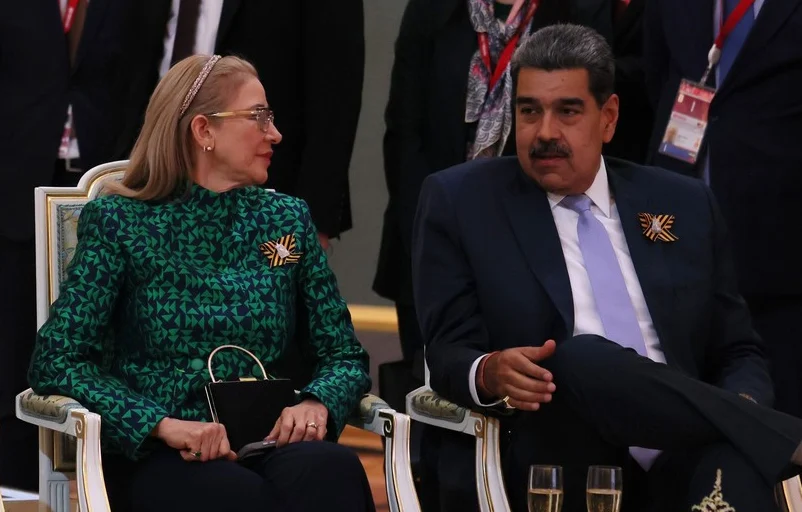
In a high-stakes legal maneuver that could redefine the boundaries of international law and U.S. foreign policy, ousted Venezuelan President Nicolás Maduro and his wife, Cilia Flores, have formally petitioned a Manhattan federal court to dismiss the federal drug trafficking indictments currently pending against them. The motions, filed on Wednesday, strike at the core of the U.S. government’s assertion of extraterritorial jurisdiction.
Maduro and Flores, who have been detained in a Brooklyn facility since their capture in Caracas on January 3, 2026, argue that they are shielded by sovereign immunity—a principle they contend remains intact regardless of the United States’ refusal to recognize Maduro’s administration as the legitimate governing body of Venezuela. As the June 1, 2027, trial date approaches, the judiciary is now tasked with navigating a complex intersection of customary international law, executive recognition power, and the aggressive prosecution of alleged narco-terrorism.
The Legal Arguments: Status vs. Conduct
The defense strategy, led by Maduro’s attorney Barry Pollack, rests on two primary pillars: status-based immunity and conduct-based immunity.
Status-Based Immunity
In his filing before U.S. District Judge Alvin K. Hellerstein, Maduro contends that he maintains the status of a head of state. Citing the International Court of Justice’s (ICJ) landmark Arrest Warrant case (DRC v. Belgium), the defense argues that incumbent holders of senior state offices are entitled to absolute immunity from foreign criminal jurisdiction. The motion asserts that this is a customary rule of international law that operates independently of the political whims or recognition policies of any single nation-state, including the United States.
Conduct-Based Immunity
Furthermore, the defense argues that the acts described in the Fourth Superseding Indictment—specifically the issuance of diplomatic passports and the deployment of military assets—are inherently official state acts. By characterizing these actions as the execution of foreign policy and the exercise of administrative authority, Maduro’s legal team seeks to insulate him from prosecution for what the U.S. Department of Justice (DOJ) classifies as criminal enterprise.
The Argument of Cilia Flores
Cilia Flores has adopted a parallel strategy, asserting that her immunity is derivative of her husband’s status as a head of state. Her defense team posits that immunity is not a personal privilege but an "attribute of Venezuela’s sovereignty," and therefore, only the Venezuelan state—not a U.S. court—possesses the authority to waive such protections.
Chronology of the Crisis
The current legal proceedings are the culmination of a volatile period in U.S.-Venezuelan relations.
- 2019: The United States formally ceases recognition of Nicolás Maduro as Venezuela’s president, following allegations of electoral fraud, and pivots to recognizing the opposition leadership.
- 2024: Maduro claims victory in national elections, a result widely rejected by the international community and the United States.
- January 3, 2026: U.S. forces execute a high-profile seizure of Nicolás Maduro and Cilia Flores in Caracas.
- January 5, 2026: The couple is arraigned in Manhattan federal court, where they enter pleas of "not guilty" to charges including narco-terrorism and cocaine-importation conspiracy.
- August 2026: Legal scholars and the Due Process of Law Foundation begin publishing analyses regarding the clash between international immunity norms and U.S. non-recognition policy.
- November 17, 2026: The court is scheduled to hear oral arguments on the motions to dismiss.
- June 1, 2027: The current target date for the commencement of the trial.
Supporting Data: The Fourth Superseding Indictment
The charges facing the couple are extensive. The Fourth Superseding Indictment alleges that Maduro and Flores operated as the heads of a "narco-state," utilizing the Venezuelan military and governmental apparatus to facilitate the movement of massive shipments of cocaine destined for U.S. markets.
Key counts in the indictment include:
- Narco-Terrorism Conspiracy: Alleging that the defendants conspired to use the drug trade to support violent extremist groups and destabilize regions of interest to the U.S.
- Cocaine-Importation Conspiracy: The core of the DOJ’s case, asserting that the defendants facilitated the transit of narcotics through Venezuelan airspace and maritime borders.
- Weapons-Related Offenses: Alleging the illicit use of military-grade hardware to protect drug trafficking corridors.
The DOJ contends that these activities were not "official state acts" but rather a private criminal enterprise disguised behind the veneer of presidential authority.
Official Responses and Judicial Precedents
The U.S. government’s position remains firm: the doctrine of sovereign immunity is not a "get out of jail free" card for criminal activity, particularly when the defendant is not recognized as a legitimate sovereign.
The Noriega Precedent
The prosecution is expected to rely heavily on United States v. Noriega. In that case, the U.S. court rejected immunity claims by the former Panamanian leader, reasoning that because the United States did not recognize him as the legitimate head of state, he was not entitled to the protections afforded to such a figure. The DOJ maintains that the 2019 withdrawal of recognition of Maduro mirrors the legal framework established in the Noriega case.
The Defense Rebuttal
Maduro’s counsel argues that Noriega is distinguishable. They contend that while the U.S. may withhold political recognition, the factual reality is that Maduro remained in control of the Venezuelan state apparatus, issued executive orders, and conducted international diplomacy throughout his tenure. They argue that if the court ignores the functional reality of his presidency, it creates a dangerous precedent where powerful nations can simply "derecognize" foreign leaders to facilitate their capture and prosecution, effectively stripping them of international law protections at will.
Implications: A Global Legal Ripple Effect
The resolution of this case will have profound implications for international law.
For International Relations
If the court grants the motion to dismiss, it would signal a major departure from U.S. foreign policy, potentially compelling the judiciary to recognize the "functional" reality of foreign regimes despite the executive branch’s stance. Conversely, if the court denies the motion, it reinforces the power of the U.S. Executive branch to utilize judicial proceedings as an extension of foreign policy.
For Global Immunity Standards
Legal experts, including those from the Due Process of Law Foundation, have noted that this case pits "status-based immunity" against "non-recognition policy." If the court rules that Maduro is ineligible for immunity, it effectively narrows the scope of the Arrest Warrant case, potentially making it easier for future administrations to pursue criminal charges against controversial world leaders without the hindrance of traditional diplomatic protections.
The Domestic Political Context
The detention of the couple and the subsequent legal battle are inextricably linked to the broader "Trump-era" policies regarding Venezuela. The government’s actions—from the 2026 seizure in Caracas to the aggressive pursuit of a conviction—highlight a shift toward a more interventionist approach to regional security. For the U.S. legal system, the challenge is to maintain the integrity of its criminal statutes while ensuring that the proceedings are viewed as legitimate in the eyes of the international community.
Conclusion
As the November 17 oral arguments draw near, the eyes of the global legal community remain fixed on Manhattan. The case of United States v. Carvajal-Barrios (the docket containing the charges against the couple) serves as a modern crucible for the doctrine of sovereign immunity. Whether the court determines that the power of the U.S. Executive to define legitimacy outweighs the customary protections of a head of state remains the central question of this trial—a question that will likely resonate long after the June 2027 verdict is delivered.