In a significant legislative move that underscores the intensifying intersection of higher education policy and foreign affairs, the U.S. House of Representatives voted on Thursday to pass the Protect Economic and Academic Freedom Act of 2026. The bill, which passed with a vote of 237 to 169, aims to penalize institutions of higher education that participate in commercial boycotts of Israel by stripping them of access to federal student aid.
The bipartisan nature of the vote—with 33 Democrats crossing the aisle to join the Republican majority—highlights the growing urgency among federal lawmakers to address what they describe as a crisis of antisemitism on American campuses. However, the bill has also ignited a fierce debate regarding the boundaries of academic freedom, the protection of constitutionally guaranteed speech, and the role of the federal government in university governance.
The Core Provisions: What the Bill Demands
The Protect Economic and Academic Freedom Act of 2026 functions as a direct amendment to the Higher Education Act of 1965. Under its provisions, the Department of Education would be empowered to withhold federal student aid from any college or university that engages in a "nonexpressive commercial boycott" of Israel.
Beyond the financial penalties, the legislation mandates that institutions ensure an environment of "academic neutrality" regarding Israel. Specifically, the bill requires universities to:
- Ensure that students are not "unreasonably obstructed" from participating in academic programs or study-abroad initiatives located in Israel.
- Guarantee that Israeli students and faculty are fully protected and permitted to participate in domestic academic programs without facing discriminatory barriers.
While the text of the bill does not explicitly name the "Boycott, Divestment, and Sanctions" (BDS) movement, proponents have made it clear that the legislation is specifically designed to combat the influence of that movement within academic institutions.
A Chronology of Escalation: From October 7 to the House Floor
The impetus for this legislation is inextricably linked to the geopolitical fallout of the Hamas attack on Israel on October 7, 2023, and the subsequent war in Gaza.
- October 2023 – Early 2024: The onset of the war in Gaza triggered a wave of student activism across the United States. Pro-Palestinian encampments, protest marches, and faculty-led initiatives began to dominate the headlines at major universities, including Columbia, Harvard, and UCLA.
- Spring 2024: Congressional scrutiny intensified. House committees began holding high-profile hearings, questioning university presidents on their handling of campus protests and their definitions of protected speech versus harassment.
- Late 2024 – 2025: As protests persisted, a legislative push began to gain momentum. Lawmakers argued that universities were failing to provide a safe learning environment for Jewish students and that some academic departments were becoming hubs for discriminatory rhetoric.
- March 2026: The House Education and the Workforce Committee finalized the language of the Protect Economic and Academic Freedom Act, setting the stage for the floor vote.
- Thursday, March 2026: The bill successfully clears the House, moving the focus of the debate to the Senate.
Supporting Data and the "Antisemitism" Narrative
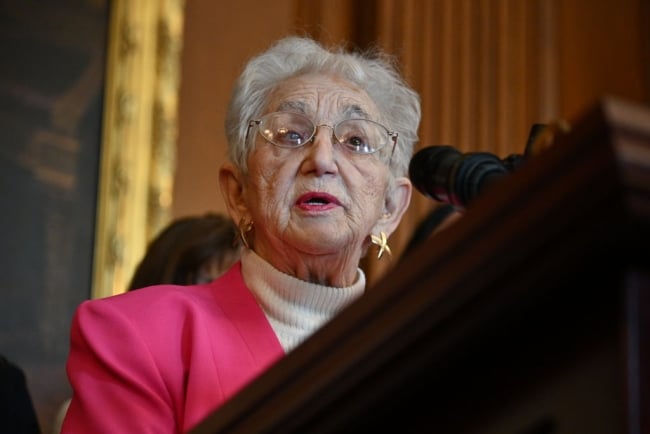
Congressional leaders who championed the bill, led by Republican Representative Virginia Foxx of North Carolina and Democratic Representative Josh Gottheimer of New Jersey, have grounded their argument in a perceived moral imperative.

"The antisemitic rot that has corroded college campuses must be eradicated—enough is enough," Foxx stated during the floor debate. Her rhetoric reflects a sentiment shared by many in the GOP caucus who believe that American universities have allowed their campuses to become hostile environments.
The legislative push is supported by data from various civil rights organizations that track campus climate. Reports from the Anti-Defamation League (ADL) and other Jewish advocacy groups have indicated a sharp spike in antisemitic incidents on campuses since the autumn of 2023. These incidents range from graffiti and verbal harassment to physical altercations during demonstrations. Proponents of the bill argue that by targeting the BDS movement, the government is effectively cutting off the institutionalized financial and academic support that provides a veneer of legitimacy to these movements.
Official Responses: A Divided Capitol
The divide over the bill is not merely partisan; it touches on fundamental interpretations of the First Amendment and the autonomy of higher education institutions.
The Proponents’ View
Rep. Josh Gottheimer, a key Democratic sponsor, has positioned the bill as a necessary tool to protect Jewish students from discrimination. "If an institution of higher education chooses to capitulate to the caustic BDS movement, there will be consequences," Gottheimer said. His involvement suggests that there is a faction within the Democratic Party that views the current campus climate as a failure of institutional leadership that warrants federal intervention.
The Critics’ View
Bobby Scott, the ranking member of the House Education and the Workforce Committee, emerged as the most prominent voice of dissent. Scott argued that the legislation is both redundant and dangerous.
"No college or university has embraced the BDS movement anyway," Scott remarked during the floor session. His opposition focuses on two main points:
- Constitutional Overreach: Scott argues that the bill conflates a student’s political views with university policy, and that punishing schools for the speech or activities of student groups may be an unconstitutional infringement on First Amendment rights.
- Academic Freedom: Critics within the academic community argue that boycotts—or the discussion of them—are a form of political expression. By forcing universities to adopt a specific stance regarding Israel, the government may be chilling free speech and debate in the very places where such debate is supposed to thrive.
Implications: The Road Ahead
The passage of the bill in the House is only the first step in a long legislative process. For the bill to become law, it must survive the Senate, which has historically been more cautious regarding legislation that touches on academic freedom.
Potential Legal Challenges
Even if the bill is signed into law, legal experts predict an immediate wave of litigation. Civil liberties organizations, such as the American Civil Liberties Union (ACLU), have previously challenged state-level anti-BDS laws on the grounds that they violate the First Amendment by conditioning government contracts on political speech. A federal law would likely face similar challenges, potentially leading to a Supreme Court showdown.
Impact on University Governance
For colleges and universities, the bill creates a precarious financial landscape. Institutions rely heavily on federal student aid—such as Pell Grants and federal student loans—to maintain their operations and serve their student bodies. The threat of losing this funding would likely force university administrators to take a more aggressive stance against student organizations and faculty members who participate in or advocate for BDS-related activities.
This could lead to:
- Stricter Codes of Conduct: Universities may implement broader definitions of "harassment" or "discrimination" to avoid federal investigations.
- Administrative Censorship: To protect their federal funding, universities might pre-emptively cancel events or defund student groups that are perceived to be in conflict with the new federal guidelines.
- Loss of Intellectual Diversity: Critics fear that the bill will create a "homogenized" campus environment where critical discussions about foreign policy are suppressed, ultimately undermining the educational mission of the university.
The Broader Political Landscape
The vote also serves as a bellwether for the upcoming election cycle. Both Republicans and Democrats are navigating the complex terrain of foreign policy and campus activism. As the bill heads to the Senate, the discourse will likely intensify, with both sides seeking to frame the debate as either a crusade for civil rights or an assault on democratic principles.
In conclusion, the Protect Economic and Academic Freedom Act of 2026 represents a major escalation in the federal government’s involvement in higher education. Whether it will succeed in its stated goal of eradicating antisemitism or instead result in a protracted legal and constitutional crisis remains to be seen. As the Senate prepares to take up the measure, the eyes of the academic, legal, and political worlds remain firmly fixed on the balance between national policy and the fundamental right to dissent.