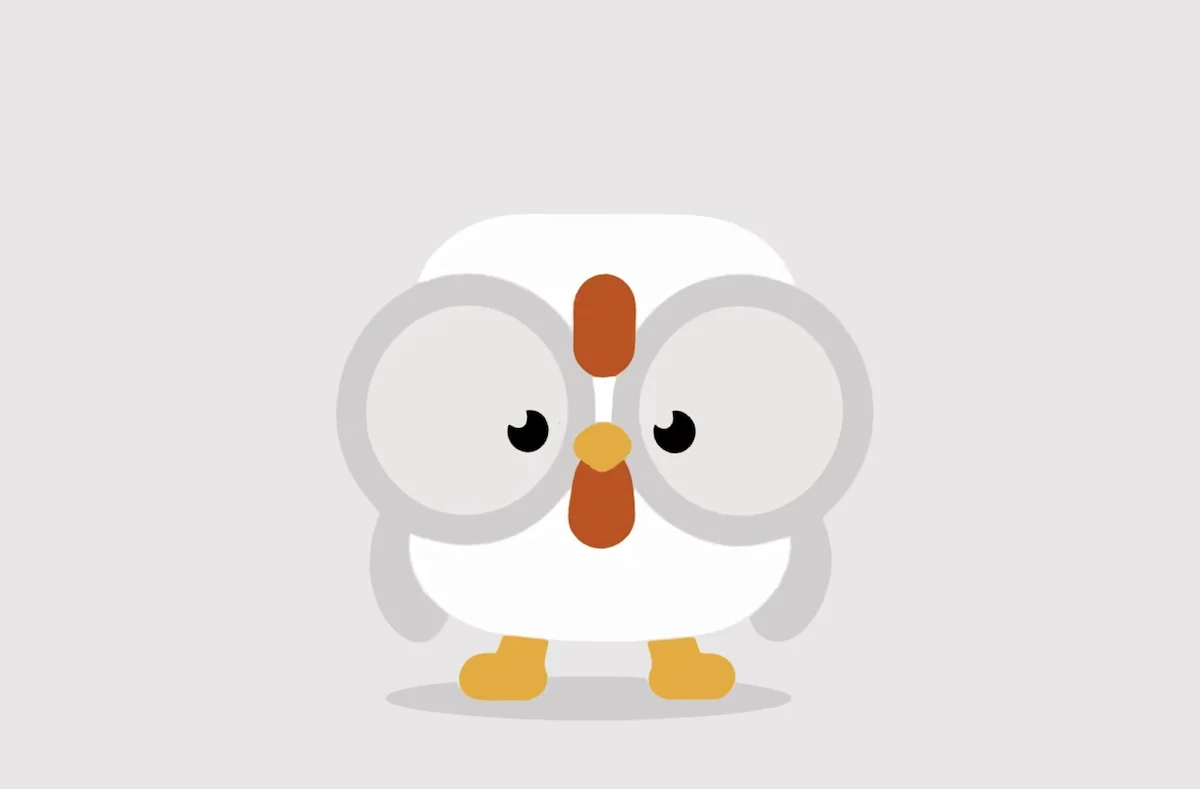
If you were jolted awake this morning by the aggressive, unmistakable cry of a rooster, you might assume you’ve been transported to a rural farmstead. But for a growing segment of tech-savvy, sleep-deprived professionals, that barnyard cacophony isn’t coming from a sunrise-sensitive bird—it’s coming from their nightstands.
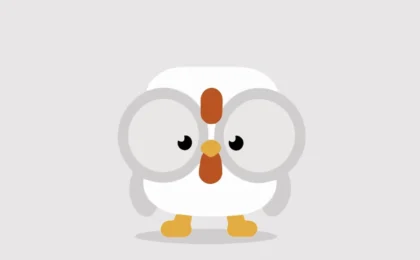
The culprit is Clucky, a newly launched iOS application designed with a singular, ruthless purpose: to ensure that habitual "snoozers" actually get out of bed. Developed by former Fanatics software engineer Adrian Angelo Abelarde, Clucky represents the latest evolution in the "anti-snooze" alarm market, a sector currently dominated by apps like Alarmy and Awake. By gamifying the act of waking up and introducing a healthy dose of friction into the morning ritual, these apps are fundamentally changing the psychology of how we start our days.
The Philosophy of Friction: Why Conventional Alarms Fail
For decades, the standard alarm clock—and its digital equivalent on the iPhone—relied on a binary interaction: the alarm sounds, and the user hits "off" or "snooze." This system is fundamentally flawed for the "heavy sleeper." According to sleep researchers, the snooze button is an enabler, allowing the brain to drift back into a fragmented, low-quality sleep cycle that often leaves the individual feeling more groggy than if they had just woken up the first time.
Clucky, and its contemporaries, operate on the principle of "forced engagement." By requiring the user to complete a series of cognitive or physical tasks, the app demands that the prefrontal cortex—the part of the brain responsible for complex decision-making—activate immediately upon waking. You cannot simply tap a button and roll over; you must solve a puzzle, perform a physical exercise, or engage with your phone in a way that makes returning to sleep impossible.
The Rooster Strategy
While Clucky offers a suite of standard, albeit polite, wake-up sounds—gentle chimes, melodic birds, and classic digital beeps—it is the "Rooster" setting that has garnered the most attention. It is a psychological masterstroke: a sound so jarring, so inherently linked to the break of dawn, that it triggers an instinctual, almost frantic response. When paired with an "Extra Loud Mode" that gradually increases volume until the task is complete, the app becomes less of a notification tool and more of an intrusive morning companion.
Chronology: The Evolution of the Anti-Snooze Market
The rise of Clucky did not happen in a vacuum. It is the result of a multi-year trend in mobile development where software designers began identifying "pain points" in daily life and applying gamification strategies to solve them.
- The Early 2010s: Alarm clocks remained largely static. The "smart" alarm movement began with apps that tracked sleep cycles, waking users up during their lightest phase of sleep. While effective, these apps still allowed for easy dismissal.
- The Mid-2020s: A shift toward "Mission-Based Alarms." Apps like Alarmy gained massive traction by requiring users to take a photo of a specific room (like the bathroom sink) or scan a barcode on a toothpaste tube to silence the alarm.
- September 2025: The launch of Awake, which emphasized high-intensity cognitive challenges for heavy sleepers, further solidified the niche.
- Late 2026: The release of Clucky marks the current peak of this trend, integrating not just task-based dismissal, but social accountability and sophisticated data tracking to turn "waking up" into a measurable performance metric.
Supporting Data and Features: Inside the Clucky Ecosystem
Clucky is not merely an alarm; it is a dashboard for your sleep recovery. The app’s feature set is designed to provide users with a sense of accomplishment, reinforcing the behavior of early rising.
The Mission Suite
To disable the alarm, users must navigate a series of "missions." These are designed to target different cognitive and physical faculties:
- Mathematical Challenges: Forcing the brain to perform arithmetic.
- Pattern Recognition: Memorizing and tapping tiles in a specific sequence.
- Physical Activation: Shaking the phone, performing push-ups, or walking.
- Spatial Precision: Tilting the phone to guide a ball into a virtual goal.
- AI Integration: Utilizing the phone’s camera to perform visual tasks, ensuring the user is physically upright and in a specific location.
Performance Analytics: The "Rooster Report"
Perhaps the most innovative aspect of the app is its focus on long-term data. The "Stats" section tracks the latency between the alarm sounding and the mission completion. It logs the total number of "successful wake-ups" and provides a weekly "Rooster Report." This report functions as a grading system, providing users with feedback on their consistency. By turning the act of waking up into a game, Clucky leverages the dopamine reward loop that keeps users coming back to fitness trackers and language-learning apps.
Social Accountability: "The Flock"
Loneliness is a silent contributor to poor sleep hygiene. Clucky’s "Nest" or "Flock" feature introduces a social element. By creating private groups, friends or family members can coordinate their wake-up times. If one member of the flock fails to wake up, the others are alerted. This creates a peer-pressure-based support system, effectively outsourcing willpower to a social contract.

Official Responses and Industry Context
Adrian Angelo Abelarde, the founder of Clucky and a veteran of the high-pressure sports betting and fan engagement world at Fanatics, has kept a low profile since the app’s launch. While he has not yet provided an official statement regarding the app’s development philosophy, his background in user-engagement-heavy software is evident in every pixel of Clucky’s interface.
The app is currently available on the Apple App Store, with a pro subscription model priced at $39.99 per year. While this puts it at a higher price point than basic alarm utilities, the subscription model signals a move toward "utility-as-a-service." Users are not just paying for a sound; they are paying for a behavior-modification tool.
Implications: The Future of Morning Productivity
What does the success of apps like Clucky say about modern society? It suggests that the "hustle culture" of the 2010s has transitioned into a "productivity-optimization" era. We no longer just want to wake up; we want to wake up efficiently.
The Psychological Cost
Critics of these apps argue that they create a high-stress start to the day. By forcing the brain into a state of problem-solving while still in a state of sleep inertia, are we increasing cortisol levels unnecessarily? Sleep hygiene experts generally recommend a gradual transition from sleep to wakefulness. However, for those suffering from chronic sleep inertia or delayed sleep phase disorder, the "friction" provided by Clucky might be the lesser of two evils compared to missing important commitments.
The Datafication of Sleep
The emergence of the "Rooster Report" and similar metrics indicates that we are moving toward a world where every minute of our day, including the ones spent asleep, is quantified. This leads to an interesting, if slightly dystopian, question: If we have to "game" our way out of bed, have we lost the natural ability to regulate our own biological clocks?
Future Market Outlook
The market for these apps is likely to expand as more developers integrate generative AI into the wake-up experience. Imagine an alarm that generates a unique daily riddle or a personalized news briefing that can only be dismissed once you have correctly summarized the top three headlines. The "Rooster" is just the beginning.
Conclusion
Clucky is a testament to the fact that, in an age of infinite digital distractions, the hardest task remains the simplest one: getting out of bed. Whether it is through the screech of a digital bird or the requirement to perform twenty push-ups, the trend is clear. We are entering an era where our devices will no longer just facilitate our lives; they will actively manage them, holding us accountable to the schedules we set for ourselves, even when we would rather hit snooze.
For now, the rooster is crowing. And for many of us, it is the only thing that works.
Disclaimer: This article contains affiliate links. When you purchase through links in our articles, we may earn a small commission. This does not affect our editorial independence.