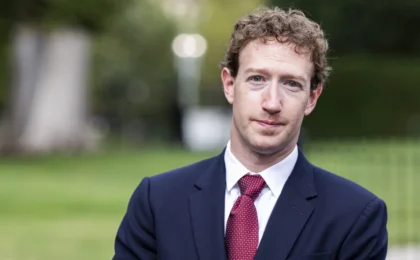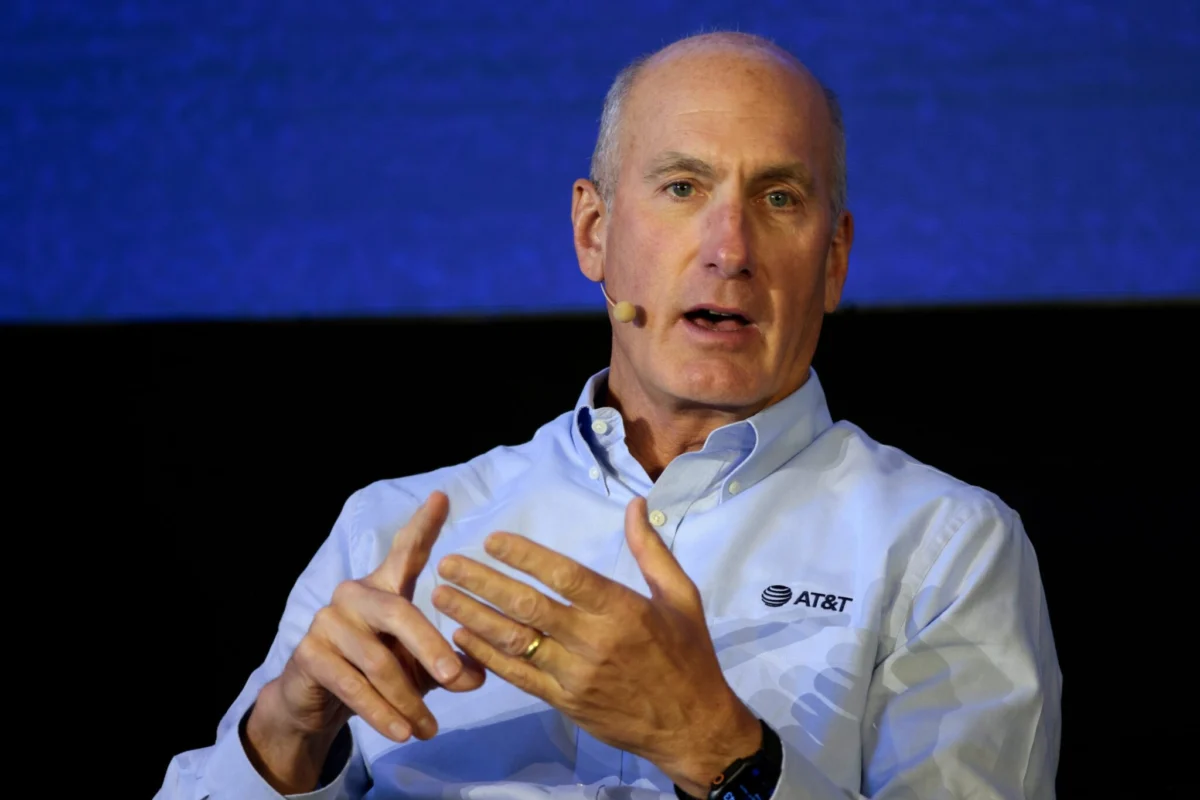
In an era of rapid technological disruption and tightening market competition, the traditional corporate meeting is undergoing a radical transformation. No longer seen as a mere venue for status updates or passive information gathering, the boardroom is being reimagined as a high-stakes arena for intellectual combat. Leading this charge are two of the most influential figures in American business: AT&T CEO John Stankey and JPMorgan Chase CEO Jamie Dimon.
Recent public dialogues between these two titans reveal a shared philosophy that challenges decades of corporate etiquette. Their message to the modern workforce is clear: show up prepared, speak with data, or stay out of the room. By declaring war on the "yes-man" culture and the "passive observer," Stankey and Dimon are setting a new standard for professional accountability that leverages everything from psychological safety to generative artificial intelligence.
Main Facts: The New Mandate for Meeting Participation
The core of the Stankey-Dimon philosophy rests on the rejection of passivity. For John Stankey, who leads a telecommunications giant currently navigating a complex pivot toward 5G and fiber-optic dominance, the presence of employees who simply "sit back and listen" is a drain on organizational resources. During a recent joint interview hosted by LinkedIn, Stankey emphasized that AT&T’s cultural documents now explicitly forbid attending meetings without having performed significant "homework."
Stankey’s requirement is not merely for participation, but for informed participation. He distinguishes between "uninformed opinions"—which he views as noise—and "points of view built on facts, information, and data." This data-driven approach is designed to eliminate the fluff of corporate politicking and move directly to problem-solving.
Jamie Dimon, the long-standing chairman and CEO of JPMorgan Chase, echoes this sentiment but adds a layer of "radical transparency." Dimon encourages a culture where employees are not only prepared but are brave enough to put the "dead cat on the table"—a colloquialism for raising the most uncomfortable, avoided, or difficult issues facing the company. Dimon’s stance is that leadership is ineffective if it is shielded from the truth by subordinates who are afraid to disagree with the person at the top.
Chronology: The Evolution of Executive Expectation
To understand where these leaders are going, one must look at where they began. The evolution of meeting etiquette for Dimon, in particular, provides a fascinating case study in the transition from an apprentice-style "listener" to a "discourse-driven" executive.
The 1980s: The Silent Assistant
In the mid-1980s, a 28-year-old Jamie Dimon, fresh out of Harvard Business School, served as an assistant to the legendary American Express president Sanford "Sandy" Weill. At the time, Dimon’s philosophy was one of strategic silence. As documented in early Fortune profiles, Dimon believed his primary goal was to "learn something and not say anything" until he was certain he could add tangible value. This "soak-it-all-in" approach was the gold standard for junior executives for decades.
The 2010s: The Rise of the Pre-Read
As Dimon ascended to the top of JPMorgan Chase, the focus shifted toward efficiency. The 2010s saw the institutionalization of the "pre-read"—the practice of sending out materials 24 to 48 hours before a meeting so that the time spent together could be used for decision-making rather than presentation. Dimon became a vocal advocate for eliminating meetings that served no purpose other than to "update" people on things they could have read in an email.
2023-Present: The AI Pivot and Discourse Dynamics
Today, both Stankey and Dimon are rethinking the "pre-read" itself. In their recent LinkedIn discussion, both CEOs admitted that traditional reading might no longer be the most efficient way to prepare. Stankey noted that he is moving toward a "dialogue dynamic" with AI, using tools to consume and synthesize information through directed conversation rather than linear reading. Dimon confirmed a similar shift, noting his use of Google’s Gemini to perform "deep dives" and previews before entering a meeting. This marks a new era where preparation is not just about time spent, but about the quality of the synthesis achieved through technological assistance.
Supporting Data: A Tale of Two Corporate Trajectories
While Stankey and Dimon share a leadership philosophy regarding internal discourse, the market performance of their respective companies over the last year highlights the different headwinds they face.
- JPMorgan Chase (JPM): Under Dimon’s "dead cat on the table" philosophy, the banking giant has seen its stock price rise by approximately 17% over the past year. JPMorgan has consistently outperformed peers by maintaining a "fortress balance sheet" and aggressively integrating AI into its operations—a move supported by Dimon’s insistence on data-backed debate.
- AT&T (T): Stankey’s tenure has been marked by a rigorous restructuring, spinning off media assets to return to the company’s core telecommunications roots. Despite Stankey’s push for a more aggressive, discourse-heavy culture, AT&T’s stock has fallen by about 12% over the same period. This suggests that while internal culture is a critical component of success, it must contend with broader sectoral challenges, such as high debt loads and the capital-intensive nature of 5G rollouts.
The contrast in stock performance suggests that "radical discourse" is a tool for navigating crisis as much as it is a tool for sustaining growth. For AT&T, Stankey’s "craving" for facts and data-driven debate is likely a response to the need for precision in a high-stakes turnaround effort.
Official Responses: Directives from the C-Suite
The public statements made by both CEOs serve as an official directive to their workforces. These are not merely suggestions; they are descriptions of the "cultural documents" that govern their organizations.
John Stankey’s Directive:
"Don’t walk in there and just be an observer," Stankey stated. This is a direct challenge to the "middle-management bloat" often found in large corporations where employees attend meetings to "stay in the loop" without contributing. Stankey’s insistence that if employees aren’t willing to speak up, they might not be "the right people in the room" serves as a warning regarding the necessity of every seat at the table.
Jamie Dimon’s Directive:
Dimon’s focus is on the psychological safety required for high-level performance. "I am never upset when someone says I’m wrong about something," Dimon said. "I just want to do the best I can for our clients, our country, our company." By framing disagreement as a service to the company’s mission, Dimon attempts to remove the fear of retribution that often creates "yes-men."
Furthermore, Dimon’s insistence on 100% attention—meaning no phones and no checking emails during meetings—is a call for presence. He views the lack of attention as a sign of disrespect and a primary cause of corporate inefficiency.
Implications: The Future of Management and the AI-Enhanced Worker
The shift in leadership style advocated by Stankey and Dimon has profound implications for the future of work, management training, and the integration of AI.
1. The End of "Update Culture"
If the Stankey-Dimon model becomes the industry standard, the "update meeting" is effectively dead. This will require a higher level of asynchronous communication skills from employees. Managers will need to be proficient in creating concise, data-rich documentation, and subordinates will need the discipline to engage with that data before the meeting begins.
2. The AI "Force Multiplier"
The admission that both CEOs are using AI to prepare for meetings suggests that "prompt engineering" and AI literacy will become essential executive skills. If an employee can use AI to poke holes in their own argument before they present it, the level of discourse in the actual meeting will naturally rise. However, this also raises the bar: if the CEO is using AI to find the flaws in your data, you had better have used AI to find them first.
3. Hiring for "Intellectual Bravery"
The demand for people who will put the "dead cat on the table" implies a shift in recruitment. Companies may begin to value "intellectual bravery" and "critical thinking" over "cultural fit" in the traditional sense. The "right person in the room" is no longer the one who agrees with the boss, but the one who can provide a fact-based alternative.
4. The Risk of Performative Preparation
There is a potential downside to this high-pressure environment. If employees feel they must have a point of view to justify their presence, there is a risk of "performative preparation"—where employees speak just to be heard, regardless of whether they are adding value. Balancing the "mandate to speak" with Dimon’s early-career "mantra of value" will be the primary challenge for junior staff.
5. Impact on Remote and Hybrid Work
This philosophy heavily favors in-person or high-quality video interaction. It is difficult to manage a "dead cat on the table" or a heated, data-driven discourse over a sluggish internet connection or a text-based chat. Stankey’s push for in-office mandates (which has been controversial at AT&T) aligns with his desire for high-bandwidth, face-to-face discourse.
In conclusion, John Stankey and Jamie Dimon are signaling a departure from the "polite" corporate culture of the past. By demanding that every employee acts as a data-driven contributor rather than a passive observer, they are attempting to build organizations that are more agile, more honest, and better equipped to handle the complexities of the 21st-century economy. Whether this cultural shift can bridge the gap between AT&T’s stock performance and JPMorgan’s remains to be seen, but the message to the workforce is undeniable: do your homework, or don’t show up.