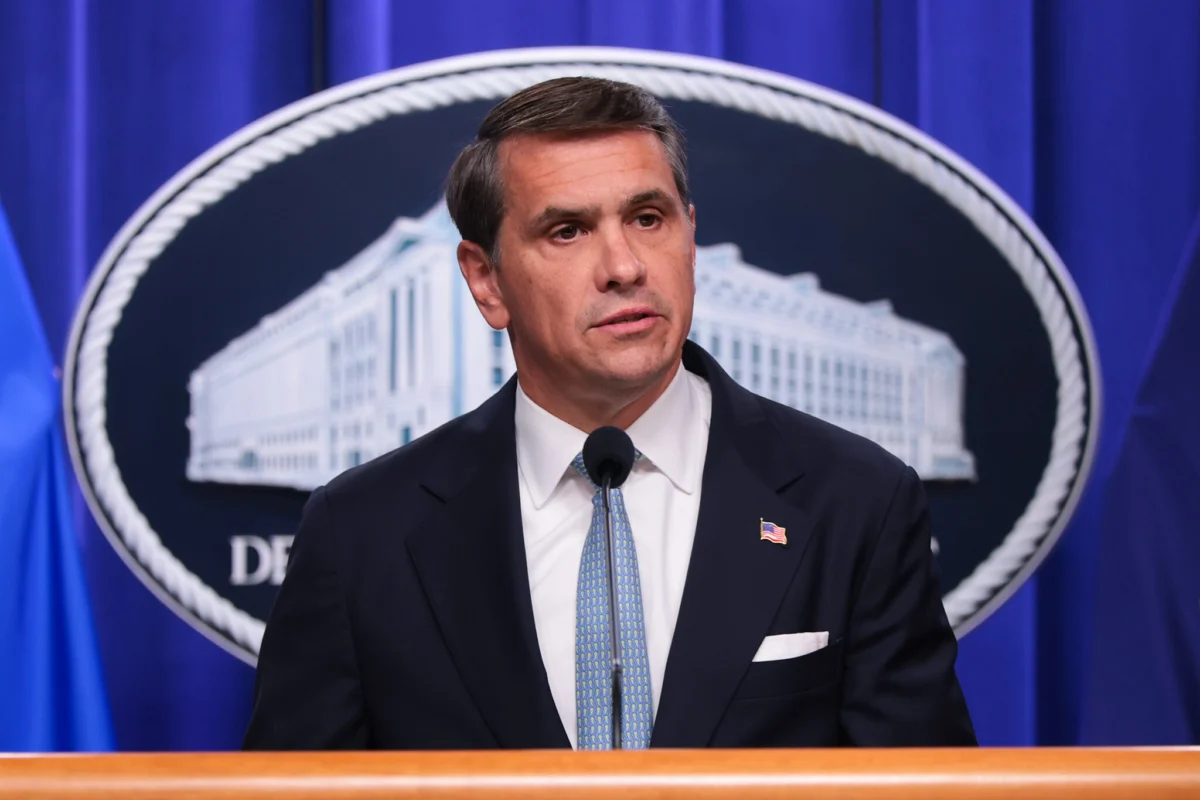
In a striking display of the shifting dynamics within the United States Department of Justice, Attorney General Todd Blanche has publicly defended Washington, D.C., U.S. Attorney Jeanine Pirro following a high-profile disagreement with President Donald Trump. The controversy centers on Pirro’s decision to dismiss a federal vandalism case involving the Lincoln Memorial Reflecting Pool—a move that sparked a public rebuke from the President and raised urgent questions about the independence of federal prosecutors.
Appearing on NBC’s Meet the Press, Blanche, who was sworn in just last week as the nation’s top law enforcement officer, sought to balance his loyalty to the President with a defense of his subordinate’s prosecutorial discretion. While acknowledging the President’s "extraordinary frustration" over the dropped charges, Blanche insisted that Pirro should be judged on the totality of her record rather than a single, contentious decision.
Main Facts: The Dismissal of the Reflecting Pool Case
The crux of the tension lies in the dismissal of charges against a former Olympic athlete who had been accused of vandalizing the lining of the Lincoln Memorial Reflecting Pool. The incident, which occurred earlier this year, was initially framed by the White House and some media outlets as a blatant act of political or social sabotage against a national monument.
However, the U.S. Attorney’s Office for the District of Columbia, led by Jeanine Pirro, filed a court motion to dismiss the case after an internal investigation suggested the damage was not the result of criminal intent. According to court filings, forensic analysis and expert testimony indicated that "botched" construction work and structural failures were primarily responsible for the degradation of the pool’s lining, rather than intentional vandalism.
President Trump, who has made the protection of national monuments a cornerstone of his administration’s rhetoric, reacted with vitriol. He has repeatedly asserted that vandals were to blame, though he has yet to provide evidence to counter the technical findings presented by Pirro’s office. The clash has placed Blanche in the difficult position of mediating between a President who expects absolute loyalty and a Justice Department (DOJ) that has traditionally operated with a degree of autonomy from the executive branch.
Chronology: From Arrest to Public Fallout
The timeline of the controversy reveals a rapid escalation of political pressure on the D.C. prosecutor’s office:
- The Incident: In early 2026, damage was reported to the specialized coating of the Lincoln Memorial Reflecting Pool. Initial reports suggested a former Olympian was seen in the vicinity, leading to an arrest and federal vandalism charges.
- The Prosecution’s Shift: Over several months, the U.S. Attorney’s Office conducted a discovery process. In July 2026, Pirro’s office filed a motion to dismiss, citing evidence that the pool’s lining was already failing due to substandard contractor work during a recent renovation.
- The Presidential Rebuttal: Following the dismissal, President Trump took to social media and public rallies to decry the decision, calling it a "disgrace" and suggesting that Pirro—a longtime political ally—was failing in her duties.
- The Bloomberg Report: On August 5, 2026, reports surfaced that the President was "undecided" on whether to keep Pirro in her position, effectively placing her on a professional probation.
- Blanche’s Intervention: On Sunday, Todd Blanche used his first major televised interview as Attorney General to address the rift, supporting Pirro’s integrity while refusing to rule out future White House influence on DOJ matters.
Supporting Data: Vandalism Trends and Prosecutorial Record
To bolster his defense of Pirro, Blanche pointed to her office’s broader record on protecting federal property. While the Reflecting Pool case was dropped, Pirro has maintained a "zero-tolerance" approach to other incidents of property damage in the capital.
The World War II Memorial Case
Just last week, Pirro’s office moved forward with a high-profile prosecution of a Kentucky woman charged with vandalizing the World War II Memorial. In that instance, the evidence was unambiguous: the defendant was caught on camera spraying graffiti across the monument’s pillars. Pirro’s office charged her with destruction of government property, a felony that carries significant prison time.
Technical Analysis of the Reflecting Pool
Data provided in the DOJ’s motion to dismiss the Reflecting Pool case highlighted that the cost of repairs for the "botched" construction exceeded $1.2 million. The defense argued, and Pirro’s office eventually agreed, that the former Olympian’s actions did not cause the structural failure, which was a result of chemical imbalances in the water and improper application of the pool’s sealant during a 2024 refurbishment.
Blanche argued on Meet the Press that it is statistically and legally unfair to judge a prosecutor on one case where the evidence was insufficient to meet the "beyond a reasonable doubt" standard required for a conviction. "I think judging her on a single case because of the evidence that we had is not fair," Blanche told moderator Kristen Welker.
Official Responses: A New Doctrine for the DOJ
The most significant aspect of Blanche’s interview was not his defense of Pirro, but his articulation of the relationship between the White House and the Department of Justice. For decades, particularly following the Watergate scandal, the DOJ has operated under a norm of independence, specifically regarding individual criminal investigations and prosecutions.
Todd Blanche’s Stance
When asked if he could pledge that the Justice Department would always act independently of the White House, Blanche’s response was a departure from his predecessors.
"No, I can’t pledge that," Blanche stated. He argued that as a member of the President’s cabinet, he cannot obligate himself to oppose the policy goals set by the Commander-in-Chief. "Will I take the President of the United States’ view on something into consideration? Yes, of course."
However, Blanche sought to qualify this by promising "integrity" rather than "independence." He claimed that while the President’s views would be heard, the final execution of the law would be handled "without fear or favor." He further noted that Trump "does not expect any of his leaders, including me, to just say ‘Yes’ to him no matter what he says."
The White House Perspective
While the White House has not issued a formal statement following Blanche’s interview, the President’s previous comments suggest a desire for a more interventionist DOJ. Trump’s frustration with Pirro stems from a belief that the "botched construction" narrative is a "deep state" excuse to avoid punishing a high-profile individual. By keeping Pirro’s employment status in limbo, the President has signaled that loyalty to his interpretation of events is a prerequisite for continued service.
Implications: The Future of Federal Law Enforcement
The defense of Jeanine Pirro by Todd Blanche carries profound implications for the American legal system and the future of the D.C. U.S. Attorney’s office.
1. The Erosion of the "Watergate Wall"
Blanche’s refusal to pledge independence marks a formal shift in DOJ policy. If the Attorney General openly admits to considering the President’s personal opinions on specific criminal cases—such as the Reflecting Pool vandalism—it could lead to a system where prosecutions are influenced by political winds rather than forensic evidence. This raises concerns among legal scholars about the potential for "selective prosecution" or "political immunity."
2. The Vulnerability of U.S. Attorneys
Jeanine Pirro’s position remains precarious. Despite Blanche’s support, the President’s public indecision regarding her tenure suggests that even loyalists are not safe if they prioritize evidentiary facts over political narratives. This creates a "chilling effect" for other U.S. Attorneys who may fear that dismissing a weak case could cost them their jobs if that case happens to be a personal priority for the President.
3. The Role of Todd Blanche as a "Buffer"
Blanche, a former personal attorney for Trump, was seen by many as a "loyalist" appointment. However, his defense of Pirro suggests he may attempt to act as a buffer between the President’s impulses and the department’s professional staff. By validating Trump’s "frustration" while upholding Pirro’s "integrity," Blanche is attempting a delicate balancing act that may become increasingly difficult to maintain as more sensitive cases reach his desk.
4. Public Trust in National Institutions
The spectacle of the nation’s top prosecutor and the President arguing over the technical details of a pool lining may seem trivial, but it represents a larger battle over the truth. When the President dismisses forensic evidence of "botched construction" as a fabrication, and the Attorney General refuses to fully distance the DOJ from such rhetoric, public trust in the objective reality of law enforcement is at stake.
Conclusion
The defense of Jeanine Pirro by Todd Blanche is a pivotal moment in the current administration. It highlights a Justice Department in transition—one that is attempting to redefine the meaning of integrity in an era where the traditional boundaries of independence are being dismantled. As the D.C. U.S. Attorney’s office continues to navigate the politically charged atmosphere of the nation’s capital, the fate of the Reflecting Pool case will be remembered not for the damage to the monument, but for the damage to the longstanding norms of American justice.
Whether Pirro remains in her post or becomes another casualty of the friction between the White House and the DOJ will likely depend on how well Blanche can navigate the President’s expectations without completely compromising the evidentiary standards of his department. For now, the "phenomenal job" Blanche claims Pirro is doing remains under the shadow of presidential disapproval.