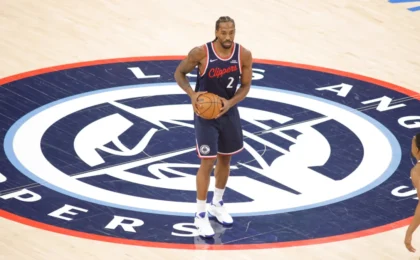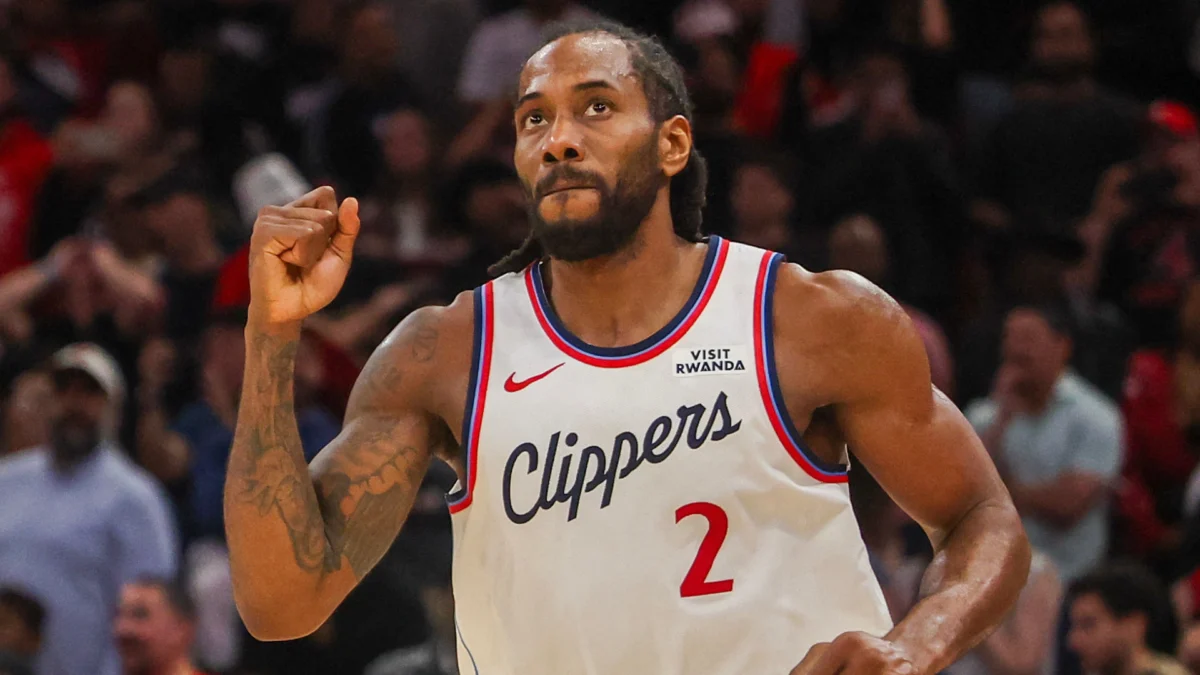
The NBA landscape has been rocked by a decision that reverberates far beyond the borders of Los Angeles. Following an exhaustive, months-long investigation spearheaded by the prestigious law firm Wachtell, Lipton, Rosen & Katz, the league office has officially levied severe penalties against the Los Angeles Clippers for salary cap circumvention involving superstar forward Kawhi Leonard.
The ruling marks one of the most significant disciplinary actions in the modern era of professional basketball. With the forfeiture of multiple first-round draft picks and substantial financial penalties, the league has sent an unequivocal message: the integrity of the Collective Bargaining Agreement (CBA) is non-negotiable. However, as the dust settles, the Clippers’ defiant response has transformed this disciplinary matter into a potential legal quagmire that could define the relationship between NBA ownership and the league office for years to come.
The Chronology of an Investigation
The seeds of this conflict were sown in the complex web of player movement and contractual negotiations. For the league, the focus was not merely on the acquisition of Leonard, but on the mechanisms used to facilitate the move. The NBA’s investigation sought to determine whether the Clippers engaged in prohibited financial arrangements designed to bypass the strictures of the salary cap—a cornerstone of the league’s parity-driven economic model.
For over a year, investigators scrutinized internal communications, financial ledgers, and testimonies from team personnel. The probe gained intensity as rumors of "shadow agreements" and third-party compensation packages began to surface. By the time the league announced its findings this Wednesday, the investigation had moved from a whisper to a bombshell, resulting in the stripping of five first-round draft picks and a series of fines that strike at the very heart of the franchise’s future asset management.
The Official Stance: A Collision of Narratives
The league’s announcement was met with immediate, blistering resistance from the Clippers organization. In a formal statement released shortly after the NBA’s decree, the team did not merely disagree with the findings—they questioned the legitimacy of the process itself.
"We vehemently reject the NBA’s findings, which are the result of a heavily biased investigation seeking to justify a predetermined narrative rather than facts and evidence," the statement read. The franchise accused the league of shifting goalposts, claiming that private conversations with the commissioner’s office stood in direct contradiction to the public penalties announced.
By framing the investigation as a lack of adherence to the standards of fairness promised by Commissioner Adam Silver, the Clippers have effectively declared war on the league’s internal judicial process. They have signaled a readiness to pursue "every avenue available," setting the stage for a protracted, high-stakes arbitration or potential civil litigation.
The Appeals Process: An Uphill Battle
One of the most critical questions facing the Clippers is the viability of a formal appeal. According to reports from ESPN and other league insiders, the NBA’s findings are considered final. Unlike some professional sports leagues that offer an internal appellate body, the NBA’s structure leaves little room for a team to challenge the Commissioner’s office through traditional sporting channels.
Furthermore, the Clippers find themselves in a precarious position because the National Basketball Players Association (NBPA) has signaled its agreement with the league’s findings. By aligning with the NBA, the players’ union has effectively left the Clippers on an island.
Historically, challenging the NBA in court is a strategy fraught with risk. While teams have sued one another—such as the 2023 New York Knicks vs. Toronto Raptors dispute—judges have frequently deferred to the Commissioner’s authority, citing the broad powers granted under the CBA. The specter of Donald Sterling’s legal battle serves as a cautionary tale; while he fought the league, the complexity of NBA bylaws often forces owners into settlements that result in the sale of assets or substantial concessions. The Clippers, led by Steve Ballmer, seem prepared to test these legal waters, but they face a daunting lack of precedent.
The Future of Kawhi Leonard and the Toronto Trade
Amidst the administrative chaos, a pressing question remains: What happens to Kawhi Leonard? The superstar, who was the centerpiece of the move to Toronto, found himself in a state of limbo when the Raptors hesitated to finalize the trade, fearing the fallout of potential contractual voiding.
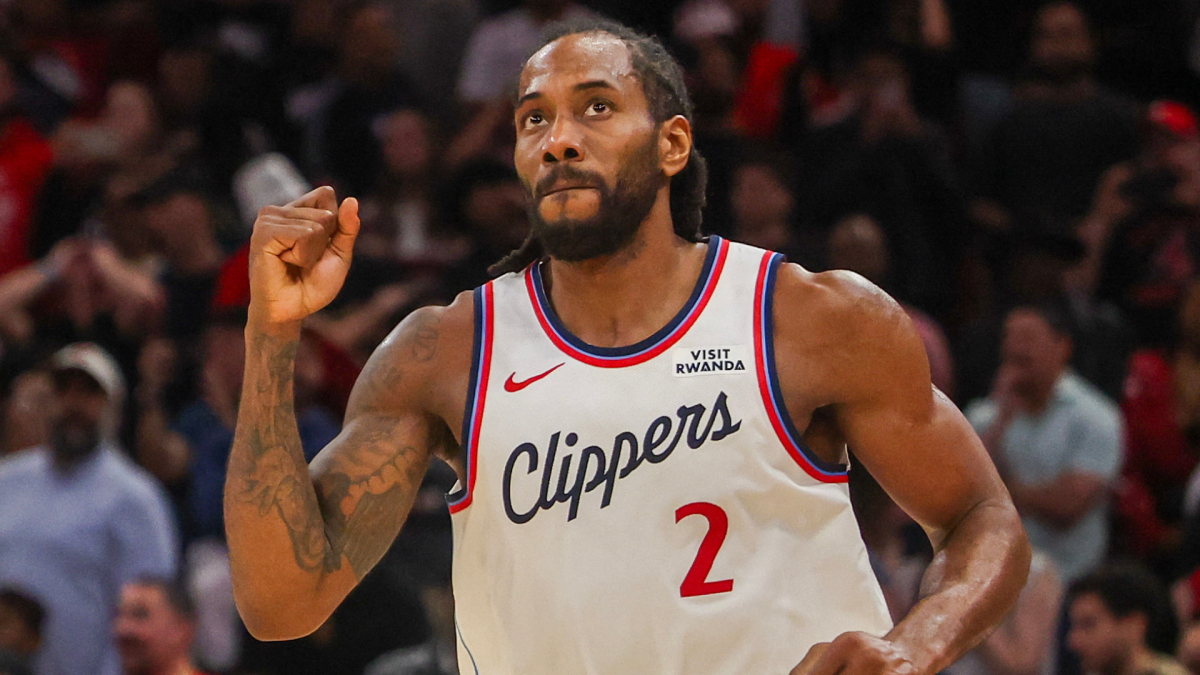
However, the league’s decision to stop short of voiding Leonard’s contract provides a clear path forward. Leonard, speaking through his representative, Harrison Gaines, has emphasized a desire to move forward. "As I return to Toronto, I am focused on what I can control, closing this chapter, and moving forward with a clean slate," Leonard noted.
Because the NBA chose to impose fines and pick forfeitures rather than nullifying the contract, Leonard’s eligibility to play for the Raptors remains intact. The trade is expected to proceed as planned, allowing both the player and his new organization to pivot toward the upcoming season, albeit under a cloud of controversy that will likely persist for some time.
Asset Management and the "Encumbered" Penalty
The structure of the penalty is as calculated as it is punitive. By stripping the Clippers of their own 2030, 2031, 2032, and 2033 first-round picks, the league has effectively hamstrung the team’s ability to rebuild or pivot through the draft for the next decade.
The inclusion of an additional 2029 first-round pick—acquired from the Indiana Pacers—reveals a sophisticated understanding of the team’s asset portfolio. Reports suggest the league bypassed other potential picks because they were "encumbered" by prior deals (such as the trade for James Harden). By opting for an unencumbered asset, the league ensured the penalty would carry maximum weight. This sets a dangerous precedent for the rest of the league: if a team circumvents the rules, the NBA will reach into their cabinet of assets, regardless of the complexity of the trade history, to find the most valuable currency possible.
Implications for the Milwaukee Bucks and Beyond
The Clippers case has cast a long shadow over other ongoing league investigations. Specifically, the Milwaukee Bucks are currently under the microscope regarding their acquisition of Gary Trent Jr.
While the nature of the alleged circumvention in Milwaukee differs—centering on the timing of free-agent agreements rather than direct financial funneling—the Clippers ruling provides a blueprint for the NBA’s potential response. The league has demonstrated that it is willing to pursue aggressive penalties when the evidence points to a subversion of the salary cap.
If the NBA determines that the Bucks made an illegal, "handshake" agreement to underpay Trent in exchange for future compensation, the league may look to the Joe Smith precedent from 2000. In that instance, the Timberwolves had their contracts voided and were stripped of picks. The Clippers outcome serves as a stark warning: the era of "gentleman’s agreements" in the NBA is over, and the league is willing to utilize the full weight of the CBA to enforce its economic boundaries.
Could the Clippers Recover?
History offers a sliver of hope, though it is thin. In the aforementioned Joe Smith case, the Minnesota Timberwolves were eventually granted the return of two of their forfeited draft picks years later, largely due to the team’s cooperation and the ownership’s acceptance of responsibility.
The Clippers, however, are taking the opposite approach. By publicly attacking the integrity of the investigation and the Commissioner’s office, they have moved away from the path of reconciliation. Should they persist in a confrontational legal strategy, the possibility of reclaiming those picks becomes increasingly remote. The league office values compliance and deference; by choosing to fight the "hammer," the Clippers may find that the league is more than willing to keep it down.
As the situation evolves, the NBA has firmly established its authority. Whether this case leads to a fundamental shift in how teams negotiate or results in a landmark legal precedent remains to be seen. One thing is certain: the Clippers are in for a long, arduous struggle to restore their reputation and their future draft capital in the eyes of the league.