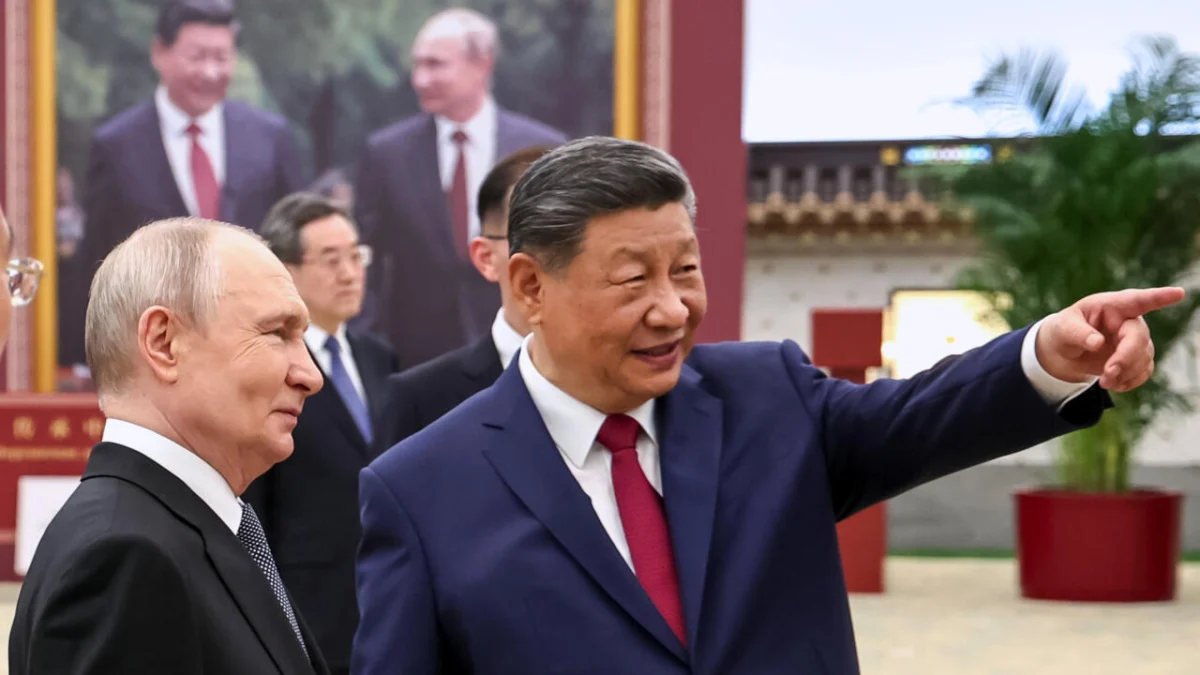
BISHKEK – As the leaders of the Shanghai Cooperation Organization (SCO) gather in the Kyrgyz capital this week, the atmosphere is defined by more than just the routine of diplomatic protocol. For two days, Bishkek has become the focal point of a burgeoning geopolitical realignment, as Russia, China, and a host of regional powers converge to mark the 25th anniversary of a bloc that is increasingly positioning itself as the primary alternative to Western-led international institutions.
With the participation of Vladimir Putin, Xi Jinping, Masoud Pezeshkian, and Narendra Modi, the summit serves as a stark visual manifestation of a "multipolar" vision—a concept that has evolved from a diplomatic buzzword into a concrete strategic objective for the member states.
The Gathering: A Coalition of the Challenged
The SCO, which now encompasses ten full member states, represents roughly 40 percent of the world’s population and nearly a quarter of global GDP. The list of attendees is a "who’s who" of nations currently navigating intense friction with the United States and its allies.
For Russian President Vladimir Putin, the summit is a critical opportunity to demonstrate that despite four-and-a-half years of war in Ukraine and sweeping international sanctions, Moscow remains a central pillar of global diplomacy. For Chinese President Xi Jinping, the event is a platform to cement Beijing’s leadership role in the Global South, shielding its economy from mounting US tariffs and strategic competition.
The inclusion of Iran—represented by President Masoud Pezeshkian—adds a layer of immediate urgency. Tehran is currently engaged in a tense standoff with Washington, and its participation in the SCO is viewed by experts as a vital lifeline to bypass Western financial isolation.
Chronology: From Regional Security to Global Counter-Weight
To understand the significance of the Bishkek summit, one must look at the evolution of the SCO over the last quarter-century:
- 2000–2001: The Security Origins. Originally formed to address border disputes and regional security concerns in Central Asia, the SCO was a pragmatic effort to ensure stability in the post-Soviet space.
- 2017: The Great Expansion. The inclusion of India and Pakistan transformed the bloc from a regional Central Asian entity into a transcontinental heavyweight.
- 2023: The Iranian Integration. By bringing Tehran into the fold, the SCO signaled a pivot toward including states explicitly opposed to the Western-led "rules-based order."
- 2025–2026: The "America-Proofing" Era. Recent summits have focused on the creation of independent financial mechanisms, regional trade corridors, and diplomatic solidarity in the face of secondary US sanctions.
Supporting Data: The Economic and Military Landscape
The SCO is not merely a political talking shop; it is increasingly a vehicle for economic survival. The trade wars currently roiling the global economy—marked by US tariffs on Chinese and Indian exports—have pushed member states to seek intra-bloc trade solutions.
The Sanctions Factor
Russia and Iran, two of the most sanctioned nations in human history, have significantly deepened their military-industrial cooperation. The "no-limits" partnership between Moscow and Beijing continues to provide a vital buffer for the Russian economy, allowing it to sustain its war effort in Ukraine.
Data from recent trade reports suggest that despite Washington’s efforts to cripple Iranian trade in gold, technology, and aviation, the SCO framework provides a degree of "sanctions-shielding." By utilizing non-Western payment systems and local currency settlements, members are attempting to insulate their trade from the reach of the US dollar.
Regional Influence
Central Asia remains the theater for a quiet, yet persistent, rivalry. While Russia maintains historical security ties, China has become the dominant economic investor. The competition for influence over the region’s resource-rich corridors—crucial for the movement of goods between Europe and Asia—is a constant undercurrent that the SCO attempts to manage through its plenary sessions and bilateral sidelines.
Official Responses and Strategic Signaling
The rhetoric emanating from the Bishkek summit is notably sharper than in previous years. While the SCO’s founding charter insists that the organization is "not an alliance directed against other states," the actions and statements of its leaders suggest otherwise.
The Kremlin’s Stance
Kremlin spokesman Yuri Ushakov confirmed that President Putin will engage in high-stakes bilateral talks with both Xi and Pezeshkian. These meetings occur in the shadow of a rare and mysterious visit by CIA Director John Ratcliffe to Moscow. While details remain classified, the prevailing speculation is that the US is exerting extreme pressure regarding Russia’s military support for Iran and the ongoing conflict in Ukraine.
The View from Tehran
President Pezeshkian has been candid about his country’s economic struggles. "Tehran believes its membership and active participation in these alliances can enable it to circumvent US and European sanctions," says international relations expert Mohammad Hassan Najmi. However, he cautions that the bloc is not a panacea. "In times of crisis, these alliances have rarely allowed Iran to resolve its deeper structural difficulties."
Beijing’s "Defensive" Posture
China’s response to the recent expansion of US sanctions on its trade partners has been firm. Beijing has declared it will "firmly defend" its interests, particularly concerning the importation of Iranian oil. For Xi, the SCO serves as a strategic defensive perimeter, a way to build a world that is, in the words of regional analysts, "America-proof."
Implications: A Fragmented Global Future
The Bishkek summit highlights several profound implications for the future of international relations:
1. The Erosion of Western Hegemony
The SCO’s growth is a tangible sign that the "Western consensus" no longer holds absolute sway. When 15 dialogue partners—including powerhouses like Turkey, Saudi Arabia, and Qatar—align themselves with the SCO, it demonstrates that a growing number of nations are opting for a "hedging" strategy, maintaining ties with the West while simultaneously embedding themselves in alternative, non-Western blocs.
2. The Internal Friction Problem
Despite the outward display of unity, the SCO is not a monolith. The inherent rivalry between China and India, as well as the long-standing tensions between India and Pakistan, prevent the organization from acting as a cohesive military alliance like NATO. The SCO functions more as a "concert of interests" rather than a unified political entity.
3. The Risk of Escalation
The proximity of the summit to the ongoing wars in Ukraine and the Middle East creates a high-stakes environment. By holding the summit while these conflicts rage, the SCO members are effectively broadcasting that they refuse to isolate Russia or Iran, effectively daring the West to escalate its sanctions regime.
Conclusion: A Turning Point
As the leaders depart Bishkek, the international community is left to contemplate a shifting landscape. The Shanghai Cooperation Organization has evolved from a regional security grouping into the primary institutional framework for the "Global South" to express its dissatisfaction with the current status quo.
Whether this group can move beyond anti-Western rhetoric to deliver genuine, tangible economic and security benefits to its members remains the primary question of the decade. For now, the takeaway from Bishkek is clear: the era of a singular, Western-centric global order is being aggressively challenged, and the architects of this challenge are meeting in Central Asia to draw the blueprints for what comes next.