By Carter Bahns | CBS Sports
August 28, 2026
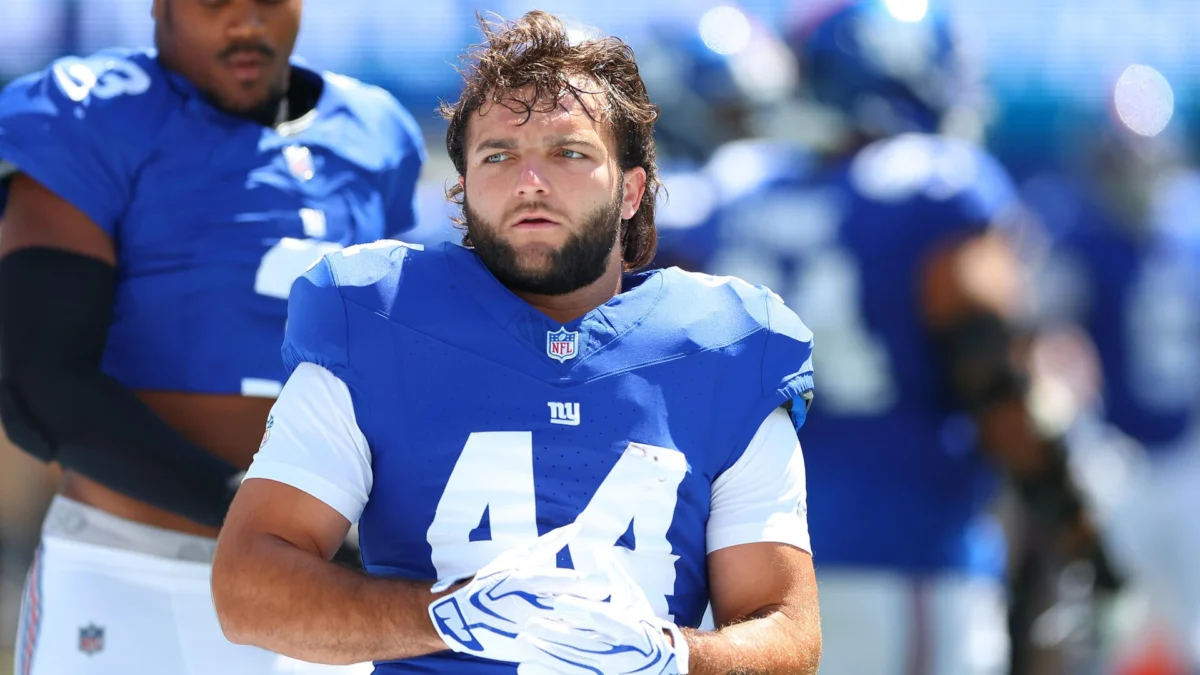
The New York Giants’ training camp is intended to be a crucible—a place where the team’s identity is forged through repetition, structure, and collective discipline. However, for rising star running back Cam Skattebo, the transition from being a fan-favorite spark plug to a teammate’s headache has become the primary narrative of late August. As the Giants look to build on a promising foundation, the juxtaposition between Skattebo’s undeniable talent and his abrasive practice habits has placed him at the center of a burgeoning internal conflict.
The Duality of a High-Impact Back
Cam Skattebo arrived in the NFL with a reputation for playing the position as if it were a full-contact combat sport. As a rookie, his hard-nosed, punishing style—often involving a signature willingness to initiate contact rather than avoid it—made him an immediate standout. Despite a season-ending ankle injury that limited him to just eight games, his 617 scrimmage yards and two touchdowns provided a tantalizing glimpse of a player who thrives in the chaos of the trenches.
Yet, that same intensity that makes him a nightmare for opposing defensive coordinators has begun to grate on his own colleagues. Skattebo is as flamboyant as he is physical; his penchant for backflip celebrations, while viral-ready for social media, has become a point of contention within the facility. While his electricity is a welcome sight on a Sunday afternoon at MetLife Stadium, the reality of training camp requires a level of restraint that Skattebo is struggling to embrace.
A Chronology of Conflict: When Intensity Oversteps
The tension reached a boiling point this week, manifesting in a series of incidents that disrupted the rhythm of the Giants’ practice sessions. The flashpoint occurred on Wednesday, when a routine drill devolved into a heated exchange.
During a non-contact period, Skattebo hauled in a reception and, rather than pulling up, executed a slide that maneuvered dangerously close to the legs of several defensive backs. The move—often used to protect a ballcarrier in a game setting—was perceived as unnecessary and reckless given the "no-hit" parameters of the practice.
Safety Jevon Holland and cornerback Gregory Newsome immediately took exception to the maneuver, confronting Skattebo over what they viewed as a disregard for the safety of his teammates. The altercation escalated quickly, drawing in other players and forcing coaching staff intervention. This was not an isolated event; just days prior, Skattebo had been involved in a similar incident where he lowered his shoulder and ran through linebacker Zaire Barnes during another period where defensive players were explicitly prohibited from making hits.
Defensive Frustration vs. Offensive Allegiance
The internal debate regarding Skattebo’s conduct has created a visible divide in the locker room. Defensive players, tasked with navigating the thin line between competitive edge and injury prevention, are reportedly fed up with the lack of "practice etiquette." They argue that Skattebo’s failure to differentiate between game-day intensity and the collaborative environment of camp puts their health at unnecessary risk.
However, the offensive unit remains protective of their explosive weapon. Veteran offensive lineman Jermaine Eluemunor has been the most vocal defender of Skattebo, pushing back against the narrative that the running back is a cancer to team chemistry. Eluemunor and others maintain that Skattebo’s energy is what fuels the offense and that his play style is a product of his competitive DNA, not malice.
The Harbaugh Doctrine: Boundaries and Penalties
Head coach Jim Harbaugh, known for his rigorous standards and emphasis on culture, has been forced to step in to mediate. Earlier this offseason, Harbaugh had already advised Skattebo to curb his acrobatic backflip celebrations, citing the unnecessary risk of reinjuring the ankle that sidelined him during his rookie year.
Following the Wednesday altercation, Harbaugh’s tone shifted from guidance to public admonishment. Addressing the media, the head coach did not mince words, though he acknowledged the talent Skattebo brings to the roster.
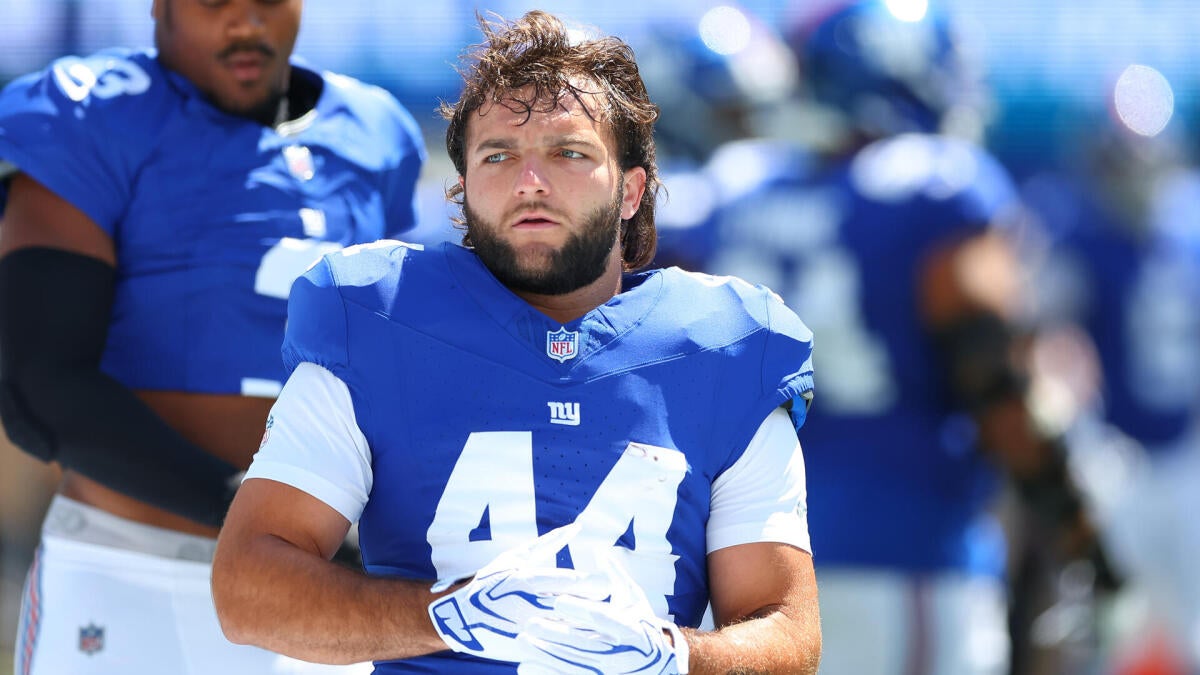
"Skatt’s great," Harbaugh said during his press conference. "He does bring a lot of energy. But he did get a 15-yard penalty at the end of practice. Did you notice that? That’s not infectious. Well, it is infectious, actually. Infectious in a bad way. Like an infectious disease type of thing. You don’t want that. You want it to be directed in a positive way."
Harbaugh’s message is clear: The Giants are building a disciplined organization, and while flair is permitted, it cannot come at the expense of team cohesion or the health of the roster. The 15-yard penalty mentioned by Harbaugh serves as a warning shot; in the NFL, such lack of control results in lost yardage and missed opportunities, a luxury the Giants cannot afford in a competitive division.
The Looming Shadow of Najee Harris
The internal drama coincides with an increasingly crowded backfield. While Skattebo remains atop the depth chart, the arrival of free-agent addition Najee Harris has introduced a new dynamic. Harris has earned consistent praise throughout camp for his approach, which aligns seamlessly with the offensive system implemented by offensive coordinator Greg Roman.
Harris provides a contrast to Skattebo—he is a downhill, bruising runner who possesses the experience to execute the "G-Ro" scheme without the extracurricular theatrics that have characterized Skattebo’s summer.
Assistant General Manager Brandon Brown underscored the importance of this addition during a recent media briefing. "Najee offers something different," Brown noted. "When you have a back that played at 235 before his injury that doesn’t need things blocked up cleanly for him to push the pile, and then he has a familiarity with G-Ro from L.A., those are things that you can’t just gloss over. When you have an opportunity to add talent, we’re never going to shy away from that."
This praise, coupled with the frustration surrounding Skattebo’s conduct, suggests that the starting job is no longer a foregone conclusion. If Skattebo continues to prioritize his individual brand over the team’s operational standards, he may find himself ceding significant snaps to Harris, who has proven to be both highly effective and highly professional.
Implications: Talent vs. Tenability
The situation presents a classic NFL dilemma: How much "diva" behavior is a team willing to tolerate from a high-impact playmaker?
For the Giants, the next few weeks are critical. They have a roster capable of competing, but the thin margins of the NFL often boil down to locker room cohesion. Harbaugh’s coaching style is predicated on "team-first" accountability. If Skattebo does not recalibrate his intensity to match the professional standards expected in a practice environment, he risks alienating the very defensive unit that is supposed to be his teammate.
Ultimately, the Giants are looking for a reliable, explosive, and disciplined backfield. Skattebo has the potential to be a star, but he must prove that his energy is a weapon to be used against the opposition, not a liability to his own teammates. With Harris waiting in the wings and a head coach who values order above all else, Skattebo’s window to adjust his behavior may be smaller than he realizes.
The path forward for the Giants is clear: they need the version of Skattebo that headbutts defenders and finds the endzone, but they need him to leave the backflips and the "infectious" hostility on the other side of the white lines. Whether he can make that adjustment will determine if he remains the face of the Giants’ backfield or becomes an cautionary tale of squandered potential.