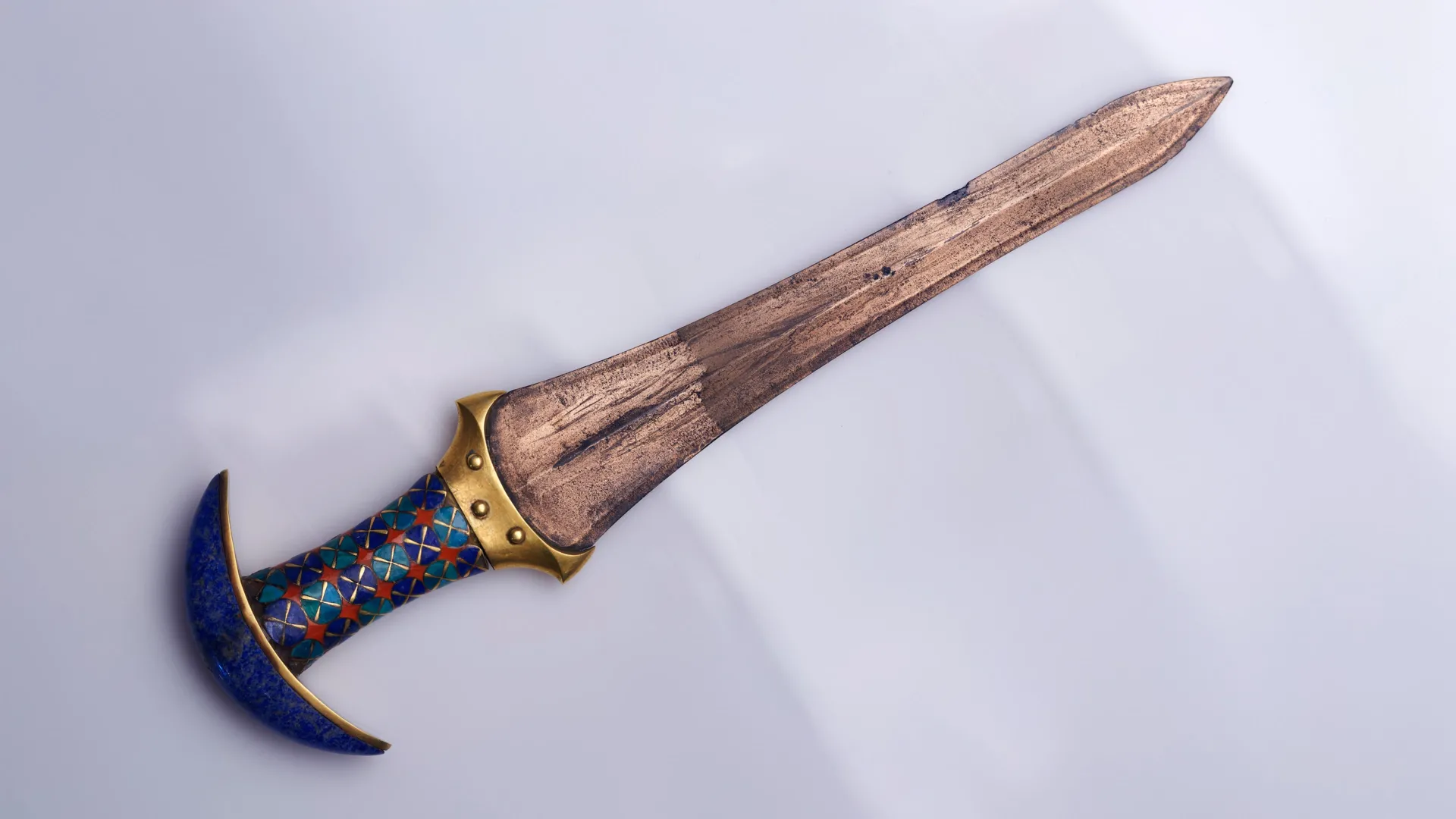
For over a century, the burial chambers of Dahshur have yielded some of the most exquisite treasures of Egypt’s Middle Kingdom. Among the golden pectorals, intricate jewelry, and funerary offerings, archaeologists have consistently unearthed weapons: bronze daggers, ornate maces, and carefully crafted bows and arrows. For generations, these items were relegated to the realm of the symbolic—thought to be ceremonial badges of rank or votive gifts intended to protect the deceased in the afterlife.
However, a groundbreaking study published in Frontiers in Environmental Archaeology has upended this long-standing assumption. By analyzing the skeletal remains of six royal individuals from the Middle Kingdom—including four daughters of the Pharaoh Amenemhat II—researchers have found that these princesses were not merely passive holders of aristocratic title. Their bones bear the unmistakable biological signatures of high-intensity, repetitive physical training, suggesting that the weapons found in their tombs were tools of an active, martial, and physically demanding lifestyle.
The Rediscovery: Unearthing the Past at Dahshur
The focus of this investigation is a collection of six royal mummies discovered during excavations in the 1890s at the Dahshur necropolis. Known for its iconic pyramids and sprawling complex of shaft tombs, Dahshur served as a vital burial site for the Twelfth Dynasty. Following their initial discovery, these remains drifted into the shadows of historical records, effectively disappearing from scholarly view for decades.
It was not until a comprehensive curation project at the Egyptian Museum in 2020 that these mummies were "rediscovered." Among the individuals identified were four sisters—Princesses Ita, Khenmet, Itaweret, and a fourth woman tentatively identified as Princess Sathathormeryt—who were interred in symmetrical, underground burial chambers. These princesses, alongside Princess Noub-Hotep and King Hor, provided a rare window into the private lives of the Egyptian elite.
While the preservation of the bodies was incomplete—with soft tissues having long since reduced to powder and the skulls lost during the early 20th century—the remaining skeletal structures provided a wealth of bioarchaeological data. By examining the morphology of the limb bones and the points of muscle attachment, the research team, led by Dr. Zeinab Hashesh, has begun to reconstruct the daily reality of these ancient royals.
Chronology of a Martial Life
The evidence suggests that the physical rigor of these princesses was not an isolated event, but a lifelong pursuit. The skeletal markers found on the individuals point to a regime of constant activity that began in youth and continued through their adult years.
The Skeletal Indicators of Combat
The research team identified "pronounced development" in the upper limbs of the subjects. In bioarchaeology, robust muscle attachments—known as entheses—serve as biological records of physical history. When a person engages in repetitive, high-intensity movements, the bone reacts by growing more surface area at the site where the tendon attaches, creating a rugged, thickened ridge.
- Princess Ita: Aged between 28 and 34, she exhibited strong upper-body muscle attachments consistent with the habitual use of heavy weapons such as maces and daggers.
- Princess Khenmet: Aged in her late 30s or 40s, she showed signs of bone density loss consistent with age, yet her ligament attachments remained remarkably robust, indicating she maintained significant physical strength well into middle age.
- Princess Itaweret: A younger woman, aged 20 to 34, whose remains revealed a history of physical trauma, including healed rib and foot fractures. Her skeletal structure provided the most direct evidence of archery, showing the specific muscular development associated with the strain of drawing a bowstring.
These findings challenge the traditional historiography of Middle Kingdom women, which often characterizes them as domestic figures removed from the spheres of military training or hunting.
Supporting Data: Trauma and Recovery
The physical lives of these princesses were not without risk. The skeletal analysis revealed a catalog of injuries that speaks to the hazardous nature of their activities. Princess Itaweret’s rib and foot fractures are tell-tale signs of traumatic impact—likely the result of falls or blows sustained during training or while engaged in hunting expeditions.
Perhaps most revealing is the state of these injuries: they are fully healed. The existence of well-knitted bone fractures suggests that the royal family had access to sophisticated medical care. In an era before modern medicine, the ability to successfully treat complex orthopedic trauma implies a high level of surgical or rehabilitative knowledge within the royal court. This level of care reinforces the importance of these women; they were not viewed as expendable, but as essential members of the ruling dynasty who warranted the best medical intervention available.
Furthermore, the study noted a recurring spinal abnormality across the sisters, which Dr. Hashesh identifies as a genetic trait. This provides corroborating evidence of their royal lineage and close familial ties, confirming that the intensive training they underwent was likely a standard expectation within their specific branch of the royal family.
Official Responses and Scientific Context
Dr. Zeinab Hashesh, the lead author of the study, emphasizes that this research is not merely about identifying the occupants of a tomb, but about humanizing them. "Members of the royal family, especially the women, were active participants in skilled, physically demanding activities such as archery and hunting," Dr. Hashesh stated. "This conclusion is supported by the way their bones developed to sustain heavy muscle use, which corresponds directly to the weapons discovered in their tombs."
The implications for Egyptology are significant. For years, the presence of weapons in female burials was dismissed as symbolic or prestige-related. By shifting the focus from the objects to the people, Hashesh’s team has demonstrated that these items were functional tools. The weapons were, in essence, an extension of the princesses’ own physical capability.
The scientific community has responded with cautious optimism, noting that while the loss of the skulls limits certain dietary and cranial analyses, the post-cranial skeletal data remains robust enough to support these conclusions. The study serves as a call for a broader re-evaluation of how archaeologists interpret "masculine" grave goods found in the burials of women across various ancient civilizations.
Implications: Rewriting the History of Royal Women
The study of the Dahshur royals marks a paradigm shift in our understanding of gender roles in the Middle Kingdom. If royal women were trained in archery, hunting, and the use of maces, it suggests that the martial culture of Egypt was not exclusively the domain of men.
Beyond the Grave
The research team has outlined an ambitious future for this project. Their goals include:
- Stable Isotope Analysis: By examining chemical signatures in the bones, researchers hope to determine the exact diet of the princesses and confirm their nutritional status, which will further elucidate their health and daily routines.
- Digital Preservation: The team plans to create 3D prints of the remains for pedagogical purposes and virtual exhibitions, ensuring that the legacy of these women is accessible to the public.
- Holistic Narrative: The ultimate aim is to move past the "relic-hunting" focus of the 19th century and develop a comprehensive understanding of these women’s roles in the political and social fabric of the Twelfth Dynasty.
As Dr. Hashesh noted, "Their objects and jewelry are truly fascinating, breathtaking in their craftsmanship. Yet, while archaeologists have long focused on preserving these treasures, the people themselves were often forgotten. Our study seeks to change that."
By treating these remains with the ethical respect they deserve—acknowledging them as individuals who lived, trained, suffered injury, and recovered—the researchers are finally giving these princesses a voice. They were not merely ornamental figures in the shadow of the pharaoh; they were active, physically capable individuals whose lives were defined by the same strength and discipline that built the very pyramids in which they were laid to rest.
This study reminds us that history is often hidden in plain sight, waiting for the right tools and the right questions to bring it to life. The princesses of Dahshur are no longer just names on a list or inhabitants of a long-lost tomb; they are now recognized as the warriors they were in life.