It appears the final frontier of the digital experience has been breached. For years, OpenAI’s ChatGPT stood as a sanctuary of clean, text-based utility—a rare corner of the internet where the primary focus remained on information retrieval rather than consumer engagement. That era is now drawing to a close.
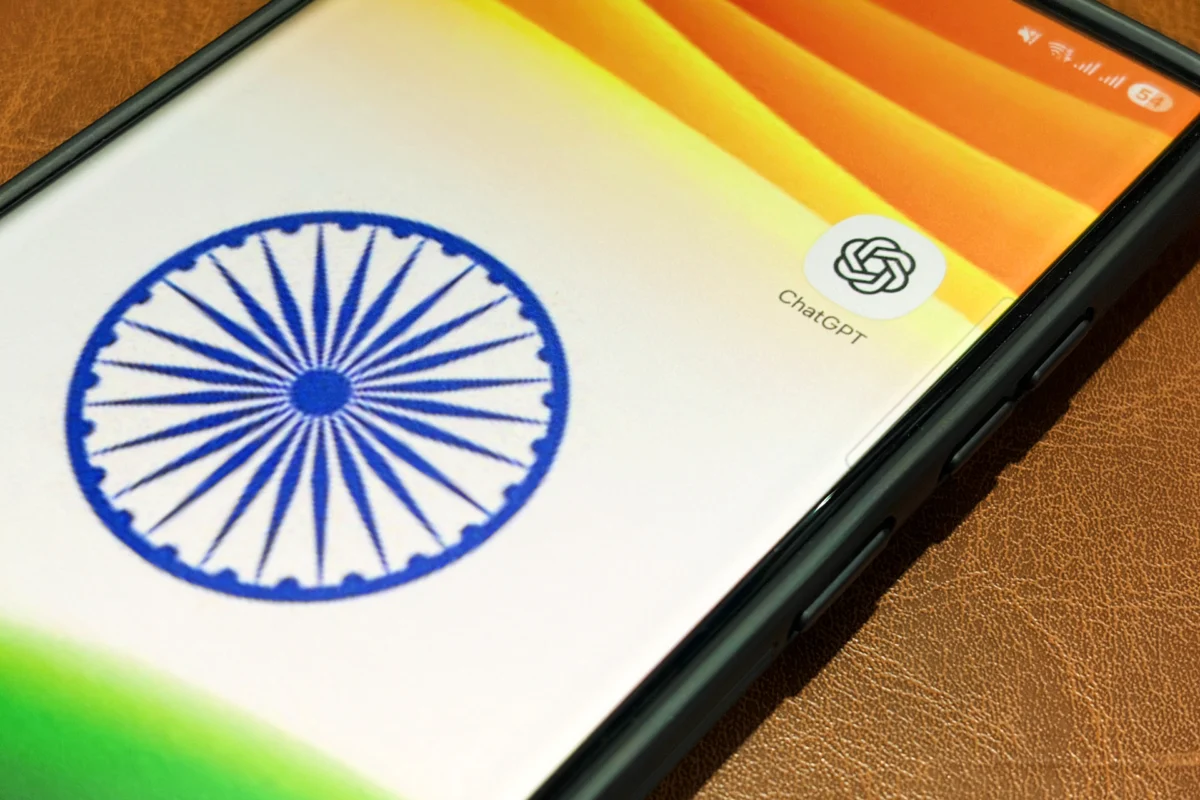
OpenAI officially confirmed on Thursday that it will begin integrating advertisements into its ChatGPT Free and "Go" subscription tiers within the Indian market. This strategic shift, which follows a quiet update to the company’s terms of service earlier this month, signals a fundamental transition for the San Francisco-based AI giant as it pivots toward a model that balances its revolutionary utility with the traditional, high-revenue mechanisms of the global advertising industry.
The Strategic Pivot: Breaking Down the India Launch
The move to introduce ads in India is far from a random experiment; it is a calculated deployment in what is arguably the company’s most vital growth market outside the United States. With over 100 million weekly active users in India—many of whom utilize the free or low-cost "Go" service—the region represents a massive, untapped reservoir of data and attention.
OpenAI is hitting the ground running. Starting this month, users in India will begin seeing advertisements from an initial cohort of 50 major brands. To facilitate this, the company has secured high-profile partnerships with global advertising powerhouses WPP and Omnicom. These agencies are expected to help navigate the complex nuances of the Indian market, ensuring that the ads are not merely intrusive banners, but contextually relevant prompts.
Perhaps most significantly, OpenAI is democratizing access to its ad infrastructure. Next month, the company will launch a dedicated ad manager portal. This platform will allow businesses of varying sizes to design and deploy their own campaigns, provided they meet a daily minimum spend of ₹725 (approximately $7.60). This low barrier to entry suggests that OpenAI is courting not just multinational corporations, but the vast ecosystem of Small and Medium Enterprises (SMEs) that form the backbone of the Indian digital economy.
A Chronology of Expansion
The path to this moment has been paved with aggressive market penetration strategies. OpenAI’s relationship with the Indian user base has been meticulously cultivated over the past eighteen months:
- August 2025: OpenAI introduces the "ChatGPT Go" plan in India, a budget-friendly tier priced at under $5 per month, designed to capture the price-sensitive demographic.
- October 2025: In an effort to secure massive market share, OpenAI launches a limited-time promotion offering a full year of ChatGPT Go for free to all users in the region.
- February 2026: The company reports a staggering 100 million weekly active users in India. Simultaneously, it begins testing its ad-supported model in the United States.
- June 2026: OpenAI hires the former head of Uber India to spearhead its regional expansion, signaling a desire for hyper-local leadership.
- August 2026: The ad program is rolled out across Europe, setting the stage for the current Indian rollout.
- Late August 2026: Official commencement of the ad-supported model for free and "Go" users in India.
Throughout this period, OpenAI utilized high-visibility partnerships, including significant advertising spend during major sporting events like the Indian Premier League (IPL) and the Women’s Premier League (WPL), effectively branding itself as an essential utility for the modern Indian professional and student.
Supporting Data: The Financial Imperative
Behind the scenes, the pressure to monetize is immense. As OpenAI prepares for a potential Initial Public Offering (IPO) in the coming year or two, the narrative of "growth at all costs" is being replaced by a narrative of "sustainable revenue."
The numbers tell the story. According to recent data from The Wall Street Journal, OpenAI recorded $6.7 billion in revenue for the second quarter ending June 2026, up from $5.7 billion in the previous quarter. While these figures are impressive, they reflect a "tepid" growth rate when compared to the meteoric rise of rivals like Anthropic.
The company’s long-term projections are even more ambitious. Reports from late 2025 indicated that OpenAI aims to reach a base of 220 million paying subscribers by 2030. At the time of those reports, only 35 million users were subscribed to the premium Plus and Pro tiers. This gap between the total user base (numbering in the hundreds of millions) and the paying subscriber base is precisely where the ad-supported model intends to generate value. By monetizing the "freemium" user, OpenAI is effectively creating a safety net that protects its bottom line against the volatility of subscription churn.
The Corporate Stance: "Relevant, High-Context Moments"
OpenAI is acutely aware that the introduction of ads risks alienating its core power users. To mitigate this, the company is positioning the ads not as interruptions, but as "value-add" integrations.
Dave Dugan, head of global ads solutions at OpenAI, framed the transition in a recent statement: "With ChatGPT Ads, businesses of every size can introduce themselves at relevant, high-context moments when decisions are beginning to take shape."
This rhetoric highlights the core differentiator of AI advertising: intent. Unlike traditional display ads on social media or search engines, which rely on historical browsing data, OpenAI’s model aims to tap into the "conversational intent" of the user. If a user is asking ChatGPT for advice on travel insurance or home appliances, the ad-manager system can theoretically serve an advertisement for a relevant service providers at the exact moment the user is formulating a decision.
Implications: The Future of the AI Interface
The move into advertising has profound implications for the future of artificial intelligence.
1. The Death of the "Neutral Assistant"
For many, the appeal of ChatGPT was its perceived neutrality—a machine that provided answers without a hidden agenda. By introducing advertisements, OpenAI is introducing a commercial bias into the system. While the company claims these ads will be clearly delineated, the integration of brand content into a conversation inevitably alters the user’s perception of the platform’s objectivity.
2. The Data Feedback Loop
The ad-manager platform will inevitably require more granular data collection to remain effective. For advertisers to see a return on their $7.60/day investment, they need to know that their ads are reaching the right people. This will likely lead to even deeper profiling of user behavior, potentially raising concerns among privacy advocates who have already been wary of how AI companies use conversational logs to train their models.
3. A New Competitive Frontier
By opening up to advertisers, OpenAI is moving directly into the territory of Alphabet (Google) and Meta. For years, Google has dominated the "intent-based" ad market through search. By integrating ads into a conversational interface, OpenAI is creating a new category of "conversational search ads" that could potentially disrupt the long-standing advertising dominance of search engines.
4. The Impact on India’s Digital Ecosystem
For the Indian market, this represents a new chapter in digital marketing. With millions of users now interacting with AI daily, the potential for hyper-targeted, local-language advertising is immense. It provides local Indian businesses with a sophisticated toolset that was previously accessible only to global conglomerates, potentially leveling the playing field in the digital advertising landscape.
Conclusion: A Necessary Evolution?
Critics will undoubtedly argue that the introduction of ads is a betrayal of the "open" spirit that defined OpenAI’s early years. However, in the capital-intensive world of Large Language Models (LLMs), where training and inference costs are astronomical, the shift is arguably inevitable.
As OpenAI approaches its anticipated IPO, the company must prove that it can do more than build impressive technology; it must prove it can build a profitable enterprise. The expansion into India’s advertising market is the latest step in that process. Whether this leads to a more sustainable, robust AI assistant or a cluttered, ad-heavy experience will depend entirely on how OpenAI balances the needs of its advertisers with the trust of its users. For now, the experiment has begun, and the world is watching to see if the AI revolution can be successfully sponsored by the brands it helps to promote.