By Editorial Staff
Updated: July 23, 2026
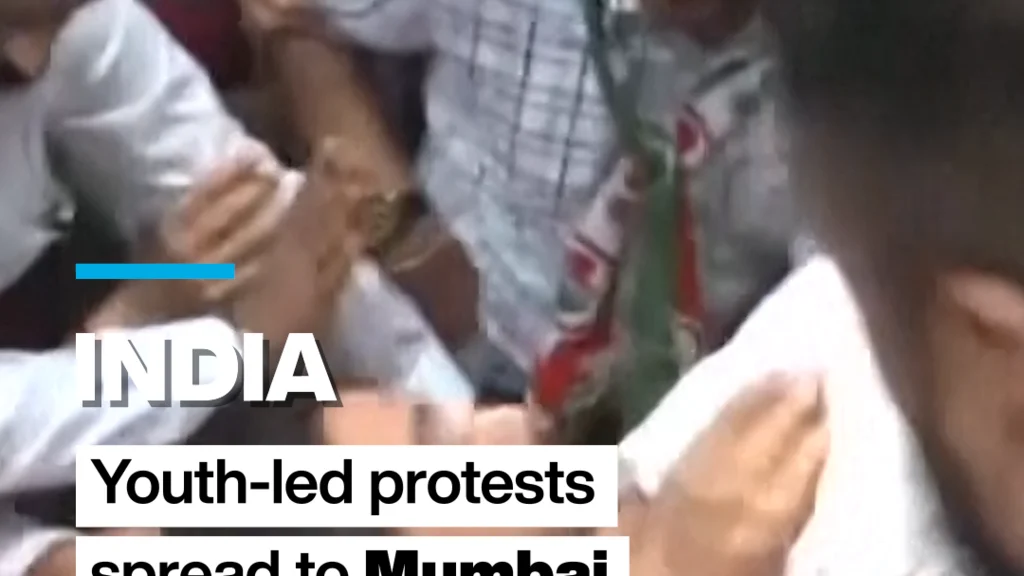
India, a nation accustomed to diverse forms of civil dissent—from silent marches to massive agricultural blockades—is currently grappling with a novel and highly disruptive form of protest that has captured the national imagination. Known colloquially as the "Cockroach Movement," this grassroots phenomenon, which first gained traction in the chaotic streets of New Delhi, has now spread to the financial capital of Mumbai.
What began as a localized expression of frustration against municipal neglect and systemic violence has transformed into a decentralized, symbolic, and deeply unsettling challenge to urban governance. By adopting the imagery of the cockroach—a creature known for its resilience, its ability to infest hidden spaces, and its capacity to survive even the most hostile environments—protesters are signaling a shift in how India’s urban poor and disaffected youth are choosing to voice their grievances.
Main Facts: The Anatomy of the Movement
The "Cockroach" movement is characterized by its leaderless structure and its reliance on psychological disruption rather than traditional street-blocking protests. Participants, often wearing dark, brownish-grey attire or rudimentary, stylized cockroach masks, congregate in public squares, municipal offices, and transit hubs. They do not typically shout slogans; instead, they move in coordinated, rhythmic patterns that mimic the scuttling of insects, creating an eerie, unsettling atmosphere for bystanders and officials alike.
The movement’s core demands center on the "three pillars of urban dignity": the right to clean, safe housing, an end to police heavy-handedness in impoverished neighborhoods, and transparency in municipal fund allocation.
The movement reached a fever pitch in New Delhi earlier this week, when a demonstration outside a municipal building turned violent. According to eyewitness accounts, police deployed tear gas after protesters refused to vacate the premises, resulting in injuries on both sides. The subsequent imagery of protesters being dragged away like pests has only served to solidify the movement’s branding, with supporters arguing that the state’s reaction proves the dehumanization of the poor.
Chronology: From New Delhi to Mumbai
The evolution of this movement has been remarkably swift, aided by encrypted messaging apps and decentralized social media coordination.
- Mid-June 2026: Small clusters of protesters appear in the outskirts of New Delhi, specifically in the resettlement colonies where sanitation infrastructure had failed for months.
- July 5, 2026: The term "Cockroach Movement" is coined during a viral social media post comparing the "hidden, overlooked existence" of the urban poor to the pest.
- July 15, 2026: The movement gains momentum as student unions join the cause, providing better organizational support for the digital aspect of the protests.
- July 20, 2026: The New Delhi protest escalates. Violence breaks out as authorities attempt to dismantle an encampment. The incident is broadcast globally, sparking solidarity protests in cities like Bengaluru, Pune, and Kolkata.
- July 22, 2026: The movement hits Mumbai. Protesters gather near the iconic Chhatrapati Shivaji Maharaj Terminus, not to block traffic, but to "infest" the public space with a silent, standing presence.
- July 23, 2026: Mumbai police maintain a high-alert status, attempting to contain the movement before it reaches the commercial districts of South Mumbai.
Supporting Data: The Socio-Economic Context
To understand why this movement has resonated so deeply, one must look at the data regarding India’s rapid urbanization. According to the 2026 Urban Development Report, India’s metropolitan populations have grown by 14% in the last five years, far outpacing the development of sanitation, water, and waste management infrastructure.
- Housing Deficit: In cities like New Delhi and Mumbai, nearly 40% of the population resides in areas classified as "informal settlements."
- Sanitation Standards: A survey conducted by an independent NGO last month indicated that in the regions where the movement is strongest, 65% of residents report infrequent trash collection and lack of basic pest control services—a literal source of the "cockroach" metaphor.
- Youth Unemployment: The demographics of the protesters are heavily skewed toward the 18–25 age bracket, a group currently facing a 22% unemployment rate in urban centers. The "Cockroach" identity, for these individuals, represents a rejection of the traditional job market they feel has abandoned them.
Economists note that while the movement is symbolic, its economic impact is beginning to be felt. Retailers in areas targeted by "infestations" report a drop in foot traffic, as the eerie nature of the protests discourages casual shoppers.
Official Responses: The Government’s Dilemma
The Indian government is currently navigating a delicate tightrope. In New Delhi, the municipal administration has characterized the movement as "an organized attempt to create public nuisance and disrupt essential services."

"This is not a legitimate form of protest," stated a government spokesperson during a press briefing on Wednesday. "By mimicking pests, these individuals are lowering the discourse of democracy. We are committed to infrastructure improvements, but we will not allow the functioning of our cities to be held hostage by performative anarchy."
Conversely, some political opposition figures have attempted to co-opt the movement, framing it as the "voice of the ignored." This has led to a polarized debate in the Parliament, with ruling party members demanding a crackdown on the "anti-social elements" behind the mask-wearing, and opposition leaders calling for an immediate summit to address the grievances of the protesters.
The police response has been equally divided. In some districts, officers have adopted a "zero-tolerance" policy, leading to the mass arrests seen in Delhi. In others, particularly in parts of Mumbai, police have opted for containment, keeping protesters at a distance to prevent the "infestation" of key government buildings while avoiding the optics of further violence.
Implications: A New Era of Symbolic Dissent?
The "Cockroach" movement poses a fundamental question for modern democratic governance: How do you engage with a movement that refuses to engage in traditional dialogue?
Because the protesters remain largely silent and rely on the visceral reaction they elicit from the public, they are difficult to negotiate with. There are no "leaders" to invite to a table, and no specific "list of demands" that, if met, would necessarily end the protests. This ambiguity is their greatest strength.
The "Infestation" Strategy
Sociologists argue that this movement marks a transition in the "politics of visibility." For decades, the poor in India have been "invisible" to the urban elite. By choosing a symbol that is loathed and associated with the "filth" of the city, the protesters are forcing the public to look at them. They are essentially saying: "If you treat us like vermin, we will act like it—until you can no longer ignore our presence."
Long-term Consequences
- Urban Policy Reform: The sheer pressure of the movement is forcing city councils to fast-track long-stalled sanitation projects. In at least three wards in New Delhi, municipal authorities have begun emergency waste-clearing operations, clearly motivated by the fear of renewed protests.
- Increased Surveillance: The Ministry of Home Affairs is reportedly considering a ban on face-covering masks in public during demonstrations, which would fundamentally alter India’s protest culture.
- Digital Regulation: Given the role of social media in organizing these events, the government is likely to tighten regulations on encrypted messaging platforms, citing the need to prevent "coordinated disruption."
Conclusion: The Resilience of the "Cockroach"
As the sun set over Mumbai on July 23, the streets remained tense. The "Cockroach" protesters remained in the shadows of the city’s grand colonial architecture, a silent reminder of the cracks in the facade of India’s booming economy.
Whether this movement will fizzle out or evolve into a permanent fixture of Indian political life remains to be seen. What is clear is that the "Cockroach" movement has successfully tapped into a deep, raw nerve of urban resentment. It has challenged the state to look past the symbols and into the reality of those who feel left behind by India’s progress.
The government’s challenge is no longer just about clearing streets or restoring order; it is about addressing the existential crisis of a generation that feels as though they are surviving in the margins of a city that has no room for them. Until that core issue is addressed, the movement, like its namesake, will likely prove very difficult to exterminate.