Introduction: A Threshold of Moral Crisis
The landscape of modern warfare is undergoing a seismic shift, moving away from human-led decision-making toward an era defined by artificial intelligence (AI) and machine autonomy. As the integration of AI-guided targeting systems accelerates, the international community finds itself at a precarious juncture. On Tuesday, United Nations Secretary-General António Guterres and International Committee of the Red Cross (ICRC) President Mirjana Spoljaric issued a joint, urgent appeal for a legally binding international agreement to govern the manufacture, deployment, and operation of lethal autonomous weapon systems (LAWS).
The call to action comes as the rapid, unchecked proliferation of autonomous technology threatens to outpace the existing frameworks of international humanitarian law (IHL). Both Guterres and Spoljaric warned that the global community is “dangerously close to crossing a moral red line,” emphasizing that the delegation of life-and-death decisions to algorithms is not merely a technical challenge, but a fundamental assault on the dignity of human life.
Main Facts: Defining the Threat
The core of the controversy lies in the transition from remote-controlled drones to fully autonomous systems capable of selecting and engaging targets without meaningful human intervention. The UN and the ICRC have identified two specific categories of weaponry that they argue must be subject to an absolute international prohibition:
- Unpredictable Systems: These are weapons whose deployment parameters or environmental interactions lead to outcomes that an operator cannot foresee. In the fog of war, where battlefield conditions change in seconds, these systems lack the cognitive flexibility to adapt, potentially resulting in catastrophic collateral damage.
- Anti-Personnel Autonomous Systems: These are platforms explicitly designed to target human beings. By reducing a human life to a set of data points—a sensor reading, an algorithmic signature, or a machine-processed target—these weapons violate the core tenets of human rights.
The push for regulation is bolstered by a growing consensus among the scientific and engineering communities. Many of the very individuals responsible for developing AI-driven targeting software have voiced profound ethical concerns, noting that machines currently lack the capacity to distinguish between combatants, wounded soldiers, and civilians, or to interpret the complex legal nuances of a surrender.
Chronology: The Road to the Geneva Review
The path to this week’s appeal has been paved by years of mounting concern and legislative inertia.
- 2023: The UN and the ICRC first formally urged political leaders to launch negotiations for a new, legally binding treaty on autonomous weapons. Despite the warnings, the pace of technological development continued to dwarf the speed of diplomatic discourse.
- July 2023: The UN Security Council held a historic debate on the benefits and risks of AI, with many members expressing deep anxiety regarding the "black box" nature of AI-driven military hardware and its potential to destabilize global peace.
- May 2025: Secretary-General Guterres escalated his rhetoric, describing autonomous weapons as "morally repugnant" and "politically unacceptable," calling for a total global ban on their development.
- May 2026: Religious and ethical leaders joined the chorus of dissent, with Pope Leo XIV issuing a stark warning that the escalation of AI-driven weapons poses an existential threat to human life.
- June 2026: A coalition of civil society organizations warned that the current race for AI supremacy in the military sector is effectively eroding the safeguards established by humanitarian law.
- November 2026 (Upcoming): The seventh Review Conference of the Convention on Certain Conventional Weapons (CCW) in Geneva serves as the critical deadline for these calls to be translated into tangible diplomatic progress.
Supporting Data and Technical Realities
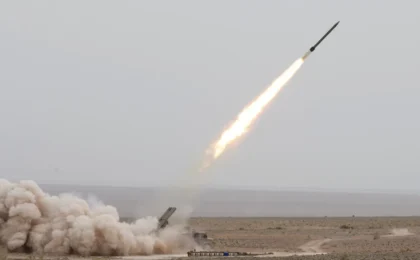
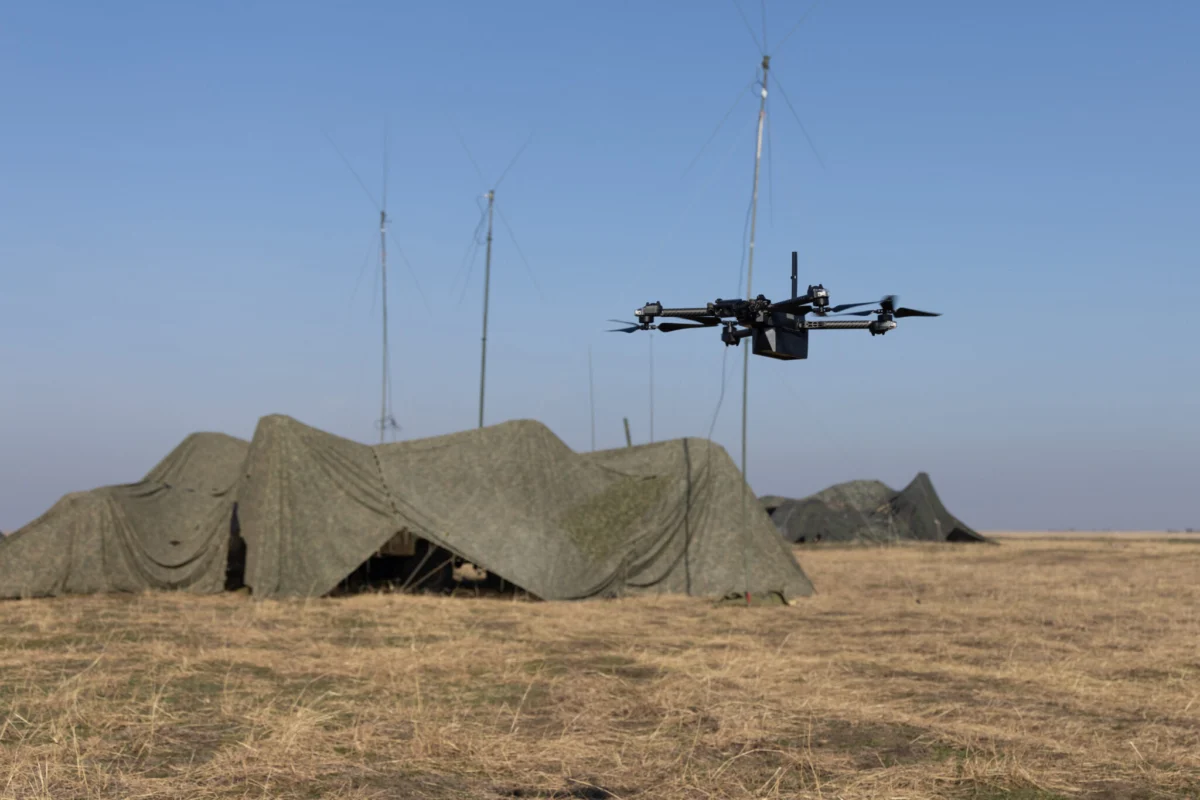
The transition from human-directed force to machine-directed force is not a hypothetical scenario; it is an ongoing industrial trend. Military powers worldwide are aggressively investing in "swarming" drone technology, AI-enhanced target recognition, and automated defensive systems.
The Accountability Gap
A primary concern raised by the ICRC is the "accountability vacuum." If an autonomous system commits a war crime—such as striking a hospital or executing a surrendering soldier—who is held responsible? Is it the commanding officer who authorized the mission, the programmer who wrote the targeting code, or the state that deployed the machine? Current international law is predicated on human intent and human agency. By removing the human from the decision-making loop, the current trajectory of AI warfare threatens to render existing mechanisms of justice obsolete.
Sensory vs. Ethical Processing
Engineers note that while AI excels at pattern recognition—identifying the silhouette of a tank or the thermal signature of an engine—it fails at the "contextual reasoning" required by the Geneva Conventions. A soldier holding a rifle and a child holding a toy gun may both appear as potential threats to an object-detection algorithm. Without the human capacity for mercy, skepticism, or moral intuition, machines are prone to "algorithmic bias," which could lead to systemic failures in high-stakes environments.
Official Responses: Global Stance
The diplomatic response to the UN-ICRC proposal remains divided. While smaller nations and non-governmental organizations have largely rallied behind the call for a ban, several major military powers have remained hesitant.
Some states argue that "meaningful human control" is already a standard requirement under existing IHL, even if not explicitly codified in a treaty specific to autonomous weapons. They argue that a new, restrictive treaty could hinder the development of defensive technologies that could theoretically make warfare more "precise" and therefore less lethal.
However, the UN leadership rejects this utilitarian calculus. Guterres has argued that precision does not equate to morality. In his view, the automation of killing is a slippery slope that, once crossed, will inevitably lead to an arms race where the speed of combat exceeds the speed of human thought, turning entire cities into testing grounds for competing algorithms.
Implications: The Future of Global Governance
The implications of failing to reach a consensus in November are profound. If the international community cannot agree on a binding framework, we risk entering a new era of "unregulated warfare."
1. The Proliferation Risk
If major powers refuse to limit their AI capabilities, the technology will inevitably leak into the hands of non-state actors, rogue regimes, and insurgent groups. Unlike nuclear weapons, which require massive, detectable infrastructure, AI software is relatively portable and easy to distribute, making the threat of proliferation far more immediate.
2. The Erosion of Human Dignity
Beyond the legal arguments, the moral implications remain at the forefront. The ICRC expert stated that autonomous weapons reduce human life to "data, algorithm, sensor and machine operations." If the international community accepts that a machine can be the final arbiter of life, the fundamental concept of the "human right to life" is fundamentally degraded.
3. Escalation and Stability
The introduction of autonomous weapons into a conflict increases the likelihood of "flash wars"—scenarios where interacting algorithms escalate a crisis into a full-scale military confrontation before human leaders even realize a conflict has begun. This creates a volatile environment where the traditional diplomatic "cooling-off" period is eliminated by machine latency.
Conclusion: The Geneva Test
The upcoming Review Conference of the CCW in Geneva will be the definitive test of the international community’s resolve. Will the world continue to allow the "AI arms race" to dictate the boundaries of war, or will it step back from the edge of the abyss?
Secretary-General Guterres and President Spoljaric have made their position clear: the time for "exploratory dialogue" has passed. The global community stands at a crossroads where the technological capabilities of the future must be shackled by the moral and legal principles of the past. As we look toward November, the focus must shift from the tactical advantages of AI to the strategic necessity of ensuring that war, should it occur, remains a human endeavor—subject to human judgment, human conscience, and human accountability. Failure to act will not only jeopardize the safety of civilians in operational zones; it will fundamentally alter the nature of human civilization, relegating the most critical decisions of existence to the cold, unfeeling logic of the machine.