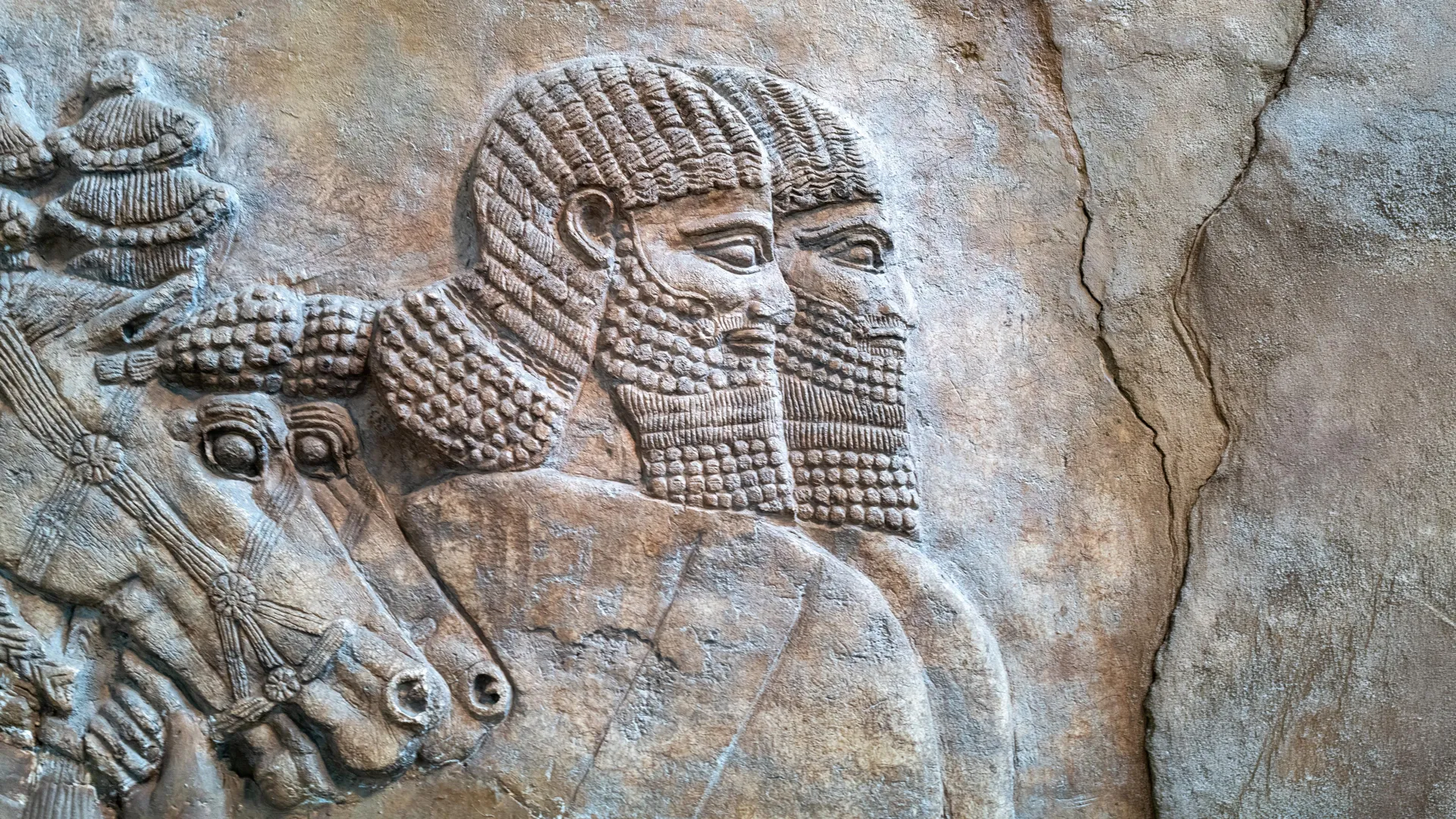
For over a century, the Assyrian King List (AKL)—a series of ancient cuneiform documents—has served as the foundational bedrock for historians studying the chronology and lineage of the Neo-Assyrian Empire. Viewed as an objective, albeit simplified, record of the kingdom’s rulers, it has dictated how we understand the rise and fall of one of the ancient world’s most formidable superpowers. However, a groundbreaking study published in the Journal of Cuneiform Studies by Alexander Johannes Edmonds and Eckart Frahm suggests that this “standard record” may be far from the historical truth.
By meticulously cross-referencing the AKL with obscure archaeological artifacts and neglected inscriptions, Edmonds and Frahm have identified three “ghost kings” whose existence was systematically erased from the official narrative. Their research suggests that the early Neo-Assyrian political landscape was not the orderly succession of monarchs we once believed, but a volatile, cutthroat arena of civil strife, usurpation, and historical revisionism.
The Illusion of Continuity: Main Facts and Methodology
The Assyrian King List was long considered an impartial chronographic work. However, Edmonds and Frahm argue that the document functioned less as a diary of record and more as a “legitimizing canon.” This canon was likely curated to present a seamless image of power, periodically purged of rulers who were perceived as illegitimate, short-lived, or failures.
By analyzing clay tablets, stelae, and damaged statuary, the researchers have reconstructed the reigns of three rulers who were scrubbed from the royal sequence. Their findings indicate that the official records were manipulated to maintain a facade of stability, effectively silencing political rivals who had, for a brief window in time, occupied the throne. This discovery shifts the focus from viewing the AKL as a reliable timeline to recognizing it as a sophisticated piece of political propaganda designed to manufacture a specific historical memory.
A Timeline of Omission: The Three Missing Kings
The study brings to light three distinct figures who occupied the throne during periods of instability, yet found their names excluded from the official record.
1. The Rival After the Eclipse (763–762 BCE)
The first “hidden” ruler identified is a figure who dared to challenge the established order during the reign of Ashur-dan III. The catalyst for this challenge appears to have been a solar eclipse—a celestial event that in the ancient Near East was viewed as a dire omen, frequently signaling the wrath of the gods or the impending fall of a king.
Taking advantage of this climate of fear, a royal pretender adopted the illustrious name "Tiglath-pileser," clearly attempting to harness the prestige of his predecessors. Historical evidence for his brief, turbulent administration survives on a clay tablet held by the British Museum, which records a royal land grant. The researchers posit that this Tiglath-pileser was actually the nephew of the reigning Ashur-dan III, making his bid for the throne a dramatic, intra-familial coup that was ultimately suppressed.
2. The Mysterious Predecessor of Tiglath-pileser III (c. 745 BCE)
The second case involves a long-standing archaeological puzzle from Tell ‘Abta, Iraq. In 1894, a stela was discovered that contained a curious discrepancy: the name of the king originally honored on the monument had been aggressively overwritten with the name "Tiglath-pileser."
For decades, scholars wondered why a royal monument would be subject to such an overt act of damnatio memoriae. Edmonds and Frahm propose a simple yet radical solution: there was an intervening king, named Shalmaneser, who ruled immediately before the ascent of the famous Tiglath-pileser III. By identifying this "lost" Shalmaneser, the authors explain the palimpsest on the stela, suggesting that the incoming regime sought to erase the memory of their immediate predecessor to solidify their own narrative of an uninterrupted transition of power.
3. The Forgotten Ashur-uballit (913–912 BCE)
The final case involves a ruler named Ashur-uballit, whose existence is betrayed by a cuneiform text attributed to King Tukulti-Ninurta II. The text references a libation vessel originally crafted by Tukulti-Ninurta I and later restored by an "Ashur-uballit."
The chronological gap in the AKL between these two kings provides no space for an Ashur-uballit, leading previous scholars to assume the text referred to a distant ancestor. However, Edmonds and Frahm argue that an unrecognized king of the same name reigned briefly at the dawn of the 10th century BCE. This theory is bolstered by the existence of a heavily damaged statue discovered at the city of Ashur, which lacks its head and royal insignia—a common result of the systematic "erasure" of a king’s identity by his successors.
Supporting Data: Beyond the Written Record
The strength of the Edmonds-Frahm study lies in its multidisciplinary approach. They move beyond the text of the AKL to examine the physical traces of power:
- Epigraphic Evidence: The use of libation vessel inscriptions provides a unique, contemporary look at royal activities that the state-sanctioned historians chose to ignore.
- Archaeological Anomalies: The damaged statue at Ashur serves as a physical testament to the "de-personing" of a king. When a ruler was deemed unworthy or illegitimate, their likeness was often mutilated, and their names were chiseled off stone surfaces.
- Contextual Analysis: By mapping these figures onto known periods of solar eclipses, famine, or regional instability, the researchers demonstrate that the "omissions" from the AKL coincide exactly with moments of profound political stress.
Official Responses and Academic Discourse
The academic community has received the study with a mixture of fascination and rigorous debate. Specialists in Assyriology have long known that the AKL was not a perfect document, but the scale of these omissions is surprising.
Dr. Helena Vance, a senior curator of Ancient Near Eastern artifacts, noted: "For years, we have treated the King List as a reliable skeleton. Edmonds and Frahm are essentially showing us that the skeleton has been surgically altered. The question now is not just who these kings were, but why their removal was deemed necessary to the survival of the state’s ideology. Was it simply a matter of political hygiene, or were there deeper religious reasons for striking these names from the record?"
Other scholars caution against over-interpreting the limited evidence, noting that the reconstruction of these reigns remains speculative. However, the consensus is that the study forces a necessary re-evaluation of the "canonicity" of Assyrian royalty. If three kings can be "found" in a century of study, it begs the question of how many more might be hidden in the vast, uncatalogued archives of the British Museum and other institutions.
Implications: A New Lens for the World’s First Empire
The discovery of these three rulers has profound implications for our understanding of political legitimacy in the ancient world. If the Assyrian King List was a "living document"—updated by scribes to suit the needs of the current regime—then historians must approach all ancient "canonical" texts with newfound skepticism.
The study invites us to ask fundamental questions about the nature of historical memory:
- Who determined canonicity? Was it the royal court, the temple priesthood, or the scribal schools that decided who was "fit" to be remembered?
- What was the function of the AKL? If it was not purely historical, was it a tool of legitimacy, a religious mandate, or a political contract?
- How much of our "known" history is a product of ancient editing?
By exposing the gaps in the official record, Edmonds and Frahm have done more than just add three names to a list. They have cracked the veneer of the Assyrian state, revealing the messy, human, and often desperate politics that lurked behind the scenes. This research reminds us that history is rarely the objective truth; it is often the version of events that the winners chose to write down.
As we move forward, the Assyrian King List will no longer be seen as the definitive guide to the empire’s rulers, but as a map of the empire’s anxieties. Every "omission" is a clue, and every "erasure" is a story waiting to be told. The early political history of the Assyrian Empire is suddenly much more complex, more intriguing, and, in many ways, more reflective of the human condition than it was yesterday. The "ghost kings" have returned, and with them, the past is once again wide open for discovery.