We are conditioned from childhood to view existence through a competitive lens. Whether it is the milestone-tracking of the Milton Bradley board game The Game of Life—a cultural staple since 1860—or the constant digital updates on social media, society is obsessed with the idea that life is a contest to be won. We measure progress by salary brackets, job titles, square footage of our homes, and the prestige of our children’s universities.
However, as the lines between personal fulfillment and competitive achievement blur, a growing body of sociological and psychological research suggests that this "game" mindset is not merely a metaphor; it is a fundamental misunderstanding of what it means to be human. By treating life as a zero-sum game, we risk sacrificing the very elements that make life worth living.
The Anatomy of a Game: Why Life Doesn’t Fit the Mold
To understand why life is not a game, one must first define what a game actually is. A game is an artificial construct characterized by explicit rules, clear winning conditions, and an objective hierarchy of performance. In a game, players pursue goals that hold no intrinsic value—it does not objectively matter if a ball crosses a line or a piece moves across a checkered board.
Games are also inherently exclusionary; for every "winner," there must be "losers." This structure works perfectly for athletics, where the goal is to test physical or strategic boundaries. However, when applied to life, this framework becomes corrosive.
The Subjectivity of the "Good Life"
The core components of a life well-lived—ethical integrity, the depth of one’s relationships, the pursuit of intellectual passions, and the feeling of professional fulfillment—are inherently subjective.
- Non-Quantifiable Metrics: You cannot create a leaderboard for "meaningful relationships." There is no objective algorithm to measure who is "winning" at ethics.
- The Trap of Objectivity: Because internal states like contentment and integrity are difficult to measure, we gravitate toward what is easy to track: money, status, and material assets. By focusing on these, we prioritize "petty" prizes over the profound, unquantifiable milestones that actually constitute a successful existence.
Chronology of a Cultural Obsession: From Board Games to Digital Comparison
The cultural transition from viewing life as a journey to viewing it as a contest did not happen overnight. Its trajectory reflects a shifting focus in Western society from community-based values to individualistic, meritocratic competition.
- 1860: The Dawn of the "Game" Mindset: Milton Bradley’s The Checkered Game of Life was the first mass-produced board game in the United States. It taught players that life was a series of squares to be navigated, where "Wealth" and "Happy Old Age" were the ultimate victory conditions.
- 1950s–1980s: The Rise of Corporate Meritocracy: The post-war economic boom solidified the idea of the "career ladder." The corporate structure, with its clear hierarchies and annual performance reviews, mirrored the competitive nature of the board games that preceded it.
- 2000s–Present: The Digital Panopticon: With the advent of social media, the competitive aspect of life has moved from the office and the neighborhood to a 24/7 global stage. We now have real-time data on the achievements of our peers, turning the "Game of Life" into a constant, high-stakes spectator sport.
Supporting Data: The Cost of Competitive Living
Psychological research consistently demonstrates that comparing oneself to others—a prerequisite for "playing" the game—is a primary driver of modern anxiety.
The Psychology of Comparison
According to the Social Comparison Theory, first proposed by psychologist Leon Festinger, humans have an innate drive to evaluate themselves by comparing their achievements to others. In the modern context, this has turned pathological.
- The Insecurity-Arrogance Dichotomy: When we view life as a competition, our emotional state becomes tethered to our relative rank. If we perceive ourselves as losing, we experience debilitating insecurity and shame. If we perceive ourselves as winning, we often fall into the trap of arrogance, which isolates us from the very social connections we need for true well-being.
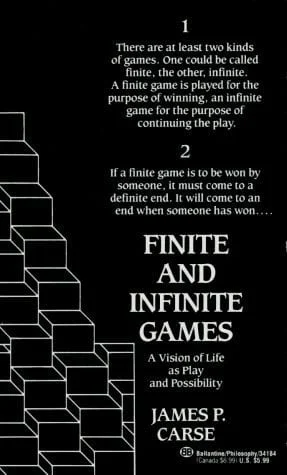
- The Zero-Sum Myth: Research in game theory shows that while some games are zero-sum (one person’s gain is another’s loss), life is an "infinite game." As philosopher James Carse argued in his seminal work, Finite and Infinite Games, the goal of an infinite game is not to win, but to keep the game going. By treating life as a finite, zero-sum game, we actively limit our own potential for growth.
Expert Perspectives and Sociological Implications
Sociologists and philosophers have long warned against the commodification of the human experience. The "Game of Life" narrative is increasingly criticized for its role in the modern mental health crisis.
The Erosion of Community
A competitive view of life necessitates seeing others as obstacles. If your neighbor’s success diminishes your relative status, you are incentivized to view them as a rival rather than a peer. This erodes the foundation of "social capital"—the trust and mutual support that keep communities functional.
Official reports from various psychological associations note that the "hyper-competitive" environment of modern education and career development is leading to record-high levels of burnout. "When we frame life as a competition," says Dr. Aris Thorne, a behavioral sociologist, "we are effectively training people to experience life as a series of threats rather than opportunities for connection."
Implications: The High Price of "Winning"
If we continue to view life through the prism of competitive success, the implications for the future of our society are severe:
- The Pyrrhic Victory: Many individuals who "win" at the game—reaching the top of their field or accumulating vast wealth—find themselves at the end of their lives feeling isolated and unfulfilled. They have achieved the objective goals but ignored the subjective requirements of the good life.
- The Shame Cycle: By setting external, competitive benchmarks, we guarantee that the vast majority of the population will feel like "losers." This creates a society defined by chronic inadequacy, which is a fertile ground for depression and social instability.
- Loss of Autonomy: When you play by someone else’s rules—chasing a title or a lifestyle simply because it is perceived as "winning"—you surrender your personal sovereignty. You are no longer living your life; you are acting out a role in a script written by societal expectations.
Conclusion: Reframing the Experience
The solution is not to abandon ambition, but to reorient it. We must distinguish between the "games" we play for fun and the life we live for meaning.
- Play the Game, Don’t Be the Game: It is perfectly healthy to enjoy the competition of a golf match, a fantasy sports league, or a professional challenge. The problem arises when we bring the scoreboard home.
- Cultivate Intrinsic Goals: Success should be defined by internal metrics—adherence to one’s own ethics, the quality of one’s relationships, and the joy derived from one’s work—rather than comparisons to others.
- Reject the Leaderboard: The most radical act of rebellion in a hyper-competitive world is to refuse to participate in the ranking system. By defining your own rules, you reclaim the autonomy required to live a life of depth and substance.
Life is not a game to be won; it is a reality to be experienced. When we stop trying to beat the world, we finally find the space to join it.