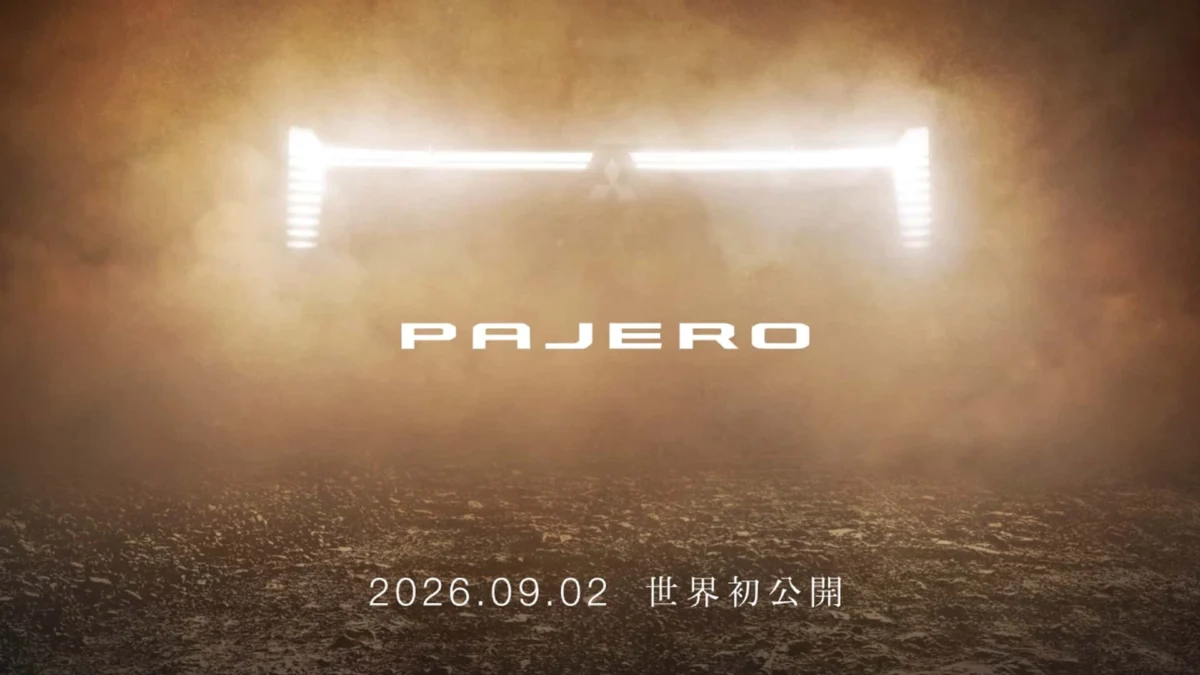
Mitsubishi Motors is preparing for a monumental shift in its product strategy. After years of speculation and a strategic pivot toward the crossover market, the Japanese automaker has officially confirmed that the legendary Pajero is returning to the global stage. The fifth-generation SUV is scheduled for its world premiere on September 2, 2026, marking a dramatic return to the rugged, body-on-frame roots that once defined the brand’s identity in the global off-road community.
This move signals a departure from the unibody architecture that characterized the late-stage fourth-generation model. By embracing a robust ladder-frame chassis—shared with the widely acclaimed Triton pickup—Mitsubishi is signaling to enthusiasts and industry analysts alike that the new Pajero is not merely a soft-road vanity project, but a serious contender in the heavy-duty 4×4 segment.
The Mechanical Foundation: Engineering for the Trail
The core of the new Pajero’s appeal lies in its hardware. According to reports confirmed by Automotive News, Mitsubishi will equip the upcoming SUV with its signature Super All-Wheel Control (S-AWC) system. Originally perfected on the rally stages in the Lancer Evolution X, this sophisticated torque-vectoring and stability-management suite has been successfully adapted for the Triton pickup, proving that it can handle the rigors of heavy-duty, off-pavement operation.
Industry insiders anticipate that the S-AWC system will be paired with Mitsubishi’s proven Super Select 4WD-II transfer case. This combination would allow drivers to seamlessly toggle between two-wheel drive for highway efficiency, full-time all-wheel drive for variable traction, and a dedicated low-range transfer case for extreme terrain. By utilizing the proven bones of the Triton, Mitsubishi is effectively bypassing the "first-year blues" associated with clean-sheet vehicle architecture, opting instead for a battle-tested foundation that emphasizes reliability and mechanical longevity.
A Chronology of the Rebirth
The road to the 2026 reveal has been one of gradual disclosure, marked by a calculated drip-feed of information to maintain enthusiast interest.
- Early 2024: Rumors began to circulate regarding a "flagship" SUV that would sit above the Outlander, with industry reports pointing toward a revival of the Pajero/Montero nomenclature.
- Late 2024: Mitsubishi began releasing cryptic teaser images, showcasing silhouette lines that suggested a boxy, upright design reminiscent of the classic, slab-sided Pajeros of the 1990s.
- Early 2025: Technical reports surfaced confirming the abandonment of unibody construction in favor of a ladder-frame chassis, a move heavily influenced by the modular nature of the new Triton platform.
- Mid-2025: Speculation regarding a potential "Ralliart" off-road variant intensified, with designers and engineers hinting at an aesthetic that prioritizes approach, departure, and break-over angles.
- September 2, 2026: The official, locked-in date for the global reveal.
Supporting Data: The Hybrid Conundrum
While the mechanical architecture is largely understood, the powertrain remains the most closely guarded secret. Mitsubishi has dropped heavy hints regarding the inclusion of hybrid technology, though the specifics of the engine-motor pairing remain speculative.
Given the shared DNA with the Triton platform, automotive analysts are leaning toward a diesel-based hybrid powertrain. This setup would provide the massive low-end torque required for rock crawling and towing—a prerequisite for the target demographic—while simultaneously meeting tightening emissions standards in global markets like Europe and Australia. Unlike the city-focused plug-in hybrid (PHEV) systems found in the Outlander, the Pajero’s hybrid system is expected to prioritize "power-assist" and regenerative torque rather than long-range electric-only driving.
Furthermore, reports from the supply chain suggest that Mitsubishi is not just building a single vehicle, but a "Pajero family." There is growing evidence that the company is planning a range of smaller, "kei-class" SUVs wearing the Pajero badge by 2030, which would leverage compact hybrid technology to cater to urban markets in Japan and Southeast Asia.
Official Responses and Strategic Vision
Mitsubishi’s executive leadership has been careful not to overpromise, yet the tone from the boardroom is one of renewed confidence. During recent dealer discussions, the brand emphasized that it cannot afford to ignore the "enthusiast halo" that a vehicle like the Pajero provides.
While the company has remained coy about the North American market, the potential for a "Montero" revival is a recurring topic in internal strategy documents. The brand’s 2030 US roadmap explicitly carves out space for a flagship off-road vehicle. For American dealers, the return of the Montero nameplate would be a massive win, providing a direct rival to the Toyota Land Cruiser Prado and the Ford Bronco—two vehicles that have proven there is a massive, lucrative appetite for rugged, lifestyle-oriented SUVs.
Mitsubishi’s commitment to the Pajero is also a testament to its current survival strategy: by sharing components across the Triton and Pajero lines, the brand is achieving economies of scale that allow for the development of niche products without the financial risk that previously hampered its R&D budget.
Implications for the Off-Road Segment
The return of the Pajero is more than just a trip down memory lane; it is a tactical strike at the heart of the modern SUV market. For years, the segment has been dominated by "soft-roaders"—unibody vehicles that trade off-road capability for fuel economy and on-road comfort. By pivoting back to a ladder-frame design, Mitsubishi is essentially betting that the market pendulum is swinging back toward authenticity.
1. Market Positioning
If the Pajero arrives with the rumored Ralliart trim, it will place Mitsubishi in direct competition with the "hardcore" off-road segment. This includes the Toyota Land Cruiser, the Land Rover Defender, and the Jeep Wrangler. To succeed, the Pajero must balance its heritage with modern tech; it will need to offer the latest in driver-assistance systems and interior connectivity to compete with the luxury-laden interiors of modern 4x4s.
2. Global Brand Credibility
For Mitsubishi, the Pajero is more than a product—it is a brand pillar. The success of the Dakar Rally in the 80s and 90s was built on the back of the Pajero. A successful launch in 2026 could restore the company’s reputation as an engineering-first organization. If the new SUV performs as well as its predecessors, it could provide the "halo" effect needed to drive sales across the entire Mitsubishi lineup, including the smaller crossovers and pickups.
3. The "Mini-Pajero" Strategy
The reported plan to expand the Pajero name into a sub-brand of SUVs is a clever hedge. By offering smaller, more accessible versions, Mitsubishi can hook a younger generation of buyers who may not need a full-sized 4×4 but want the aesthetic and brand prestige associated with the Pajero name.
Conclusion: A High-Stakes Bet
As we approach the September 2, 2026, premiere, the automotive world is watching closely. Mitsubishi has chosen the most difficult path—re-entering a highly competitive, enthusiast-driven segment with a vehicle that must honor a massive historical legacy.
The decision to return to the ladder frame is a bold acknowledgment that the "Pajero" nameplate carries weight only if it can deliver on its promise of off-road dominance. With the technical specs of the Triton-derived chassis and the promise of a sophisticated S-AWC system, the ingredients for success are certainly present. Whether the final product can bridge the gap between 20th-century ruggedness and 21st-century technological expectation remains to be seen. However, one thing is certain: Mitsubishi has officially re-entered the arena, and the competition has every reason to take notice.