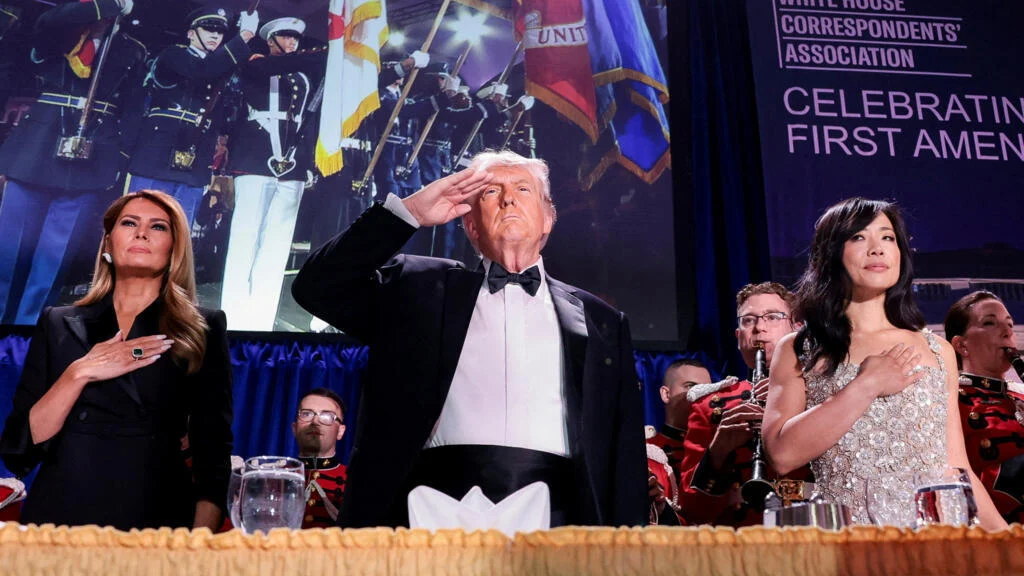
WASHINGTON D.C. — Three months after a violent breach brought the glitter and gravitas of Washington’s most prestigious social event to a screeching, terror-filled halt, the White House Correspondents’ Association (WHCA) is set to host its rescheduled gala this Friday. The atmosphere at the Waldorf Astoria, the new venue for the evening, will be a stark departure from the typical levity of the "nerd prom." Instead, the dinner will serve as a tense, high-stakes intersection of political theater, a celebration of the First Amendment, and a testament to the fragile state of American civil discourse.
President Donald Trump, who will be in attendance to deliver remarks, returns to the podium at a time when his relationship with the press corps has reached a fever pitch of antagonism. For the President, the evening is an opportunity to project strength; for the journalists in attendance, it is a fraught exercise in maintaining professional integrity while navigating a landscape defined by executive hostility and physical threat.
The Night the Music Stopped: A Chronology of the April 25 Incident
The original event, slated for April 25 at the Washington Hilton, was intended to be a watershed moment—the first time President Trump had graced the correspondents’ dinner during his tenure. For years, the President had pointedly boycotted the affair, which he frequently characterized as a hub for elites and purveyors of "fake news."
The Breach
As the ballroom began to fill with the usual cross-section of cabinet officials, foreign dignitaries, and high-profile journalists, a man later identified as Cole Allen attempted to breach a security checkpoint. According to eyewitness accounts and subsequent police reports, Allen produced a shotgun outside the ballroom where the President and his cabinet were preparing to take their seats.
The security perimeter, which had been set up to facilitate a high-profile presidential visit, functioned as designed. A chaotic scramble ensued as Secret Service agents and local law enforcement neutralized the threat. In the ensuing exchange, Secret Service officer Victor Gonzales was shot at the checkpoint. Despite the injury, Gonzales’s swift action is widely credited with preventing the assailant from gaining access to the ballroom, where the casualty count could have been catastrophic.
The Aftermath
The event was immediately called off, with the hotel placed on lockdown as the area was secured. The shockwaves of the event were felt globally, as headlines flashed the news of an attempted assassination. In May, Cole Allen appeared in court, where he pleaded not guilty to charges including attempted assassination of the President. The legal proceedings remain ongoing, casting a long shadow over the rescheduled gathering this week.
A Fortress of Diplomacy: The Shift in Security Protocols
The move from the Washington Hilton to the Waldorf Astoria represents more than a change in venue; it marks a total overhaul of the security apparatus governing the event. Secret Service Director Sean Curran, in a briefing with reporters this past Wednesday, emphasized that the agency is not taking any chances.
"We do expect bad people to show up," Curran noted candidly. "It’s just a reality of where we are, but we’re treating it no differently than any other site that the president goes to."
The new security plan is comprehensive, involving layers of electronic surveillance, K-9 sweeps, and an increased presence of tactical units. The "new normal" for the dinner is one of visible, heavy fortification, a reality that the President has utilized to push his own political agenda. Trump has repeatedly cited the April incident as definitive proof that the White House requires a new, $400 million ballroom. He argues that by hosting these events within the secure confines of the Executive Mansion, the presidency would be better insulated from the types of threats witnessed in April. Critics, however, argue that such a move would further alienate the press from the public and centralize power in a way that is antithetical to the transparency of the office.
Honoring the Thin Blue Line: A Moment of Recognition
While the evening will be dominated by political tension, the WHCA has made it clear that the centerpiece of the event is the honoring of those who stood between the guests and the assailant. Officer Victor Gonzales, who remains a symbol of courage for his actions in April, will be formally recognized for his heroism.

The WHCA has also announced that Washington Hilton staff members, who worked under extreme duress to assist guests and maintain order during the evacuation, will be celebrated. These acts of individual bravery serve as a necessary grounding for the event, reminding all in attendance that despite the political vitriol, the evening is fundamentally about the protection of those who report on the state of the nation.
The First Amendment Under Pressure: A Fragile Truce
The core purpose of the WHCA dinner is to raise funds for journalism scholarships and to honor the First Amendment. Yet, this year’s gala is occurring against a backdrop of unprecedented friction between the Trump administration and the Fourth Estate.
The War of Words
President Trump’s rhetoric regarding the media has been unrelenting. From suing news outlets for defamation to labeling entire organizations as "enemies of the people," the President has redefined the adversarial relationship between the executive branch and the press. His administration has gone further than mere verbal sparring, implementing policies that have restricted access to the Pentagon and barred the Associated Press from certain pools.
Most recently, the President sparked a constitutional firestorm by threatening to revoke the broadcasting licenses of television networks that refused to air a prime-time speech concerning "election security." The speech contained claims regarding foreign interference that stood in direct contradiction to official U.S. intelligence assessments. The White House defends these actions, characterizing them as necessary measures to ensure accountability and to curb what they deem as systemic bias.
The Industry’s Response
The response from the journalism community has been split between attempts at engagement and active resistance. A coalition of several hundred veteran journalists and eight professional media organizations have signed an open letter to the WHCA leadership, urging the association to use the dinner as a platform to formally condemn the President’s perceived assaults on the First Amendment.
WHCA President Weijia Jiang has attempted to strike a balance between hosting the President and asserting the independence of the press. "The event will be a statement that violence has no place in American life," Jiang stated. "And it will be a reminder that a free press will not be intimidated into silence."
The Paradox of Access
Despite the heated rhetoric, there exists a unique paradox in the Trump administration’s relationship with the media. While the President’s attacks on the press are frequent and vicious, his accessibility is, by historical standards, quite high. Trump has consistently provided more direct access to reporters than many of his predecessors, frequently taking lengthy, unscripted Q&A sessions during public appearances and engaging in direct, if combative, phone conversations with journalists.
This "access-versus-hostility" dynamic creates a disorienting environment for the press corps. Journalists are simultaneously barred from briefings and then granted hours of direct, unfiltered access to the President himself. As they prepare to sit down for dinner this Friday, the attendees will be grappling with this contradiction: how to hold an administration accountable when the primary source of information is also the primary source of pressure.
Conclusion: The Path Forward
The evening will conclude with entertainment from mentalist Oz Pearlman—a somewhat ironic choice given the psychological intensity of the current political climate. As the lights dim and the dinner proceeds, the underlying questions will remain: Can a free press operate effectively under the shadow of both physical threat and institutional hostility? Can a President and a press corps find a way to coexist when their fundamental interests are so diametrically opposed?
Friday’s dinner is a test of resilience. For the WHCA, it is an opportunity to prove that the traditions of American democracy—including the right to ask hard questions—can survive even the most volatile of times. For President Trump, it is a stage to exert his influence over the narrative of the nation. As the nation watches, the Waldorf Astoria will host not just a gala, but a defining moment in the history of the American presidency and the journalists who document its every move.