In an era defined by rapid technological shifts and an overwhelming abundance of information, many individuals find themselves paralyzed by the paradox of choice. We are often haunted by the "what ifs"—the paths not taken, the careers abandoned, and the versions of ourselves that exist only in the realm of imagination. Recently, this existential anxiety has found a surprising cultural anchor in the A24 film Everything Everywhere All at Once and the structured methodologies found in the Stanford-born book Designing Your Life. Together, these two works offer a roadmap for navigating the modern condition, transforming the abstract concept of the "multiverse" into a practical tool for personal development.
The Cinematic Catalyst: Everything Everywhere All at Once
Released to critical acclaim, Everything Everywhere All at Once serves as a chaotic, kaleidoscopic mirror for the contemporary mind. The plot follows Evelyn Wang, a laundromat owner struggling with a failing business, a fraying marriage, and a strained relationship with her daughter, Joy. During a mundane audit with the IRS, Evelyn’s reality shatters as she is thrust into a conflict spanning parallel universes.
The film utilizes the multiverse not merely as a sci-fi trope, but as a metaphor for the infinite choices we face daily. The antagonist, Jobu Tupaki, embodies a nihilistic response to this infinite possibility: if every outcome exists somewhere, then nothing inherently matters. Yet, the film counters this despair with the perspective of Waymond Wang, Evelyn’s husband. He posits that if life is truly meaningless, we are liberated to assign our own meaning—and that radical kindness is the most potent tool in that endeavor.
For viewers, the film is a dense, layered experience that demands repeat viewings. It begins in the mundanity of tax paperwork and descends into surreal madness, only to reconcile these extremes in a poignant, humanistic conclusion. It is a work that argues that even in a world of infinite, often overwhelming, variables, the present moment and the connections we forge within it are what anchor us to reality.
The Practical Methodology: Designing Your Life
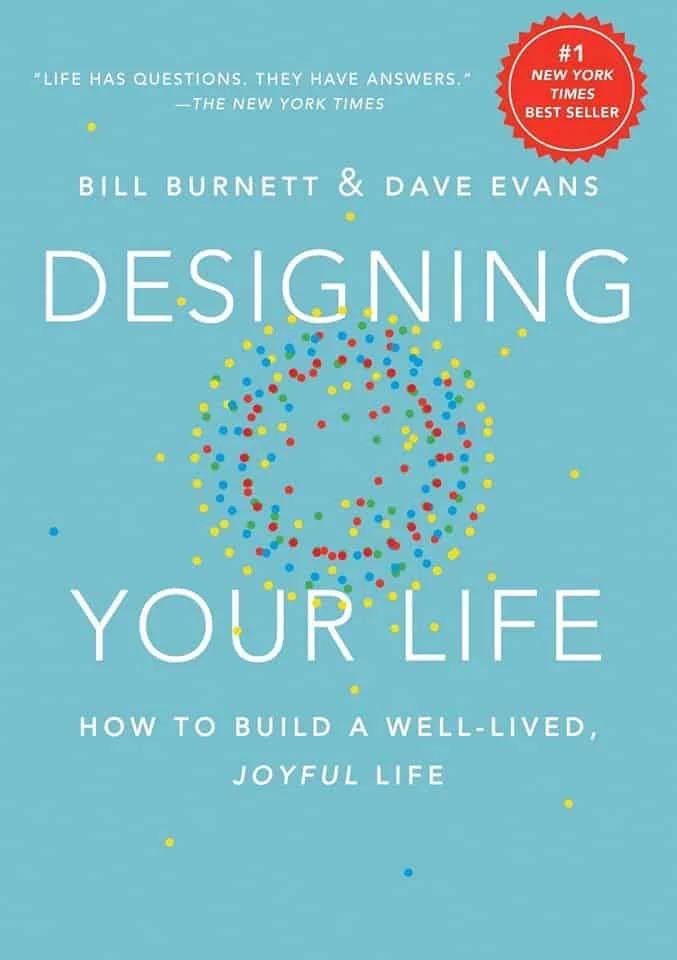
If the film provides the philosophy, Designing Your Life by Bill Burnett and Dave Evans provides the mechanics. Derived from a wildly popular course at Stanford University, the book applies the iterative principles of design thinking—originally used to create products like Apple’s laptops and Electronic Arts’ video games—to the human life cycle.
Burnett and Evans argue that a "well-designed life" is one characterized by coherence. This is the state in which your internal identity, your core beliefs, and your external actions are in alignment. To reach this state, they propose five fundamental disciplines: curiosity, bias to action, reframing, awareness, and radical collaboration.
The book’s core utility lies in its insistence that we are not trapped in a single, unchangeable trajectory. Instead, it encourages readers to engage in "life design," viewing their future as a series of prototypes rather than a fixed destination.
Chronology of Personal Transformation
For many readers, the journey toward life design begins with a "nadir"—a moment of profound dissatisfaction or existential crisis. The following timeline illustrates how individuals can shift from passive observation to active design:
- The Recognition of Stagnation: The process typically starts when a person realizes their current "timeline" no longer serves their values. This is often triggered by life-altering events, such as a career plateau, the loss of a loved one, or a broader cultural shifts like those experienced globally in 2022.
- The Internal Audit: Inspired by tools like the "Workview" and "Lifeview" reflections, individuals must articulate what they believe about work and life. By contrasting these two views, one begins to identify the friction points causing their current unhappiness.
- The Odyssey Plan: This is the most critical juncture. Based on the concept of the multiverse, readers are asked to draft three distinct, five-year "Odyssey Plans." These plans are not mere bucket lists; they are comprehensive visions of three different, equally viable versions of one’s future.
- Prototyping: Once the plans are drafted, the final stage is to begin "prototyping" these lives—testing the waters through small, low-risk actions before committing fully to a new path.
The Odyssey Plan: Mapping the Multiverse
The Odyssey Plan is perhaps the most innovative exercise in modern self-help. It requires the individual to draft three, five-year timelines:
- Plan A: The Current Trajectory. This is a detailed vision of where you are headed if you stay the course. It allows you to refine your current path, ensuring that your existing work—whether it be building a business, a brand, or a career—is as intentional as possible.
- Plan B: The Pivot. This plan explores what you would do if your current professional reality vanished tomorrow. It forces an examination of hidden skills and dormant passions. For many, this involves pivoting to a related field where their talents can be utilized in a more fulfilling capacity, such as transitioning from corporate writing to legacy storytelling or hospice care.
- Plan C: The Pipe Dream. This is the "no-limits" scenario. If money, social judgment, and fear were removed, what would you do? This could involve radical shifts, such as going back to art school, starting a creative project like a webcomic, or pursuing a long-abandoned artistic pursuit.
By visualizing these three distinct futures, the individual realizes that they are not stuck. The "multiverse" of their own potential is vast, and the power to transition between these realities lies in the choices they make today.
Official Perspectives on Life Design
Critics and scholars of design thinking have noted that the success of the Stanford approach lies in its removal of the "mystique" of life planning. Rather than waiting for a "calling," Burnett and Evans suggest that a calling is something you design through trial and error.
While some academic reviewers have pointed out that the book’s reliance on design-industry terminology can occasionally feel forced, the consensus remains that the framework provides a necessary structure for those feeling adrift. The absence of a traditional index in the first editions was a notable point of contention among readers—ironic for a book about "design"—yet it has not hindered its status as a foundational text in the self-actualization genre.
Implications for the Future
The convergence of these ideas—the cinematic exploration of the multiverse and the structured design of our own lives—signals a shift in how we approach personal growth. We are moving away from the rigid, linear "career ladder" mentality toward a more fluid, multi-hyphenate existence.
Key Takeaways for the Reader:
- Coherence is Key: Your life is most satisfying when your beliefs and actions are in lockstep.
- Embrace the Prototype: You don’t need to change your entire life overnight. Start with small, actionable tests.
- Nothing Matters—And That’s Good: If the universe is vast and inherently meaningless, you have the absolute freedom to imbue it with your own specific, personalized meaning.
- Draft Your Odyssey: By visualizing multiple versions of your future, you break the psychological trap of feeling "stuck" in a single reality.
In conclusion, whether through the lens of a blockbuster film or the pages of a design manual, the message is clear: the constraints we perceive are often of our own making. By treating our lives as a series of prototypes and embracing the possibility of multiple parallel futures, we gain the agency to craft a existence that is not only successful by traditional metrics but deeply, personally meaningful. The multiverse is not just a concept for science fiction; it is the playground of your potential. It is time to start building the version of yourself you were always meant to be.