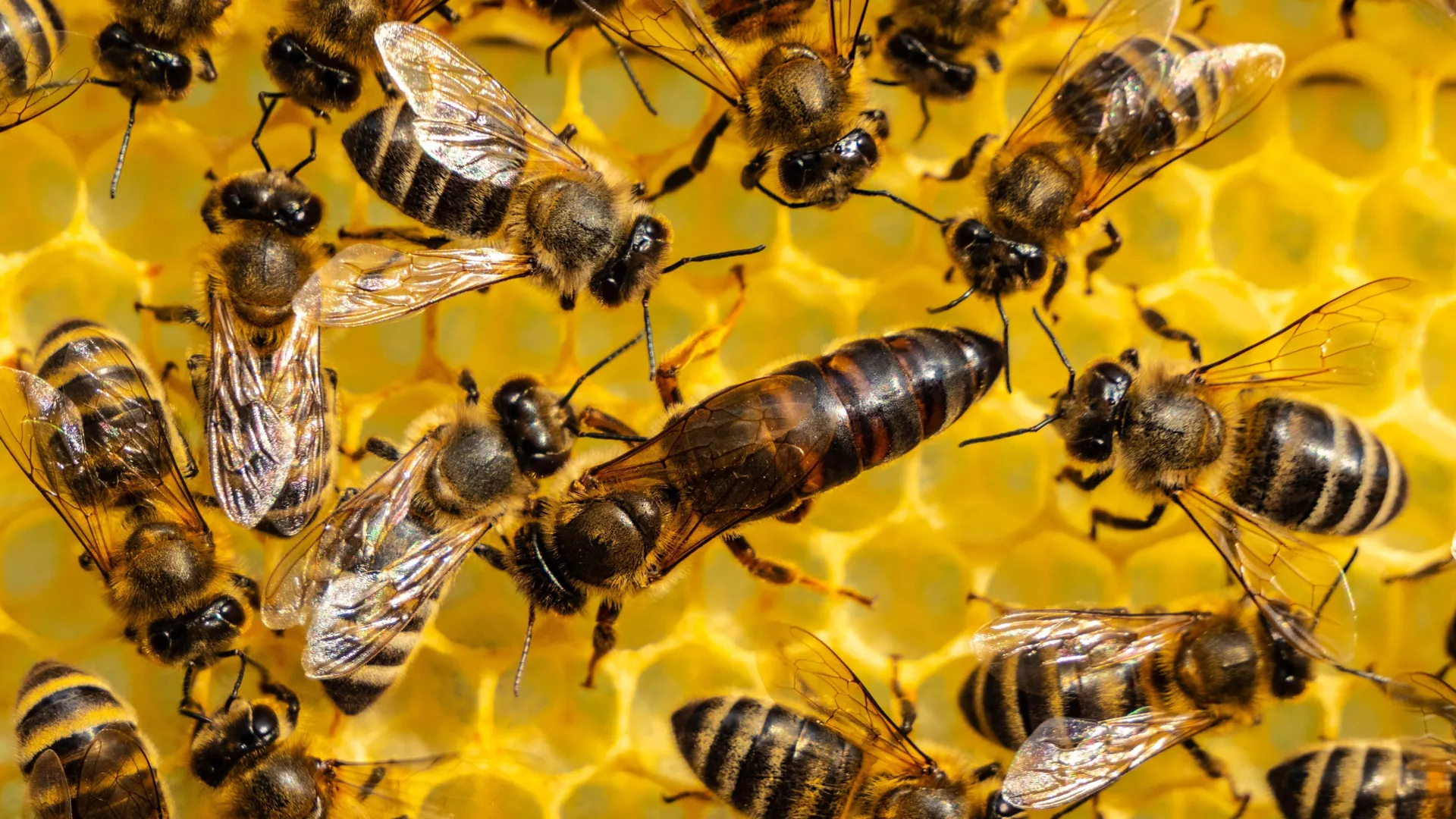
For over half a century, the architectural marvels of the insect world—the bustling, clockwork precision of an ant colony, the orchestrated labor of a honeybee hive, and the paper-thin fortresses of social wasps—have been viewed through a specific, elegant, and seemingly definitive genetic lens. Since the mid-20th century, the prevailing theory in evolutionary biology has posited that "eusociality," or the division of labor between reproductive queens and sterile workers, was a direct consequence of a peculiar genetic quirk known as haplodiploidy.
However, a groundbreaking study led by researchers at Arizona State University (ASU) has recently challenged this foundational dogma. By analyzing nearly 69,000 insect species, the team has demonstrated that the perceived link between genetics and social structure may be a case of evolutionary "mistaken identity," suggesting that the sophisticated cooperation we see in our gardens is driven by complex life-history traits rather than a simple chromosomal shortcut.
The Haplodiploidy Hypothesis: A 60-Year-Old Evolutionary Pillar
To understand the magnitude of this discovery, one must look at the theoretical framework that has dominated the field since the 1960s. Eusociality is arguably the most complex form of social organization in the animal kingdom. It is defined by three pillars: the overlapping of generations within a colony, cooperative brood care, and a reproductive division of labor where only a few individuals—the queens—reproduce, while the rest function as workers.
While this structure is ubiquitous among ants, bees, and wasps, it is vanishingly rare in the broader insect world. For decades, biologists sought a "smoking gun" to explain why these specific groups—the Hymenoptera—evolved such extreme altruism. They found it in haplodiploidy.
In a haplodiploid system, males develop from unfertilized eggs and carry only a single set of chromosomes (haploid), while females develop from fertilized eggs and carry two sets (diploid). This leads to a fascinating mathematical anomaly: because a father passes all his genes to his daughters, sisters in a haplodiploid colony share 75% of their genes with each other, but only 50% with their own potential offspring.
Under the logic of "kin selection," evolution favors individuals who help their relatives survive and reproduce if those relatives share enough genetic material. Theoretical models suggested that because sisters were "super-related" to one another, they gained a greater evolutionary payoff by helping their mother raise more sisters than by attempting to raise their own offspring. This elegant mathematical explanation became a staple of biology textbooks, representing one of the most celebrated intersections of genetics and social behavior.
Chronology of a Scientific Re-evaluation
The path to overturning this hypothesis was not paved by a single sudden epiphany, but by a painstaking, multi-year effort to modernize the data.
- The 1960s–1980s: The haplodiploidy hypothesis gains dominance. It becomes the standard explanation for the evolution of sociality in Hymenoptera. Comparative tests are largely theoretical, as computational power and vast genomic datasets are not yet available.
- The 1990s–2010s: Dissent begins to emerge. Researchers note that several eusocial species, such as termites and some beetles, do not follow the haplodiploid model, suggesting the theory is incomplete.
- 2020–2023: Sachin Suresh and Timothy Linksvayer, researchers at the ASU School of Life Sciences, embark on a massive comparative study. They aim to move beyond theoretical predictions and utilize modern phylogenetic comparative methods to test the hypothesis against the reality of nearly 69,000 insect species.
- 2024: The study is published in the journal Current Biology, formally concluding that the association between haplodiploidy and eusociality is an evolutionary artifact rather than a universal driver.
Supporting Data: Dissecting the Statistical Mirage
The ASU study represents one of the most comprehensive empirical tests in the history of evolutionary biology. Suresh and Linksvayer synthesized data on social behavior and genetics from across the insect tree of life, mapping these traits onto two of the most extensive species-level family trees currently available.
Initially, the data seemed to confirm the old guard’s theory. When the researchers ran a raw analysis, the correlation was clear: eusociality appeared significantly more frequently in insects with haplodiploid systems. However, as the researchers dove deeper into the phylogenetic nuances, the signal began to collapse.
The "aha!" moment occurred when the team isolated the aculeate Hymenoptera—the specific lineage that includes stinging wasps, bees, and ants. They discovered that nearly the entire statistical support for the haplodiploidy hypothesis was tethered to this single group. When the researchers adjusted their models to account for the unique evolutionary history of this lineage, the correlation vanished.
"When we formally tested it, we found there is no real association between the genetic determination system and eusociality," Sachin Suresh explained. "It has more to do with environmental factors and the life-history traits of insects."
When the team looked at the remaining 69,000 species—excluding the specific branch of aculeate Hymenoptera—they found that haplodiploid insects were no more likely to evolve eusociality than their diploid counterparts. The "genetic shortcut" was revealed to be a correlation of history, not a law of biology.
Official Responses and Theoretical Shifts
The implications of this research are profound. By stripping away the "genetic necessity" of eusociality, the scientific community is now forced to look toward alternative, perhaps more complex, explanations for why these insects cooperate.
"This is a fundamental shift," says the research team. For years, the field was constrained by the idea that we needed to find a specific genetic condition to trigger sociality. Now, the spotlight shifts to ecological and behavioral traits.
The researchers suggest that the repeat evolution of sociality in ants, bees, and wasps may be due to "pre-adaptations." These might include:
- Stingers: A powerful defensive tool that makes defending a nest a viable and highly beneficial strategy.
- Specialized Nesting: High-quality, defensible real estate that encourages long-term habitation.
- Extended Parental Care: Traits that evolved independently of sociality but provided the necessary foundation for adults to interact with their offspring in a communal setting.
These features, rather than a chromosomal inheritance pattern, likely created the "evolutionary trap" that pushed these lineages toward complex, cooperative societies.
Implications: The Future of Evolutionary Biology
The ASU study serves as a masterclass in the importance of modern, data-driven meta-analysis. It highlights a common trap in science: the tendency to allow a single, elegant theory to explain a phenomenon so thoroughly that we stop questioning the underlying data.
For the broader field of evolutionary biology, this study underscores the necessity of using large-scale comparative datasets to revisit foundational theories. As computational power continues to grow, we are likely to find that many of our "universal rules" are, in fact, localized phenomena shaped by the unique histories of specific evolutionary lineages.
The evolution of eusociality remains a testament to the power of cooperation, but we now know it is not a story written solely in the code of chromosomes. Instead, it is a mosaic of ecological pressures, behavioral innovations, and the long, winding path of adaptation. As we move forward, the focus will likely turn toward "life-history" studies—researching how the day-to-day survival challenges of an insect determine whether it remains a solitary creature or evolves into the complex, hive-minded architect of a sophisticated society.
By debunking a 60-year-old myth, Suresh and Linksvayer have not made the story of insect evolution less interesting. On the contrary, they have made it more human, more complex, and significantly more representative of the messy, unpredictable, and wondrous reality of the natural world. The ants and bees are no longer prisoners of their own genetics; they are active agents of their evolutionary destiny.