PEABODY, Mass. — Across the United States, the 2026 midterm primary season has developed into a crucible for the Democratic Party. Facing an ideological and generational inflection point following the 2024 election cycle, voters nationwide are actively re-evaluating what type of leadership is required to counter the second administration of President Donald Trump.
Nowhere is this philosophical tug-of-war clearer than in Massachusetts’ 6th Congressional District. In a congested primary race unfolding across the coastal suburbs north of Boston, Democratic voters are grappling with a fundamental strategic question: Should they send a battle-tested candidate with elite Washington connections to the Capitol, or is it time to empower a party outsider promising to dismantle a broken political establishment?
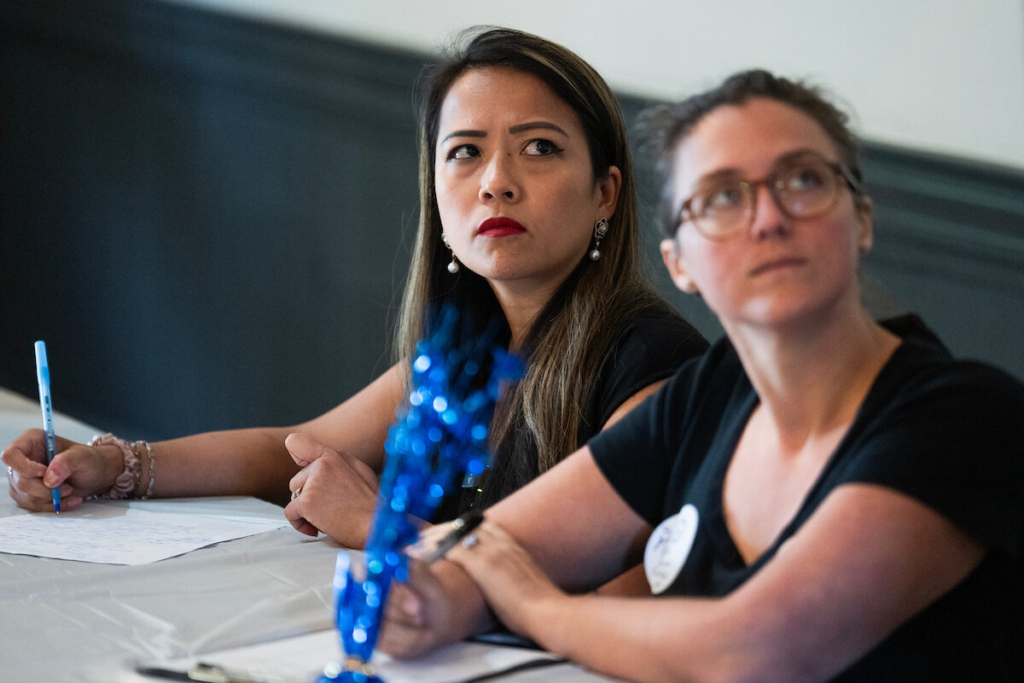
During an August 2026 candidate forum held inside a Veterans of Foreign Wars (VFW) post in Peabody—adorned with red, white, and blue balloons—the anti-incumbent, anti-status-quo sentiment among candidates was palpable, despite the absence of an actual incumbent on the ballot.
"We keep electing D.C. insiders… playing by the old playbook," warned state Rep. Tram Nguyen.
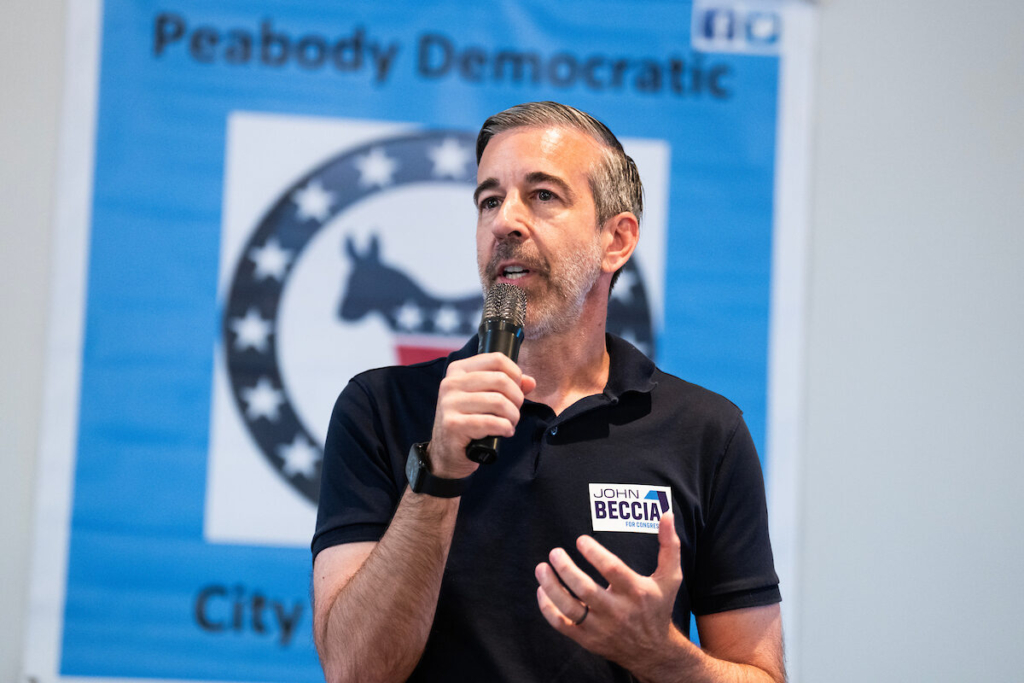
"People are fed up with the status quo," declared fintech executive John Beccia.
Former state Rep. Jamie Belsito offered an even starker assessment: "The Democratic Party is broken, figuratively and financially."
Yet, the primary contest features a unique dynamic. Unlike other recent blue-district primaries where entrenched long-term incumbents were ousted by progressive or younger challengers, the seat in Massachusetts’ 6th District is wide open. Six-term Democratic Rep. Seth Moulton vacated the seat to launch a U.S. Senate bid, leaving behind a highly competitive six-candidate Democratic primary set for Sept. 1, 2026.
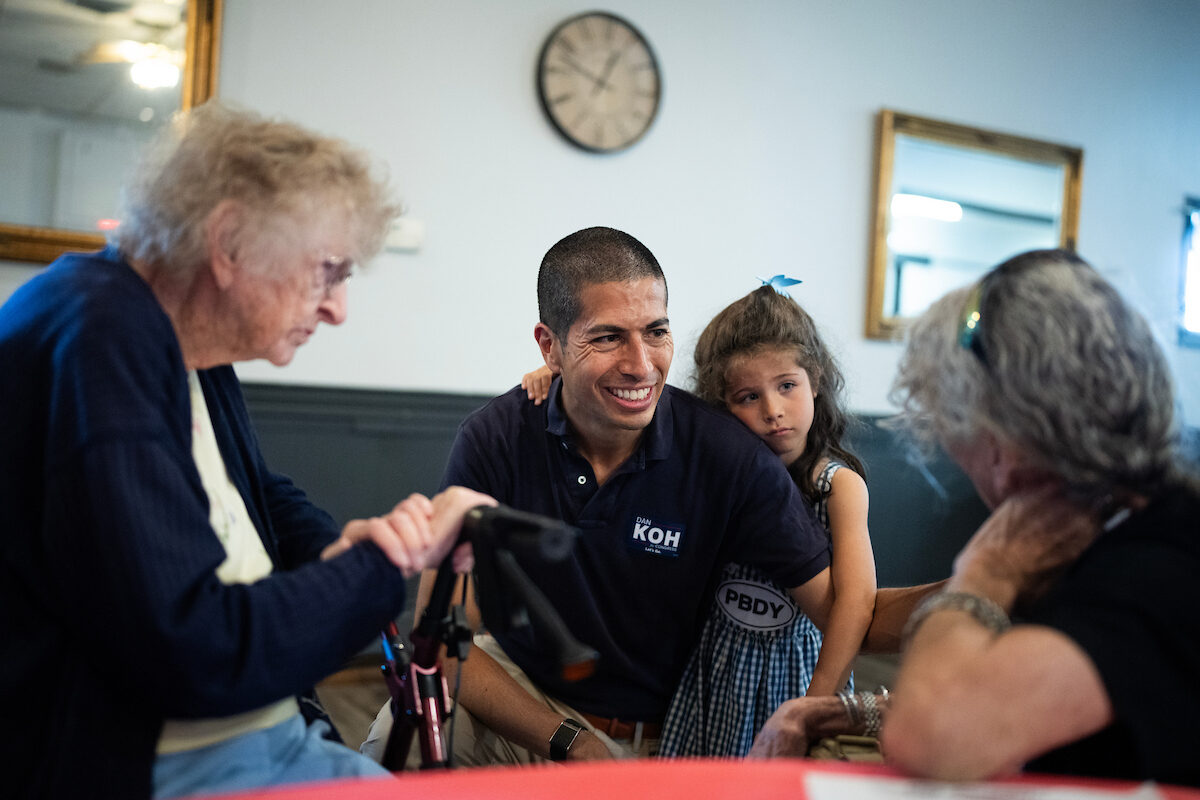
In the absence of an incumbent, the primary field has focused its sights on Dan Koh. Though Koh’s elected background consists of a single term on the Andover Select Board and an unsuccessful 2018 primary run in the neighboring 3rd District, his high-profile resume as a former senior adviser in President Joe Biden’s White House and chief of staff to former Labor Secretary Martin J. Walsh has positioned him as the de facto establishment candidate—and the primary target for his opponents.
Main Facts: The Race at a Glance
The Seat: Massachusetts’ 6th Congressional District, encompassing the state’s northeastern North Shore, including old-money enclaves, bustling suburban centers, and working-class coastal communities.
The Context: An open seat following six-term Rep. Seth Moulton’s decision to challenge for the U.S. Senate.
The Candidates: Six Democrats are competing in the Sept. 1, 2026 primary:
Dan Koh: Former Biden White House adviser and Labor Department chief of staff; top fundraiser.
Tram Nguyen: State Representative, former legal aid attorney, and Vietnamese refugee.
John Beccia: Fintech executive and self-funding candidate.
Jamie Belsito: Former state Representative with working-class roots.
Bethany Andres-Beck: Software engineer and progressive activist.
Mariah Lancaster: Former State Department and congressional aide.
General Election Landscape: The district is reliably Democratic; Vice President Kamala Harris carried the district by 21 percentage points in 2024. The primary winner will face Republican nominee Micah Jones, an Army veteran, in November.
Key Conflict: High-level Washington governance experience versus grassroots, working-class representation and anti-establishment reform.
Chronology: The Road to the September Primary
The path to the Sept. 1 primary has been defined by rapid political shifts and intensifying competition over the past year:
[Late 2025] ───────────────────> [Early 2026] ───────────────────> [Mid-2026] ───────────────────> [August 2026]
Rep. Seth Moulton announces     Six Democratic candidates         Dan Koh posts $4.5M fundraising  Candidates clash at Peabody forum;
Senate bid, leaving MA-06 open.  launch primary campaigns.         total; Super PACs enter race.    Biden/Harris ads launch nationwide.
Late 2025: Rep. Seth Moulton publicly announces he will not seek a seventh term in the House of Representatives, opting instead to enter the Democratic primary for the U.S. Senate seat held by Ed Markey. His departure opens up Massachusetts’ only unseated congressional district for the 2026 cycle.
Early 2026: A diverse slate of six candidates formally enters the race. Dan Koh quickly secures backing from prominent national party figures, while state Rep. Tram Nguyen and fintech executive John Beccia build robust campaign infrastructures to challenge Koh’s early momentum.
Spring 2026: The campaign turns increasingly costly. Campaign finance reports reveal that Koh raised $4.5 million through June 30, driven by national networks, while Beccia begins deploying personal resources to finance broadcast advertising.
Summer 2026: External groups enter the fray. Independent expenditure Super PACs supporting Koh and Nguyen launch targeted direct-mail campaigns across the district. Koh debuts broadcast ads featuring explicit endorsements from former President Joe Biden and Vice President Kamala Harris.
August 15, 2026: Candidates convene in Peabody for a final major candidate forum. Sharp exchanges highlight deep divisions over the national Democratic Party’s direction, set against the backdrop of the upcoming Sept. 1 primary election.
Supporting Data: Campaign Finances, District Demographics, and Baseline Metrics
The battle for the 6th District represents a major financial and political undertaking, driven by the district’s shifting economic conditions and high voter turnout expectations.
Campaign Finance Overview (As of Mid-2026 Filings)
Financial disclosures through the end of the second quarter illustrate a stark disparity in resources across the primary field:
Candidate
Primary Background / Role
Total Raised (Through June 30, 2026)
Primary Funding Source
Dan Koh
Former White House Adviser / Cabinet Aide
$4,500,000
National donors, establishment networks
John Beccia
Fintech Executive
Undisclosed (Top Tier)
Self-funding, private executive network
Tram Nguyen
State Representative
Undisclosed (Top Tier)
Grassroots contributions, labor unions
Jamie Belsito
Former State Representative
Lower Tier
Local individual donors
Bethany Andres-Beck
Software Engineer
Lower Tier
Small-dollar grassroots contributions
Mariah Lancaster
Former Congressional/State Dept Aide
Lower Tier
Local individual donors
Economic and Demographic Profile of MA-06
The 6th District covers the northeastern corner of Massachusetts, presenting a varied socioeconomic makeup that spans historic industrial cities, affluent suburban communities, and maritime centers:
Electoral Baseline: Analyzed by Inside Elections, the district maintained a +21 percentage point Democratic advantage in the 2024 presidential election, where Kamala Harris comfortably defeated Donald Trump within these municipal borders.
Economic Shifts: Peabody, historically known as a hub for leather manufacturing, reflects broader economic shifts within the district. Just four days prior to the August candidate forum, The Boston Globe designated Peabody as home to the nation’s hottest housing market, underscoring intense regional real estate pressures, suburban growth, and rising cost-of-living concerns for residents.
The central debate in the MA-06 primary centers on whether Washington political experience is an asset or a liability in the current political climate.
The Case for Experience: Dan Koh
Koh argues that his background at the highest levels of federal executive governance makes him uniquely qualified to defend Massachusetts interests against the Trump administration from day one.
"People want fighters against this president who are going to hold him accountable," Koh stated prior to the Peabody candidate forum. "I’ve been out there using the experience I had in the Biden White House, working in the Cabinet."
Responding to critics who question his decision to prominently feature former President Joe Biden in his television advertisements—given the contentious nature of Biden’s 2024 exit from the presidential race—Koh maintained that Biden’s legacy remains a positive anchor for Democratic primary voters.
"Plenty of people have their differences with the president," Koh noted. "But they remember what it was like when there was a president that they actually could look up to and admire, one that honored the presidency."
Koh’s rationale is endorsed by party veterans who argue that navigating federal agencies requires established relationships.
"We need a congressman who knows the lay of the land and can get things done," said former Congressman John F. Tierney, who represented the 6th District for nearly two decades before losing his seat to Seth Moulton in 2014. "Dan is very capable of getting around in Washington and working with everybody there."
                          DAN KOH'S CAMPAIGN PILLARS
  ┌───────────────────────────┬───────────────────────────┬───────────────────────────┐
  │      White House Ties     │     Cabinet Experience    │   Federal Readiness       │
  │ Senior Adviser to Biden   │ Chief of Staff to         │ Positions experience as   │
  │ administration.           │ Labor Sec. Marty Walsh.   │ essential to counter GOP. │
  └───────────────────────────┴───────────────────────────┴───────────────────────────┘
The Outsider Counter-Argument: Lived Experience over "Fancy Resumes"
Koh’s opponents argue that reliance on Washington connections ignores growing discontent among working-class voters who feel left behind by the party establishment.
State Rep. Tram Nguyen has centered her platform on her personal history as a Vietnamese refugee who grew up in public housing, contrasting her lived experience with institutional political credentials.
"People are feeling as though elected officials are detached from their lives," Nguyen said at the forum. "That’s why we need new voices and fresh perspectives and people with lived experience going to Congress."
Former state Rep. Jamie Belsito and software engineer Bethany Andres-Beck echoed these concerns, challenging the assumption that executive appointments automatically translate to effective representation.
"In the Democratic Party, we consistently mistake a fancy resume for real experience," said Tristan R. Brown, a 41-year-old data privacy attorney from Peabody attending the forum. "These things are not the same, and if we want to be a party of working-class people, we need working-class candidates who can actually speak from experience." Brown confirmed he is supporting Belsito.
Andres-Beck took direct aim at Koh’s reliance on endorsements from the party’s national leadership, stating bluntly:
"I would not personally put Biden’s endorsement on my webpage."
Former congressional aide Mariah Lancaster emphasized that party frustration extends deep into the Democratic base, arguing that national leadership has lost touch with economic struggles:
"I know that my faith in the Democratic Party is shaken, and I suspect in this room I am not alone in that, because we know that even as Democrats, we have not been delivering for working families."
Despite the sharp rhetoric exchanged throughout the campaign, some local voters view the debate as a healthy reflection of the party’s bench strength.
"We have six excellent candidates," said Mary Duff Henry, an undecided voter and union activist from Peabody. "We’ll have excellent representation no matter who wins."
Implications: A Benchmark for the National Democratic Strategy
The outcome of the Sept. 1 primary in Massachusetts’ 6th District carries broader political implications for the Democratic Party as it seeks to rebuild its coalition ahead of the 2026 midterms:
Testing the Legacy of the Biden-Harris Era: Koh’s decision to make his service in the Biden White House a centerpiece of his campaign serves as a direct test of how primary voters view the previous administration’s record. A victory for Koh would suggest that establishment governance credentials remain a potent selling point in suburban districts. A defeat, conversely, would highlight lingering dissatisfaction with the party leadership’s post-2024 direction.
The Debate Over Working-Class Authenticity: The primary underscores an ongoing debate within the party over candidate recruitment. Candidates like Nguyen and Belsito argue that winning back working-class voters requires nominees whose personal backgrounds mirror those of their constituents, rather than candidates with traditional political resumes.
Super PAC Influence in Open-Seat Primaries: The heavy spending by independent expenditure groups and self-funding candidates in MA-06 highlights how open seats in safe blue districts often turn into high-cost contests, shaping national fundraising strategies in midterm election cycles.
Governing Strategy in a Divided Washington: The race presents two distinct visions for congressional oversight during the Trump administration: one reliant on institutional experience and legislative mechanics (represented by Koh), and another focused on populist movement-building and systemic reform (represented by his challengers).
As voters in the 6th District head to the polls on Sept. 1, their decision will provide a key indicator of whether Democratic voters prefer traditional political experience or systemic party reform heading into the 2026 midterm elections.