Disclosure: This page may contain affiliate links. If you click and sign up, make a deposit, or place a wager, we may earn a commission at no additional cost to you.
The intensity of the 2026 NFL preseason shifts into high gear this Friday as the second week of exhibition play kicks off with a compelling three-game slate. For Daily Fantasy Sports (DFS) enthusiasts, the preseason offers a unique landscape—one defined by volatility, shifting depth charts, and the relentless pursuit of "sleeper" value. As roster spots continue to be contested, understanding the nuances of coaching staff rotations is the key to unlocking tournament-winning lineups.
To help navigate this complexity, we turn to the expertise of R.J. White, a premier NFL handicapper and SportsLine’s all-time No. 1 NFL ATS expert. With two major victories in the prestigious Westgate Las Vegas SuperContest under his belt, White brings a level of analytical rigor to the DFS format that is rarely matched.
Main Facts: The Friday Night Slate
Friday’s three-game schedule features a diverse set of matchups:
- Pittsburgh Steelers vs. New York Jets: A spotlight game featuring high-upside quarterback talent.
- Carolina Panthers vs. Jacksonville Jaguars: A crucial test for veterans and newcomers alike.
- Green Bay Packers vs. Denver Broncos: A battleground for positional depth.
In these contests, every player on DraftKings and FanDuel is priced at a flat $5,500 and $6,000 respectively. This "level playing field" format removes the traditional salary cap pressure, forcing users to rely almost entirely on volume projections and expected snap counts rather than avoiding expensive "studs."
Chronology and Momentum: From Week 1 to Week 2
The transition from Week 1 to Week 2 is often the most critical window in the preseason. In Week 1, the primary objective is evaluation of the entire roster. By Week 2, coaching staffs begin to narrow their focus, giving extended looks to players who have separated themselves in camp.
The Rise of Drew Allar
Steelers quarterback Drew Allar proved to be the ultimate Week 1 DFS asset. The former Penn State standout dominated the field, accounting for three total touchdowns—two through the air and one on the ground. His performance solidified his status as a "must-roster" player for those tracking the Pittsburgh quarterback carousel. As the Steelers head into Friday, the coaching staff has made it clear that they intend to maintain a high-volume passing approach to evaluate their younger signal-callers, keeping Allar in the conversation for top-tier production.
The Pickett Factor
On the other side of the ledger, former first-round pick Kenny Pickett finds himself in a new environment with the Carolina Panthers. Pickett’s Week 1 performance was highly efficient; he completed 84.2% of his passes for 92 yards and a touchdown. Significantly, Pickett saw more passing attempts than all other Panthers quarterbacks combined. This level of volume is the holy grail for DFS players, as it provides a stable floor for points in a format where variance is high.
Supporting Data: Why Volume Dictates Success
In the preseason, talent is secondary to opportunity. A player may be the most gifted athlete on the field, but if they are only scheduled for two series, their DFS utility is limited. R.J. White’s methodology focuses on identifying "volume magnets"—players who are guaranteed to see the field for the second and third quarters, which is when the talent gap between teams becomes most pronounced.
Braelon Allen’s Opportunity
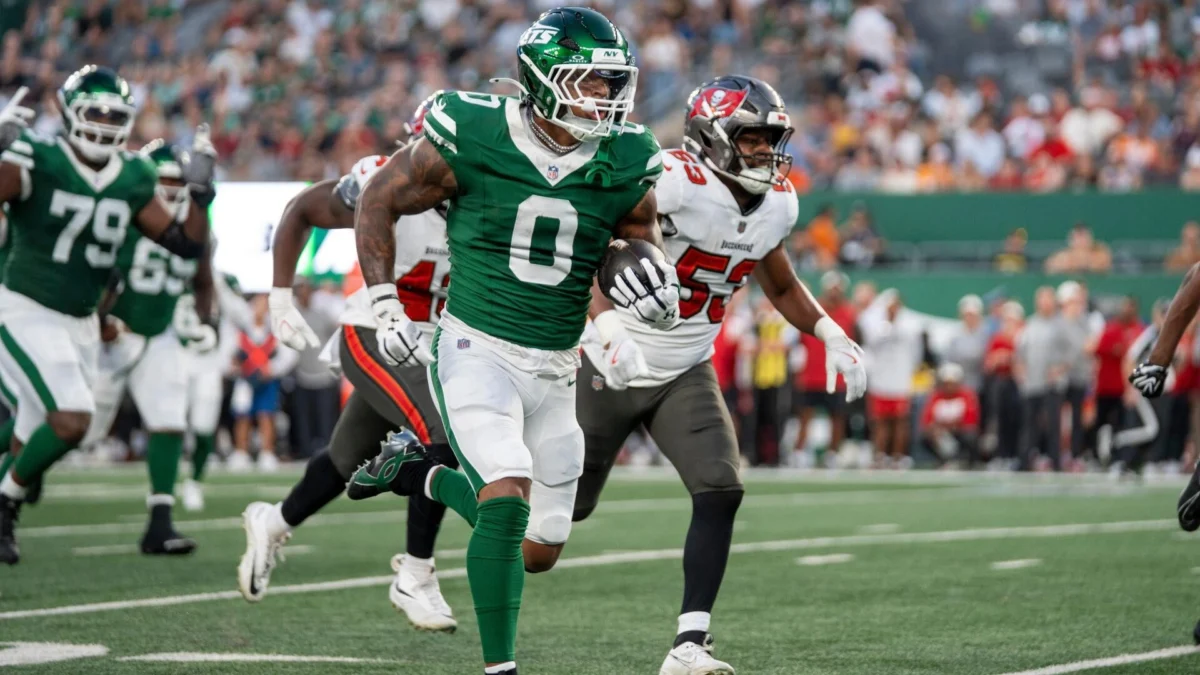
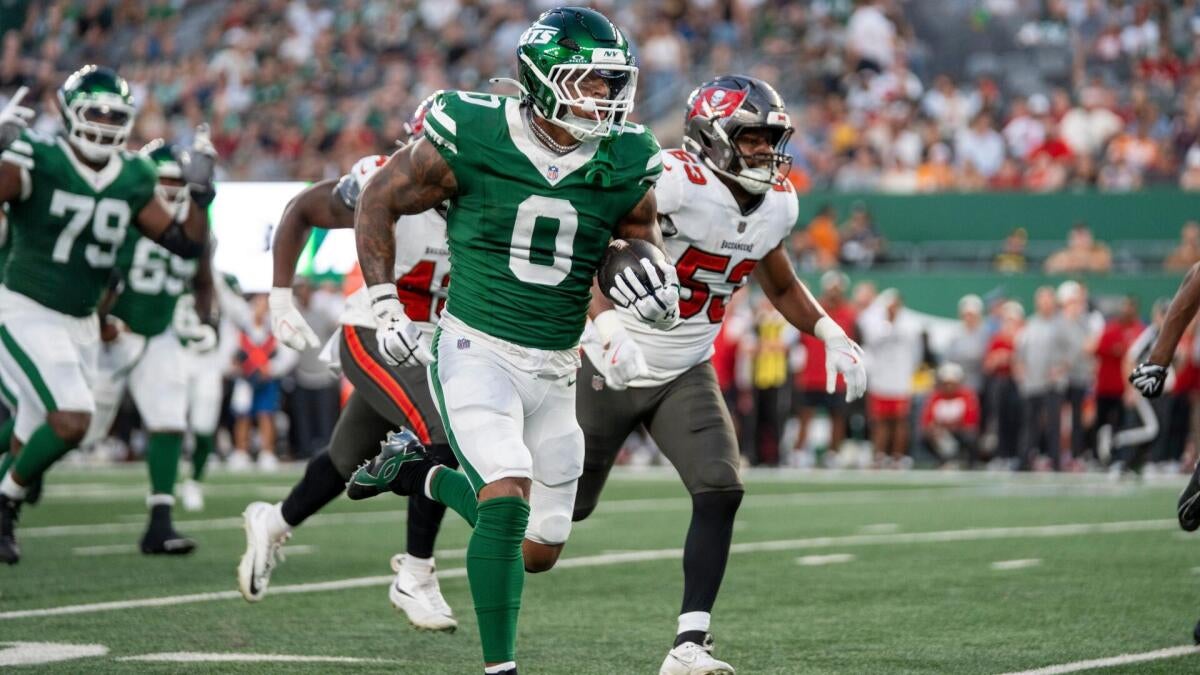
One of White’s primary targets for Friday is New York Jets running back Braelon Allen. With starting back Breece Hall nursing a groin injury, the pathway for Allen is clear. Jets head coach Aaron Glenn has hinted that starters will see limited action, which naturally creates a vacuum that backups must fill.
Allen’s efficiency in Week 1 was undeniable: he tallied 44 yards and a touchdown on just four carries. His history as a standout rookie in 2024—where he racked up 482 scrimmage yards despite being the league’s youngest player—suggests he possesses the vision and power to exploit second-team defensive units. In a slate where everyone is priced the same, Allen represents a high-floor, high-ceiling play that simplifies the running back position for your lineup.
Germie Bernard and the Passing Game
The receiving corps is notoriously difficult to predict in the preseason, but R.J. White is prioritizing Pittsburgh wide receiver Germie Bernard. Bernard led the Steelers in targets (five) and receptions (four) during Week 1, totaling 51 yards.
The strategy here is rooted in coach Mike McCarthy’s stated intent. McCarthy has indicated that the Steelers will lean heavily on Allar and Will Howard to evaluate their young receiving threats. As a second-round pick who led Alabama in every major receiving category last season—64 catches, 862 yards, and 7 touchdowns—Bernard has the pedigree to translate his collegiate success into preseason dominance. If he continues to see the target volume from Week 1, he is a statistical lock for optimal lineups.
Official Responses and Tactical Implications
The nature of the NFL preseason means that the most valuable information comes directly from the podium. Coaches’ comments regarding playing time are the "insider trading" of the DFS world.
The Philosophy of Evaluation
Coaches often use the second week of the preseason to test chemistry between new quarterbacks and receivers. For example, the Panthers’ commitment to Kenny Pickett indicates a desire to see if he can serve as a long-term solution. When a coach makes a statement like "we want to give our young players a chance to impress," they are signaling to DFS players exactly where the points will come from.
White’s analysis hinges on interpreting these comments. When a coach confirms a specific quarterback rotation, the receivers associated with those quarterbacks become exponentially more valuable. This is why building "stacks"—pairing a quarterback with his primary target—is the most effective way to leverage the high-variance nature of preseason DFS.
Managing Risk
The biggest risk in Friday’s slate is the "bust" factor—players who start but see minimal action, or players who play late into the fourth quarter against third-string defenders who may not be able to execute at a high level. White’s approach is to avoid the "star" veterans who might only play one series, instead focusing on the "middle-class" of the roster—players fighting for the final 53-man roster spots. These athletes are incentivized to play hard for every snap, providing the necessary consistency to win in tournament formats.
Strategic Outlook: Setting Your Lineup
As you prepare your rosters for Friday’s action, remember that the goal is not to predict the winner of the actual game, but to predict the players who will handle the most volume.
- Monitor the Inactives: Before lock, check the official injury reports. If a projected starter is ruled out, their backup becomes an immediate priority, regardless of name recognition.
- Prioritize Target Share: In the preseason, targets are more predictable than carries. Seek out receivers who are being featured in the two-minute drill or the red zone.
- Trust the Expert Consensus: With the complexity of roster turnover in 2026, relying on analysts like R.J. White who monitor the granular details of camp battles provides a significant competitive advantage over the casual player.
R.J. White’s deep dive into the Friday slate provides a blueprint for success, but the nuances of the lineup construction—such as his "undervalued player" pick—are what separate the winners from the rest of the field. By utilizing his expert insights, you can navigate the unpredictability of the 2026 preseason and position yourself for a successful Friday night.
For the full, finalized list of R.J. White’s optimal NFL DFS picks, including his top-tier stacks and under-the-radar sleepers, visit SportsLine today.
Visit SportsLine now to see optimal NFL DFS picks, rankings, advice, and stacks, all from a DFS expert who has cashed twice in a prestigious NFL handicapping contest, and find out.