By Editorial Staff
Published June 28, 2026
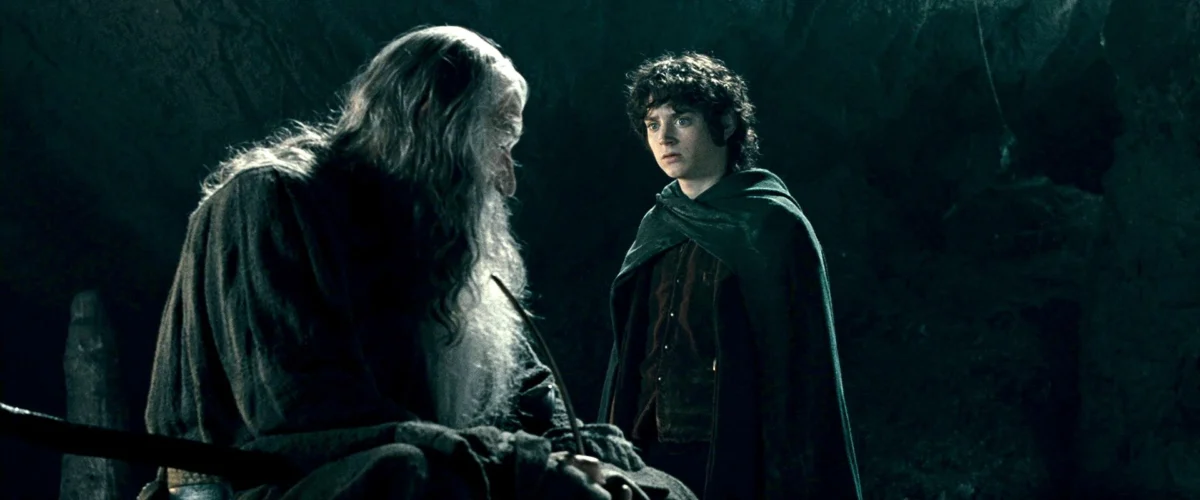
In the hallowed halls of Oxford University, where J.R.R. Tolkien once paced as a professor of Anglo-Saxon, a modern titan of the fantasy genre stood to challenge the status quo. Brandon Sanderson, the prolific architect behind the Cosmere universe, Mistborn, and the conclusion of The Wheel of Time, delivered the prestigious Tolkien Lecture on Fantasy Fiction this week. His message was both a tribute to the past and a stern warning for the future: if the fantasy genre is to survive, it must stop attempting to replicate the shadow of Middle-earth.
The Core Argument: Beyond the Tolkienian Blueprint
The central thesis of Sanderson’s lecture, which has already sparked significant discourse among literary critics and fans, revolves around his controversial essay, "How Tolkien Ruined Fantasy." While Sanderson acknowledged during his address that the title was intended as "clickbait," the underlying sentiment is deeply rooted in his observations of the publishing landscape over the last several decades.
Sanderson argues that Tolkien’s achievement was so singular and so complete that it created a stifling environment for subsequent writers. By setting the gold standard for world-building—complete with invented languages, extensive mythology, and a rigid moral hierarchy—Tolkien inadvertently forced the genre into a box. For decades, publishers and authors alike chased the "Tolkien-esque" aesthetic, leading to a glut of derivative works that favored tropes over innovation.

"Many readers told me during my early years of publishing that they were falling out of love with the genre," Sanderson noted. "They felt that fantasy had become stagnant, no longer providing the sense of wonder or the genuine exploration of new ideas that it once promised."
A Chronology of a Genre’s Stagnation
To understand the weight of Sanderson’s critique, one must look at the historical trajectory of fantasy as a literary category:
- 1954-1955: The publication of The Lord of the Rings changes the landscape of modern literature, establishing high fantasy as a commercially viable and intellectually rigorous genre.
- 1960s-1980s: A wave of "Tolkien clones" emerges. While some succeed, the template of the "Dark Lord," the "Fellowship," and the "Farmboy Hero" becomes the industry standard.
- 1990s: A period of exhaustion. Readers begin to pivot toward darker, grittier narratives or move away from traditional epic fantasy entirely, feeling the genre has become repetitive.
- 2000s-2010s: The rise of subversion. Authors like George R.R. Martin and, eventually, Sanderson himself, begin to move away from pure Tolkien imitation, introducing complex political machinations and "hard" magic systems.
- 2026: Sanderson’s Oxford lecture marks a defining moment, calling for a total departure from the "imitation model" in favor of diverse, culturally specific, and narratively innovative structures.
Supporting Data: The Cost of Conformity
The stagnation Sanderson describes is not merely a subjective feeling; it is reflected in the evolution of publishing trends. Market analysis suggests that in the late 20th century, the barrier to entry for "Epic Fantasy" was the ability to emulate the Lord of the Rings style. This created a "monoculture" where fantasy was often dismissed by mainstream critics as mere escapism that relied on archaic European folklore motifs.
Sanderson points to the necessity of "Recovery, Escape, and Consolation"—the three core emotions Tolkien identified as the primary functions of fantasy. According to Sanderson, these elements should not be copy-pasted; they must be rediscovered through new cultural lenses. "We need a variety of places to explore, from a variety of diverse roots and narrative traditions," he asserted. If the genre remains a closed loop of elves, dwarves, and rings, it risks irrelevance in an increasingly globalized literary market.

Official Responses and Literary Implications
The academic community and fellow authors have reacted to the lecture with a mixture of reverence and debate. Critics of Sanderson’s stance argue that Tolkien’s work provided a necessary foundation—a "common language" for fantasy that allowed the genre to grow into the behemoth it is today. They contend that the "Tolkien template" is not a cage, but a starting point.
However, many contemporary authors have rallied behind the call for more radical experimentation. The implication of Sanderson’s speech is clear: the next generation of fantasy writers should prioritize original world-building and narrative experimentation over the comfort of established archetypes.
"If we continue to rely on the same tropes, we lose the ‘impossible’ nature of the genre," Sanderson explained. "Fantasy is not about the set pieces; it is about the exploration of the human condition in impossible circumstances."
Empathy and Hope: The Moral Imperative
Beyond the structural critiques, the lecture pivoted toward a defense of the genre’s value. In an era often defined by cynicism and social fragmentation, Sanderson made a passionate plea for the role of fantasy in the modern world.
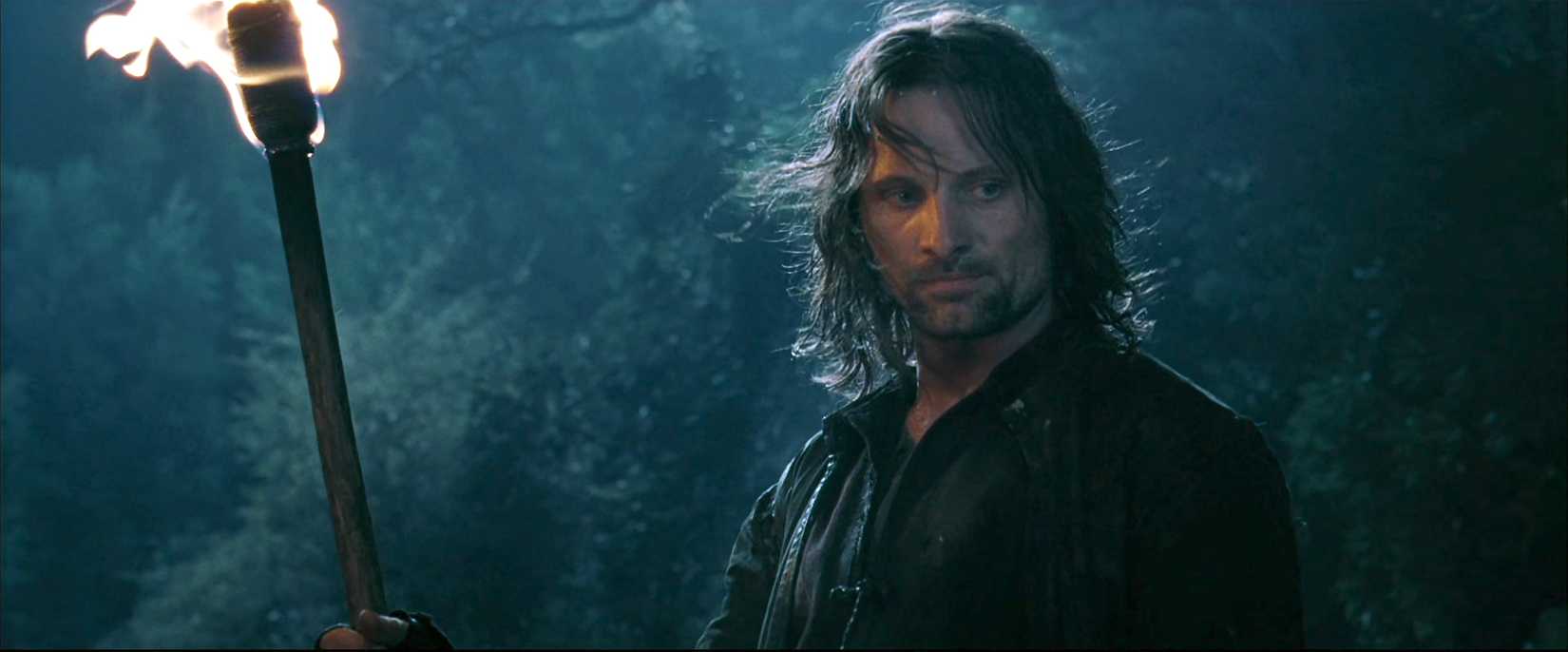
"Fantasy is often treated as a lesser form of literature, a playground for the immature," he said. "But it is actually a vital tool for empathy. When we read about a world that is not our own, we are forced to challenge our perceptions, to step into the shoes of others, and to imagine a future that is better than the present."
Sanderson concluded by framing fantasy as the "genre of the impossible." He argued that by imagining impossible worlds, we cultivate the cognitive flexibility required to solve real-world problems. The survival of the genre, he suggested, depends on its ability to offer what the modern reader needs most: a genuine sense of wonder, a deeper sense of empathy, and, perhaps most importantly, a resilient, unwavering hope.
Looking Forward: A Call to Action
The lecture serves as both a roadmap and a challenge. For aspiring writers, the instruction is explicit: stop looking at the map of Middle-earth and start charting new territories. For publishers, it is a warning that the market for derivative content is shrinking.
As the genre moves into the second half of the 2020s, the "Sanderson Doctrine" suggests that the future of fantasy lies in its diversity. By incorporating non-Western mythologies, challenging traditional power structures within stories, and moving beyond the binary of good vs. evil that defined the mid-20th century, fantasy can reclaim its place at the vanguard of literature.

Whether the industry will heed this call remains to be seen. However, one thing is certain: Brandon Sanderson has started a conversation that will define the next decade of speculative fiction. The shadow of the Ring is long, but for the first time in many years, the path forward appears to be leading away from it, toward an horizon that is entirely, and beautifully, uncharted.