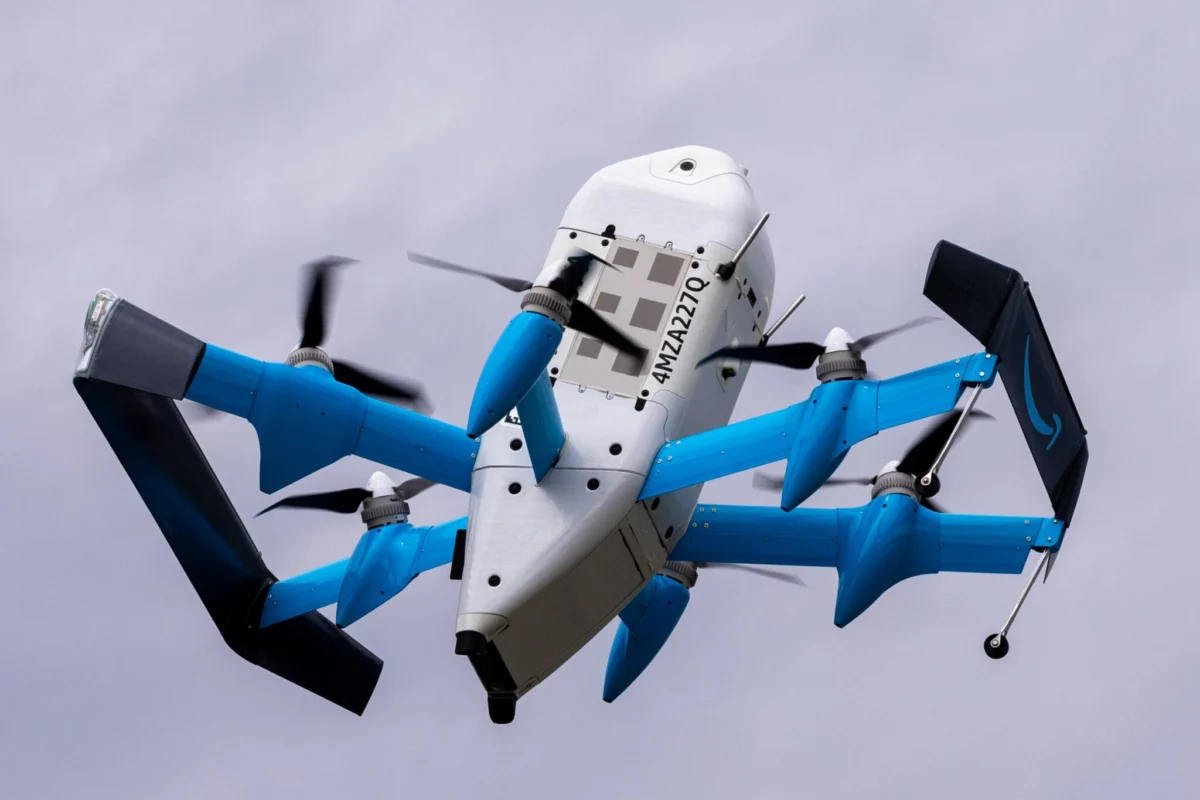
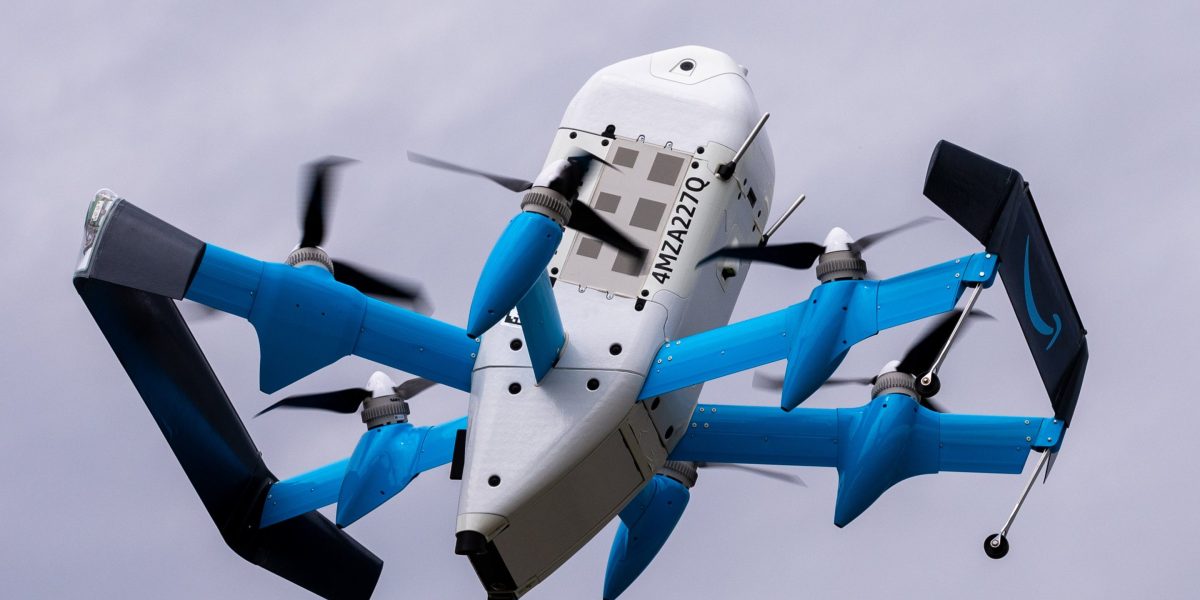
Thirteen years ago, Jeff Bezos, then-CEO of Amazon, stood before a national audience on CBS’s 60 Minutes and unveiled a vision that seemed more akin to science fiction than retail logistics. Holding a prototype of an autonomous "octocopter," Bezos predicted that within four to five years, 30-minute airborne delivery would be the standard for Amazon customers. Since that 2013 reveal, the e-commerce giant’s "Prime Air" initiative has faced a gauntlet of technical failures, regulatory roadblocks, and public skepticism.
However, a massive new expansion plan suggests that Amazon is finally ready to move beyond the experimental phase. The company recently announced an aggressive push to bring drone delivery to nearly 500 U.S. cities and towns by the end of this year. This represents a sixfold increase in its drone network footprint, potentially bringing airborne logistics to tens of millions of customers.
Main Facts: The Scope of the Expansion
Amazon’s latest strategic pivot aims to integrate drone delivery into the broader metropolitan landscapes of the United States. The expansion focuses on major hubs, including the Chicago, Syracuse, Cleveland, and Atlanta areas. While the company has been tight-lipped regarding the exact size of its fleet or the specific number of daily sorties it expects to fly in each location, the parameters of the service are now clearly defined.
Service Specifications and Eligibility
To utilize the service, customers must navigate the Amazon app for eligible items. The criteria for drone delivery are currently restricted by weight and volume:
- Weight Limit: Items must weigh five pounds or less.
- Dimensions: The package must fit within a container roughly the size of a large shoebox.
- Cost Structure: For Amazon Prime members, the service is free on orders over $50. Orders under that threshold incur a $2.99 fee. Non-Prime members are charged a flat rate of $4.99 per delivery.
According to Amazon, these drones—which depart from specialized fulfillment sites—can reach a customer’s doorstep in as little as 30 minutes. However, the service remains geographically tethered. Current drone technology limits the flight radius to approximately seven miles from the launch point. Furthermore, the service is primarily restricted to suburban environments, where the lack of high-rise buildings and complex urban "canyons" makes autonomous navigation significantly safer.
Chronology: From Visionary Concept to Operational Reality
The path to 500 cities has been anything but linear. The history of Prime Air is a study in the "bleeding edge" of technology, where visionary goals often outpaced the realities of aerospace regulation and hardware reliability.
2013–2019: The "Visionary" Years
Following Bezos’s initial reveal, Amazon spent years in a cycle of rapid prototyping. Under the leadership of Gur Kimchi, the program focused heavily on the "moonshot" aspect of the technology—building autonomous systems that could "see and avoid" obstacles. However, while the technology progressed, the regulatory framework remained stagnant. The Federal Aviation Administration (FAA) struggled to categorize these unmanned aerial vehicles (UAVs) within a system designed for human-piloted aircraft.
2020: The Pivot to Professionalism
In 2020, Amazon signaled a shift in strategy by replacing Kimchi with David Carbon, a former Boeing executive. This move was widely interpreted as Amazon’s acknowledgement that it needed "aerospace DNA" rather than just "Silicon Valley DNA" to satisfy federal regulators. Carbon’s tenure brought a more disciplined, safety-first approach, though it initially caused a culture clash that led to the departure of several original team members, momentarily stalling the project.
2022–2025: Testing and Turbulence
The program began localized testing in Lockeford, California, and College Station, Texas. These sites served as real-world laboratories but also highlighted the program’s growing pains. In the fall of 2025, two delivery drones collided with a crane during a test in Arizona, resulting in a fire. More recently, in July, a drone crashed into a garden in Darlington, UK, during a delivery attempt. These incidents, combined with noise complaints from residents in testing zones, forced Amazon to shutter its Lockeford and College Station operations in favor of the new, more robust expansion sites.
Supporting Data: The Logistics of a Giant
To understand why Amazon is doubling down on drones, one must look at the sheer scale of its logistics machine. While David Carbon recently stated that Amazon has delivered "hundreds of thousands" of packages by drone this year, that figure is a drop in the bucket compared to the company’s overall output.
The Volume Gap
Amazon delivers approximately 20 million packages every day in the United States, according to data from the market research firm ShipMatrix. Even if drone deliveries reached one million per year, they would still account for less than 0.02% of Amazon’s total domestic volume. This suggests that for the near future, drones are a premium "speed" solution rather than a replacement for the ubiquitous blue delivery van.
Infrastructure and Investment
The drone expansion is supported by Amazon’s massive investment in "sub-same-day" (SSD) centers. There are currently at least 65 of these specialized facilities across the U.S. These centers are strategically located closer to urban cores and are stocked with the most popular items to ensure rapid turnaround.
- Third-Party Subsidy: Amazon’s logistics network is largely funded by the fees it charges third-party sellers (which account for nearly 25% of its total revenue) and its 200 million Prime members worldwide.
- The 5-Pound Rule: Logistics experts note that roughly 80% of Amazon’s total package volume falls under the five-pound limit, meaning the "addressable market" for drones is theoretically massive, provided the radius and battery life issues are solved.
Official Responses and Regulatory Challenges
The primary hurdle for Amazon remains the FAA. In recent regulatory filings, Amazon has noted that GPS signals can degrade at the lower altitudes required for yard deliveries. The company has petitioned regulators for permission to use specialized wireless frequencies to maintain drone connectivity.
The FAA’s Stance
The FAA has traditionally evaluated aircraft based on standards for manned flight. Gaining Part 135 air carrier certification—which allows a company to operate a fleet of drones as a commercial airline—has been a grueling process for Amazon. However, a proposed FAA rule regarding "Beyond Visual Line of Sight" (BVLOS) flights is currently under review. If approved, this would allow drones to fly much further than the current seven-mile radius, as operators would no longer need to maintain a direct line of sight with the aircraft.
Executive Defense
In response to noise complaints, Amazon spokespeople have emphasized that each generation of Prime Air technology has seen significant acoustic improvements. David Carbon has maintained that the drones are "no louder than an idling delivery truck" and are essential for reducing the carbon footprint associated with traditional road-based delivery.
Implications: The Future of Labor and Speed
The expansion of Prime Air is not merely a technological experiment; it is a strategic hedge against a shifting labor and regulatory landscape.
The Labor Factor
The push for automation comes at a time of increasing tension between Amazon and labor advocates. In New York City, for example, Mayor Zohran Mamdani has supported legislation that would require companies like Amazon to classify their delivery drivers as employees rather than independent subcontractors. By shifting toward autonomous drones, Amazon can mitigate the rising costs and legal complexities associated with a human workforce.
The Competitive Landscape
Amazon is not alone in this race. Walmart, in partnership with Alphabet’s Wing, has also been expanding its drone efforts, with plans to reach 40 million American customers by 2027. This competition is driving a "speed war" where the goal is no longer two-day or one-day shipping, but sub-45-minute delivery.
Urban vs. Rural Dynamics
Currently, the "10-foot radius" safety requirement for drone landings limits the service to suburban homes with yards. Josh Lowitz, co-founder of Consumer Intelligence Research Partners, notes that if Amazon can improve battery life to extend the range to 15 miles, the service could become a lifeline for rural areas where traditional delivery is slow and expensive. Conversely, the "last mile" in dense urban environments like Manhattan remains the "final frontier" that drones have yet to conquer.
Conclusion
Thirteen years after Jeff Bezos’s bold prediction, Amazon is finally attempting to scale Prime Air into a legitimate branch of its logistics empire. The move to 500 cities marks a transition from "if" to "how" drone delivery will function in American society. While the technical and regulatory challenges remain formidable, Amazon’s willingness to invest billions into the sky suggests that the drone buzz may soon be as common a sound in the American suburbs as the rumble of a delivery truck. For Amazon, the goal is clear: in the race for consumer dominance, the fastest way to the customer’s heart is through the air.