For centuries, the history of human civilization has been written in the skins of animals. From the legal codices of medieval Europe to the sacred religious texts of Ethiopia, parchment has served as the enduring substrate of our collective memory. Now, a groundbreaking development in forensic science is allowing researchers to reach past the ink and into the biological record, extracting genetic data from these manuscripts without causing a single blemish to the artifacts themselves.
This new methodology, recently detailed in the journal Manuscript Studies, represents a watershed moment for the intersection of genomics and the humanities. By harvesting cellular material from historic documents, scientists are transforming dusty library shelves into vast, untapped biological archives, offering a window into the evolution of livestock, the history of trade, and the nuances of pre-modern life that have remained hidden for over a millennium.
The Biological Tapestry: Parchment as a Genetic Record
To understand the magnitude of this discovery, one must first understand the nature of the medium. Unlike paper, which is derived from wood pulp or rags, parchment is produced from animal skins—typically sheep, goat, or calf. Through a process of scraping, cleaning, and stretching, these skins were transformed into a surface capable of holding ink for centuries.
Crucially, the biological components of the animal—the DNA residing within the skin cells—were never fully eradicated. While the parchment underwent chemical treatments to become a writing surface, it remained, at a molecular level, a biological relic.
"Because they are made from animal skins, it is often possible to extract genetic information from parchments," explains Tim Stinson, an associate professor of English at North Carolina State University and the corresponding author of the study. "That genetic information, in turn, offers us a window into the past, answering questions about things such as when and where a manuscript was made."
For historians, this is a revolutionary development. While the written text provides the what and the why of history, the DNA provides the who—not just the human authors, but the animal populations that supported the societies in which these documents were created.
Chronology of a Scientific Breakthrough
The path to this discovery was paved by a growing interdisciplinary desire to bridge the gap between hard science and the humanities.
- Initial Conceptualization: Recognizing that parchment acts as a biological archive, researchers began seeking non-invasive ways to sample these materials. Traditional methods often involved cutting small snippets or removing fragments, which was strictly prohibited by most curators of rare, culturally sensitive manuscripts.
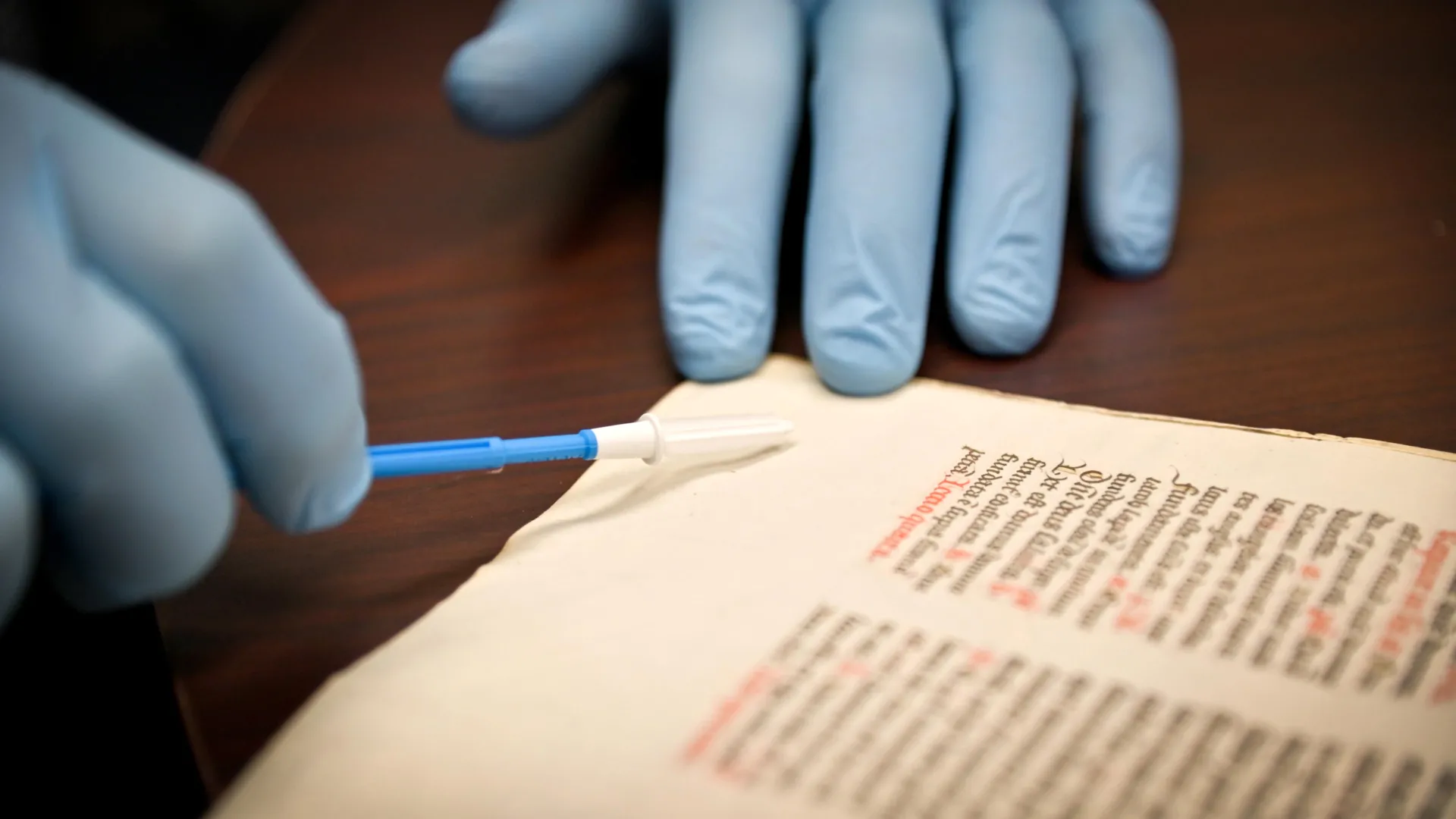
- The Pilot Phase: A team at North Carolina State University, in collaboration with experts from Duke University and Western Sydney University, sought to solve the access problem. They turned to cytology brushes—the same gentle, dry instruments used in human medicine for Pap smears—as a potential sampling tool.
- The Rubenstein Study: To validate their theory, the team conducted a study on 91 manuscripts housed at Duke University’s Rubenstein Library. These documents, ranging in origin from England to Ethiopia and dating from the late eighth to the early 20th century, provided a diverse testing ground.
- Methodological Refinement: The team demonstrated that a simple, non-destructive rub of the parchment surface collected enough cellular material for high-fidelity DNA extraction without leaving any visible trace or causing mechanical damage to the artifact.
- Publication and Peer Review: The findings were finalized and published in the open-access journal Manuscript Studies, under the title "Adventures in the Animal Archive: New Techniques for the Genetic Analysis of Parchment Manuscripts."
Supporting Data: The Power of Forensic Sequencing
The methodology is deceptively simple, yet the analytical process that follows is a feat of modern engineering. After the cytology brush collects the cellular material, researchers employ forensic-level, next-generation sequencing technologies.
"We’re essentially using state-of-the-art technologies and genetic analytical techniques to get new, empirical information regarding historical cultural and agricultural practices," says Stinson.
The ability to amplify genetic sequences from samples that are up to 1,300 years old is a significant technical achievement. By isolating specific markers, researchers can identify the species, breed, and even the health status of the animal used for the parchment. This data provides a secondary layer of information that verifies or challenges existing historical records. For instance, if a manuscript is labeled as being produced in a specific region, but the DNA reveals the parchment was sourced from a species indigenous to a completely different part of the continent, it provides immediate, irrefutable evidence of historical trade routes and supply chains.
Official Responses: Navigating the Ethical Frontier
The primary hurdle to this research has never been scientific; it has been institutional. Libraries, museums, and private collections operate under a mandate of preservation. Allowing a researcher to touch a 900-year-old document with a brush—even a soft one—carries an inherent risk that most curators have historically been unwilling to accept.
"This paper is particularly important because one of the biggest challenges for this emerging field of genetic analysis has been gaining access to historic parchments, due to concerns that collecting samples would damage these culturally significant artifacts," notes Stinson. "Our work shows that we can collect samples without harming the parchments, which is a big step forward."
Matthew Breen, a co-author of the paper and the Oscar J. Fletcher Distinguished Professor of Comparative Oncology Genetics at NC State’s College of Veterinary Medicine, emphasizes the importance of building trust. "We’ve shown that we’re able to extract a tremendous amount of new information from these parchments without harming them. This will hopefully engender trust with those organizations that are responsible for preserving these historic documents."
By removing the "damage" variable, the team hopes to open the doors of the world’s most prestigious archives to genomic researchers, effectively turning libraries into laboratories.
Implications: A New Era of Interdisciplinary History
The implications of this technique extend far beyond the immediate study of 91 manuscripts. We are entering an era where the history of agriculture, epidemiology, and biodiversity can be mapped through the medium of the book.
Investigating Agricultural Evolution
For centuries, farmers have selectively bred animals for specific traits—hardiness, meat quality, or wool production. By analyzing the DNA of parchments from different centuries, researchers can create a "genetic timeline" of domesticated species. This allows us to see how breeds emerged and disappeared, providing a clearer picture of how human-driven selection influenced the biological diversity of livestock.
Tracking the Spread of Disease
Livestock diseases have historically shaped the economic and social stability of civilizations. The genetic material preserved in parchment can reveal the presence of pathogens that affected animal populations at specific times and places. This data could help historians understand the impacts of livestock epidemics on local economies and food security in the medieval world.
Integrating the Humanities and Sciences
Perhaps the most exciting implication is the shift toward a truly integrated form of history. As Matthew Breen points out, "It is essentially a whole new field, bringing together a truly interdisciplinary range of expertise spanning fields from genetics to medieval history."
Researchers are now looking toward the future, seeking funding to scale this project. The goal is to create a massive, searchable database of genomic information derived from manuscripts worldwide. Such a project would allow scholars to cross-reference text-based historical claims with genomic reality.
"We’re excited about the potential of this field and are seeking funding that will allow us to explore that potential," Stinson concludes. "We’ve demonstrated that this is a vast, untapped source of historical information, and we want to continue this pioneering work."
As this field matures, the "animal archive" will likely become a pillar of historical research. Every time a scholar handles a manuscript, they will now be aware that beneath the ink lies a hidden, silent record—a biological echo of the past that is finally, after more than a millennium, beginning to speak.