WASHINGTON — As Congress faces mounting pressure from clean energy developers, fossil fuel producers, and utility executives alike, the ongoing legislative battle over comprehensive energy permitting reform has emerged as one of the most critical policy debates in the nation’s capital.
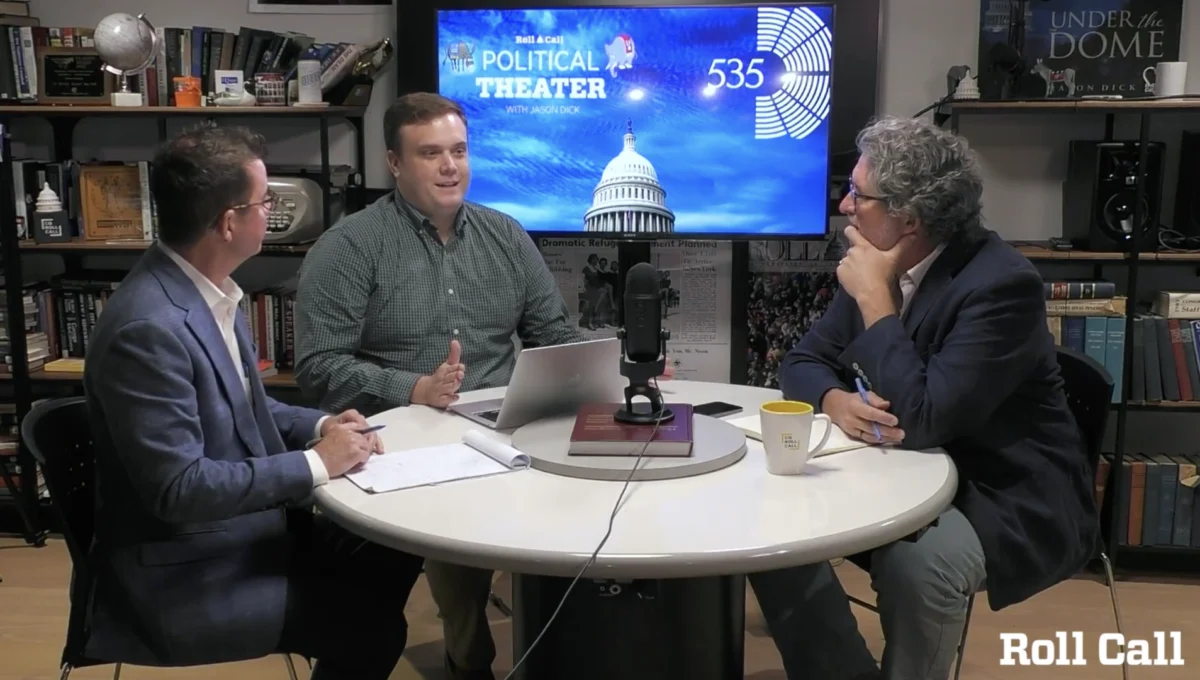
In a joint media analysis hosted on CQ Roll Call’s Political Theater Podcast, Roll Call Editor in Chief Jason Dick, 535 Editor in Chief Brody Mullins, and CQ Roll Call Staff Writer David Jordan examined the intricate political maneuvers and statutory hurdles surrounding the reform effort. The discussion highlighted how a rare convergence of bipartisan economic interests is currently clashing with deeply entrenched ideological divides over environmental review standards, judicial oversight, and interstate power grid expansion.
As the federal government injects hundreds of billions of dollars into domestic manufacturing, clean energy, and traditional resource extraction, the underlying regulatory machinery responsible for approving these major capital projects remains bound by decades-old procedural constraints. Whether the current Congress can bridge the gap between progressive environmental protections and conservative deregulation goals will determine the trajectory of American energy dominance and climate goals for decades to come.
Main Facts: Navigating the Legislative Divide on Permitting
The core debate over federal permitting reform centers on updating the processes established by landmark environmental statutes—most notably the National Environmental Policy Act (NEPA) of 1969—to accelerate project approvals without sacrificing crucial environmental safeguards and public participation.
At the heart of current legislative discussions is a complex compromise mechanism designed to satisfy competing political constituencies:
- Interstate Electric Transmission: Clean energy advocates and Democratic lawmakers prioritize expanding the authority of the Federal Energy Regulatory Commission (FERC) to approve high-voltage, cross-border transmission lines. This infrastructure is essential for transmitting renewable energy generated in rural wind and solar corridors to high-demand urban centers.
- Fossil Fuel and Mining Certainty: Republicans and moderate Democrats insist that any reform package must provide statutory guarantees for oil, natural gas, and critical mineral development. This includes mandating regular federal offshore and onshore lease sales, streamlining pipeline approvals, and setting strict deadlines for agency decisions.
- Judicial Review and Litigation Limits: A major point of contention involves restricting the timeframe during which opponents can file lawsuits against federally permitted projects under NEPA. Proposed measures seek to shorten the statute of limitations from six years down to as few as 150 days, while placing caps on the length of court-ordered injunctions.
- Categorical Exclusions and Categorical Timelines: Reform drafts aim to expand "categorical exclusions"—projects deemed to have no significant environmental impact—while establishing hard, legally enforceable time limits (typically two years for complex Environmental Impact Statements and one year for simpler Environmental Assessments).
While both parties acknowledge that the current system is characterized by prolonged litigation, bureaucratic inertia, and costly delays, building a durable legislative coalition requires balancing environmental justice concerns against national industrial competitiveness.
Chronology of Permitting Reform: From NEPA’s Origin to Current Battles
The legislative journey to reform federal infrastructure approvals reflects decades of compounding regulatory layers, punctuated by recent high-stakes congressional negotiations.
+-----------------------------------------------------------------------------------+
|                            PERMITTING REFORM TIMELINE                             |
+-----------------------------------------------------------------------------------+
| 1969  | NEPA Signed into Law                                                     |
|       | Baseline federal environmental review framework established.             |
+-------+---------------------------------------------------------------------------+
| 2021  | Infrastructure Investment & Jobs Act (IIJA)                              |
|       | Enacts initial "One Federal Decision" framework for major infrastructure.  |
+-------+---------------------------------------------------------------------------+
| 2022  | Inflation Reduction Act (IRA)                                            |
|       | Allocates $369B to clean energy; triggers severe grid connection bottleneck.|
+-------+---------------------------------------------------------------------------+
| 2023  | Fiscal Responsibility Act (FRA)                                          |
|       | Codifies statutory page limits and initial 1-to-2-year review caps.       |
+-------+---------------------------------------------------------------------------+
| 2024  | Senate Energy & Natural Resources Committee Markup                        |
| 2026  | Bipartisan consensus builds behind FERC transmission & leasing mandates.  |
+-----------------------------------------------------------------------------------+
Historic Foundations (1969–2020)
- 1969: President Richard Nixon signs NEPA into law, creating a mandatory framework requiring federal agencies to assess the environmental consequences of major federal actions prior to issuing permits.
- 2005–2015: As energy production shifted dramatically due to the shale revolution, pipeline and resource infrastructure faced escalating legal challenges, exposing significant backlogs across the Department of the Interior and the U.S. Army Corps of Engineers.
- 2017–2020: The Trump administration issues Executive Order 13807 ("One Federal Decision"), attempting to streamline multi-agency reviews to a two-year average and curtailing NEPA guidelines via rulemaking—a initiative later challenged and partially reversed in federal courts.
Incremental Progress in Recent Legislation (2021–2023)
- November 2021: The Infrastructure Investment and Jobs Act (IIJA) passes, codifying aspects of the "One Federal Decision" concept for large-scale transportation and energy projects and expanding the role of the Federal Permitting Improvement Steering Council (FPISC).
- August 2022: Passage of the Inflation Reduction Act (IRA) allocates approximately $369 billion toward climate and energy programs. However, side negotiations to include sidecar permitting legislation championed by moderate lawmakers fail to reach the threshold required for Senate passage.
- June 2023: As part of negotiations to raise the national debt ceiling, the Fiscal Responsibility Act (FRA) includes the first major statutory amendments to NEPA in decades. The FRA imposes a 200-page limit on Environmental Impact Statements (EIS), sets a two-year completion deadline, and allows project sponsors to prepare environmental documents under agency supervision.
The Push for Comprehensive Consensus (2024–2026)
- Mid-2024 to Early 2025: Bipartisan leadership within the Senate Energy and Natural Resources Committee introduces updated legislation aimed at merging clean grid development with traditional energy security provisions.
- Mid-2026: Congressional committees hold high-level negotiations and public hearings. Media collaborations like the CQ Roll Call / 535 podcast report intense backroom negotiations regarding judicial standing thresholds, FERC cost-allocation rules, and the future of liquefied natural gas (LNG) export approvals.
Supporting Data and Economic Impact
Quantitative analysis from federal regulatory bodies and independent economic institutes highlights the substantial operational backlogs slowing infrastructure development across the United States.
  Average Years Required to Complete an Environmental Impact Statement (EIS)
  +-------------------------------------------------------------------------+
  | Federal Highway Administration   | █ █ █ █ █ █ █ █ 7.3 Years            |
  | Bureau of Land Management        | █ █ █ █ █ █ 5.2 Years                |
  | U.S. Forest Service              | █ █ █ █ █ 5.0 Years                  |
  | Army Corps of Engineers          | █ █ █ █ █ 4.8 Years                  |
  | All Federal Agencies (Average)   | █ █ █ █ █ 4.5 Years                  |
  +-------------------------------------------------------------------------+
Review Duration and Administrative Backlogs
Data compiled by the Council on Environmental Quality (CEQ) illustrates the systemic delays associated with major federal approvals:
- Average Review Duration: Across all federal agencies, the average time required to complete a full Environmental Impact Statement (EIS) stands at 4.5 years, with nearly a quarter of projects taking longer than 7 years.
- Document Volumetrics: Prior to recent page limit mandates, the average final EIS document spanned over 600 pages, accompanied by thousands of pages of technical appendices, driven by agency efforts to make permits "litigation-proof."
        Interconnection Queue Backlog (Gigawatts of Capacity Seeking Grid Access)
  +---------------------------------------------------------------------------------+
  | 2015  | ████ 400 GW                                                             |
  | 2020  | ██████████ 1,000 GW                                                     |
  | 2025+ | ██████████████████████████ 2,600+ GW                                    |
  +---------------------------------------------------------------------------------+
  *Source: Lawrence Berkeley National Laboratory*
The Grid Interconnection Bottleneck
Studies conducted by the Lawrence Berkeley National Laboratory underline the disconnect between project planning and real-world deployment:
- Queue Volume: More than 2,600 gigawatts (GW) of generation and energy storage capacity are currently sitting in regional interconnection queues nationwide—nearly double the total existing operating capacity of the U.S. electric power plant fleet.
- Dominance of Clean Generation: Over 90 percent of the capacity currently waiting in interconnection queues consists of zero-carbon resources, specifically solar, wind, and battery storage projects.
- Withdrawal Rates: Due to regulatory uncertainty, permitting delays, and unexpectedly high transmission upgrade cost allocations, only 19 percent of projects seeking grid interconnection between 2000 and 2018 ultimately reached commercial operation.
Official Responses and Stakeholder Reactions
The debate over permitting reform has produced unique political alignments, dividing interest groups along regulatory, economic, and political lines.
+-----------------------------------------------------------------------------------+
|                        KEY STAKEHOLDER POSITIONS & CONCERNS                       |
+-----------------------------------------------------------------------------------+
| Group / Sector                | Core Priority            | Key Objection           |
+-------------------------------+--------------------------+------------------------+
| Bipartisan Congressional Block | National Competitiveness | Procedural gridlock    |
| Clean Energy Developers       | Rapid Grid Expansion     | Slower FERC approvals  |
| Traditional Energy Advocates  | Supply & Export Certainty| Leasing restrictions   |
| Environmental Justice Groups  | Community Consultation   | WEAKENING OF N.E.P.A.  |
+-----------------------------------------------------------------------------------+
Congressional Leadership and Policy Architects
Key legislators continue to frame permitting reform as a national security and economic imperative:
"The United States cannot build the infrastructure of the 21st century using administrative procedures designed in the middle of the 20th century. Whether you want to drill for domestic oil, build high-voltage power lines, or construct advanced nuclear reactors, the current system delays progress and increases costs for consumers."
— Congressional Leadership Statement
Senate committee leaders have repeatedly emphasized that compromise requires painful trade-offs for both parties: Republicans must accept federal intervention in interstate electrical transmission planning, while Democrats must agree to fixed statutory timelines and protected resource leasing schedules.
Industry Associations and Clean Energy Alliances
Industry groups representing major sectors of the economy have issued distinct calls to action:
- American Clean Power Association (ACP) & Clean Energy Buyers Association: Clean energy representatives stress that without federal grid reform, hundreds of billions in tax credits from recent legislation will remain underutilized. They argue that expanding FERC’s transmission siting authority is mandatory to move clean energy from power-rich rural areas to high-demand markets.
- American Petroleum Institute (API) & Interstate Natural Gas Association of America (INGAA): Fossil energy organizations advocate for enforceable deadlines on federal agencies, predictable leasing schedules on public lands, and strict limits on administrative appeals that freeze capital investment after permits are granted.
Environmental Organizations and Civil Rights Coalitions
Conversely, progressive groups and local communities express deep skepticism over proposed curtailments of public oversight:
- Environmental Justice Advocates: Community leaders caution that limiting the public comment period under NEPA will disempower low-income and minority populations who disproportionately bear the burden of industrial pollution. They argue that expedited reviews risk bypassing cumulative health impact assessments.
- Conservation Organizations: Groups such as the Sierra Club and the Natural Resources Defense Council (NRDC) argue that weakening judicial review deprives citizens of their primary tool to hold federal agencies accountable when environmental laws are overlooked.
Implications for Energy Policy and Grid Modernization
The resolution of the permitting reform debate carries deep macroeconomic and structural consequences for the United States.
+-----------------------------------------------------------------------------------+
|                         LONG-TERM IMPLICATIONS LANDSCAPE                          |
+-----------------------------------------------------------------------------------+
|  +---------------------------+     +---------------------------+                  |
|  |    Clean Energy & Grid    |     |   Traditional Security    |                  |
|  |                           |     |                           |                  |
|  | • Rapid deployment        |     | • Stable domestic supply  |                  |
|  | • Lower curtailment       |     | • Accelerated export ops  |                  |
|  | • System reliability      |     | • Regulatory predictability|                 |
|  +-------------+-------------+     +-------------+-------------+                  |
|                |                                 |                                |
|                +----------------+----------------+                                |
|                                 |                                                 |
|                                 v                                                 |
|                  +------------------------------+                                 |
|                  |   US Economic Growth & AI    |                                 |
|                  |     Power Demand Fulfillment |                                 |
|                  +------------------------------+                                 |
+-----------------------------------------------------------------------------------+
Grid Reliability and Surge Demand from AI
As artificial intelligence data centers, advanced manufacturing facilities, and electric vehicles drastically accelerate electricity demand across the nation, transmission grid capacity is rapidly emerging as a potential economic bottleneck.
Without comprehensive statutory reforms that streamline multi-state transmission planning and cost allocation, regional utility networks face elevated risks of power shortfalls and escalating congestion costs. Achieving long-term clean energy targets hinges directly on building high-voltage power lines at a pace not seen in American history.
Economic Competitiveness and Capital Allocation
Global institutional investors have poured unprecedented capital into domestic clean technology and infrastructure assets following the passage of major federal subsidies. However, long regulatory timelines run the risk of deterring institutional investment due to capital lockup and unpredictable cost escalation.
Streamlining the federal permitting structure would provide clear regulatory timelines, allowing energy companies to deploy capital faster, reduce project risk premiums, and create long-term jobs across domestic construction and engineering sectors.
Legislative Realpolitik and the Path Ahead
As highlighted by media analysts, passing permitting reform requires building a narrow, durable consensus in a politically divided Congress. Lawmakers must continue to navigate a fine line between:
- Modifying regulatory processes enough to unlock major capital investments.
- Preserving core environmental protections and public input mechanisms.
Whether Congress can successfully codify a comprehensive agreement or be forced to resort to piecemeal executive actions and localized legislative add-ons will serve as a definitive test of Washington’s ability to govern efficiently in an era of rapid technological transformation and escalating energy demand.