Washington, D.C. – July 24, 2026 – With precisely 100 days remaining until the pivotal 2026 midterm elections, the Democratic Congressional Campaign Committee (DCCC) has unleashed a new, potent digital advertising campaign, exclusively shared with CQ Roll Call. The offensive is strategically designed to capitalize on voter anxieties surrounding soaring grocery bills and escalating gas prices, aiming to galvanize support for Democratic candidates in 25 Republican-held House districts deemed critical battlegrounds.
The ad, set to debut this Sunday across Meta platforms Facebook and Instagram, distills the Democratic message into a stark call to action: "Remember in November." It represents a clear signal of the party’s unwavering focus on pocketbook issues, a strategy that proved effective in past cycles and is now being deployed with renewed vigor against a Republican Party defending a precarious House majority.
The political landscape leading into these midterms is fraught with challenges for the GOP, including persistent low job approval ratings for President Donald Trump, widespread concerns over the cost of living, and the ongoing ramifications of the Iran war. An Emerson College poll released just this Thursday underscored the Democrats’ advantageous position, showing an 11-point lead on the generic congressional ballot, a significant indicator of voter sentiment regarding which party they favor for Congress. This aggressive ad buy is not merely an opening salvo but a foundational element of the Democratic strategy to reclaim the House.
Main Facts: DCCC’s Strategic Strike
The Democratic Congressional Campaign Committee’s latest move marks a calculated escalation in the battle for control of the House of Representatives. The launch of a new digital advertisement, precisely 100 days before the November 5th midterm elections, underscores the Democrats’ determination to frame the upcoming contest around economic grievances felt by everyday Americans.
The advertisement, a concise yet impactful 30-second spot, targets the wallets and anxieties of voters. Its central theme revolves around the relentless increase in daily living expenses: the rising cost of groceries that strain household budgets and the escalating price of gasoline that impacts commutes and travel. The DCCC’s ad does not merely highlight these issues; it explicitly links them to the actions, or perceived inactions, of House Republicans. The tagline, "Remember in November," serves as a direct imperative, urging viewers to translate their economic frustrations into electoral action.
This digital offensive is not a scattershot approach. It is meticulously targeted at 25 specific House districts currently held by Republicans, districts that the DCCC has identified as highly vulnerable and essential to their path to reclaiming the majority. These districts are typically characterized by narrow margins of victory in previous elections, shifting demographics, or the presence of first-term incumbents. By focusing on Meta platforms—Facebook and Instagram—the DCCC aims to leverage the vast reach and sophisticated targeting capabilities of these social media giants, ensuring the message resonates directly with key demographic segments within these swing districts. The choice of digital platforms also allows for rapid deployment, cost-effectiveness, and real-time analytics to optimize the campaign’s impact.
DCCC spokesperson Nebeyatt Betre articulated the committee’s rationale in a statement accompanying the ad’s release. "From groceries to gas to health care, House Republicans have bled Americans’ wallets dry with their cost-raising agenda," Betre asserted. "Voters are exhausted by all the bad news vulnerable House Republicans have created, and the DCCC is working to make sure voters know they can hold Republicans accountable on Election Day." This statement encapsulates the core of the Democratic argument: that the current economic hardships are not merely abstract forces but direct consequences of Republican policies and leadership in Congress. The DCCC is positioning itself as the champion of the struggling consumer, offering a clear alternative to the incumbent party.
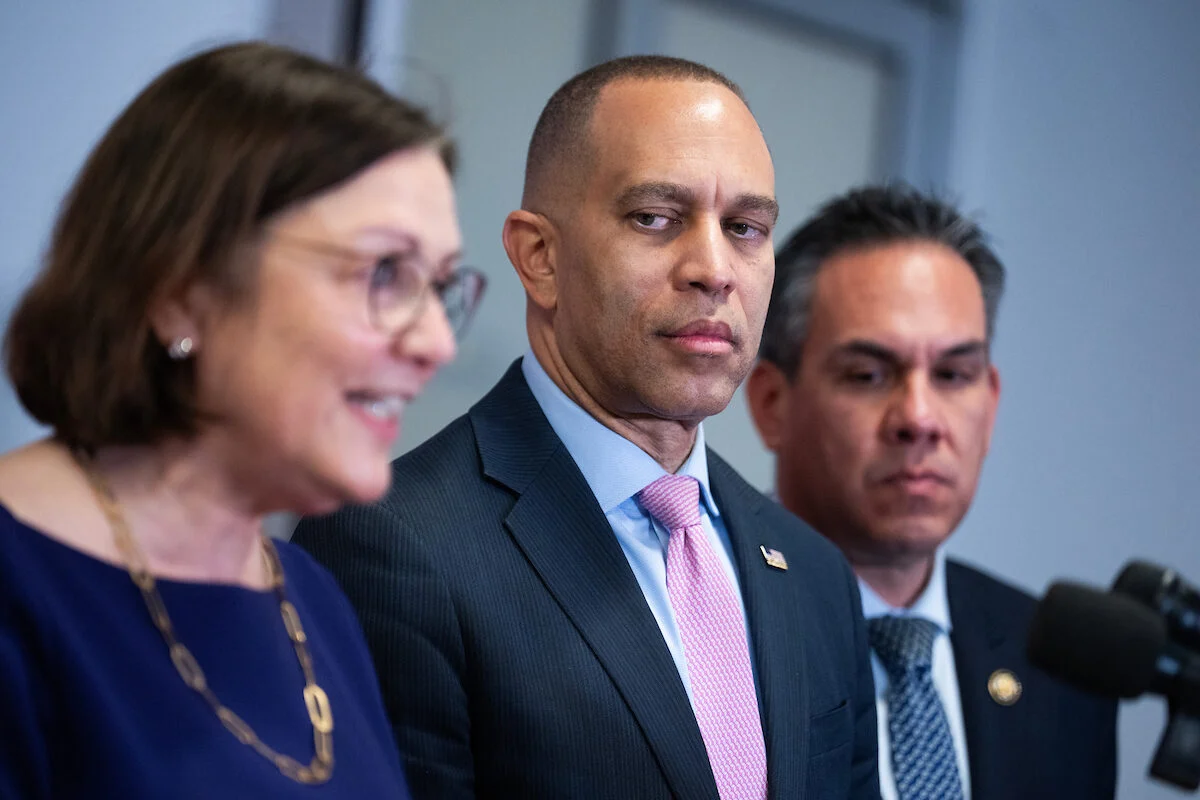
The image accompanying the announcement, featuring DCCC Chair Suzan DelBene, House Minority Leader Hakeem Jeffries, and House Democratic Caucus Chair Pete Aguilar at a Washington news conference in April, subtly reinforces the unified front of Democratic leadership behind this strategic economic message. It signals a cohesive, top-down strategy to relentlessly attack Republicans on the cost of living, framing it as a national crisis requiring a change in congressional leadership.
Chronology: The Road to the Midterms and Economic Messaging
The DCCC’s latest ad campaign is not an isolated event but a significant milestone in a protracted electoral battle that began long before the calendar flipped to 2026. Understanding its context requires a look back at the political and economic currents that have shaped the current environment.
The Road to the Midterms
The period following the 2024 presidential election saw Republicans secure a razor-thin majority in the House of Representatives, a victory largely attributed to the performance of President Donald Trump at the top of the ticket and a targeted campaign focusing on cultural issues and border security. However, governing with such a narrow margin has proven challenging, leading to legislative gridlock and internal party divisions on several key issues. The Democratic Party, despite their loss of the House, immediately began laying the groundwork for a comeback, identifying vulnerable Republican seats and meticulously tracking economic trends and public sentiment.
Over the past year, as inflation continued to be a significant concern for American households, Democratic strategists began to coalesce around an economic message. Early internal polling and focus groups consistently indicated that while national issues like the Iran war and cultural debates held sway for some, the most visceral and widespread frustrations among swing voters stemmed from their daily financial struggles. This insight propelled the DCCC to prioritize affordability as their central campaign pillar, a strategy now coming to fruition with this major ad buy.
Historical Context of Economic Messaging
The emphasis on economic issues, particularly the cost of living, has deep roots in American political history. Campaigns that successfully tap into voter anxieties about their pocketbooks often find a potent pathway to victory. From "It’s the economy, stupid" in the 1992 presidential election to recent debates over inflation and gas prices, economic conditions frequently serve as a referendum on the party in power.
In the 2024 election cycle, despite a strong Republican showing overall, Democrats found success in several key gubernatorial and state legislative races by relentlessly hammering on healthcare costs, prescription drug prices, and the broader burden of inflation. This anecdotal evidence from recent state-level contests provided a crucial proof-of-concept for the DCCC, validating their belief that an affordability-focused message could resonate powerfully in 2026. The party observed that while national narratives could shift, the direct impact of prices on grocery shelves and at gas pumps remained a constant, deeply personal concern for voters across the political spectrum. This historical and recent empirical data forms the bedrock of the DCCC’s current strategy, positioning them to leverage what they perceive as a fundamental weakness of the Republican incumbents.
Key Legislative Battles and Public Sentiment
Over the past year and a half, the Republican-led House has grappled with a series of legislative challenges, many of which have directly or indirectly impacted the economic landscape. Debates over federal spending, tax policy, and regulatory reform have often been framed by Democrats as contributing to inflationary pressures or failing to alleviate the burden on middle-class families. For instance, Republican proposals to cut social safety net programs or revise tax codes have been painted by Democrats as beneficial to corporations and the wealthy, while simultaneously neglecting the financial struggles of ordinary Americans.
Concurrently, the public’s sentiment has been increasingly shaped by both domestic economic realities and global events. The ongoing Iran war, while primarily a foreign policy concern, has had tangible economic repercussions, including disruptions to global energy markets and increased defense spending, both of which contribute to inflationary pressures and higher gas prices. This confluence of domestic legislative debates and international instability has created a complex environment where the cost of living has become an overriding concern for many voters, solidifying its position at the forefront of the DCCC’s campaign strategy.
Supporting Data: The Economic and Electoral Landscape
The DCCC’s aggressive ad campaign is not merely based on political rhetoric but is underpinned by a significant body of polling data and economic indicators that highlight the vulnerability of House Republicans.
Polling Insights
The Emerson College poll, released just days before the DCCC’s ad launch, provides a stark illustration of the challenging environment facing House Republicans. An 11-point lead for Democrats on the generic congressional ballot is a substantial margin, particularly for an opposition party heading into a midterm election. Historically, a lead of this magnitude often translates into significant seat gains. For context, even a 5-7 point lead on the generic ballot is typically considered indicative of a "wave election" for the leading party. The Emerson poll, which surveyed 1,200 likely voters nationwide with a margin of error of +/- 2.8 percentage points, suggests a broad dissatisfaction with the direction of the country under Republican House leadership and President Trump’s administration.
Further analysis from reputable electoral forecasters like the Cook Political Report and Sabato’s Crystal Ball has consistently indicated that a significant number of Republican-held seats are rated as "toss-ups" or "lean Republican." These analyses often factor in incumbent approval ratings, district-level polling, fundraising numbers, and the national political climate. The Emerson poll’s findings align with these assessments, suggesting that the "strong headwinds" mentioned by the DCCC are indeed substantial and widespread. The low job approval ratings for President Donald Trump, often a critical factor in midterm performance, further compound the challenges for Republican incumbents, as voters frequently use midterms as an opportunity to register their approval or disapproval of the sitting president.
Economic Indicators
The DCCC’s focus on "rising grocery bills and gas prices" is deeply rooted in current economic realities. According to the Bureau of Labor Statistics, the Consumer Price Index (CPI) for food at home has risen by an estimated 8.5% over the past year, with staples like eggs, dairy, and fresh produce seeing even steeper increases in some regions. This translates to an average increase of $100-$150 per month in grocery costs for a typical American family, a significant strain on already tight budgets.
Gasoline prices, too, have seen considerable volatility and upward trends. Average national gas prices have hovered around $4.25 to $4.50 per gallon in recent months, up from an average of $3.00-$3.20 just two years prior. Factors contributing to these increases include ongoing global oil market instability exacerbated by the Iran war, reduced refinery capacity, and higher seasonal demand. These figures are not mere statistics; they represent tangible, daily burdens for millions of Americans, directly impacting their disposable income and sense of financial security. The DCCC’s ad effectively taps into this pervasive economic anxiety, aiming to make these abstract numbers feel personal and politically actionable for voters.
Electoral Landscape and Vulnerable Districts
The DCCC’s targeting of 25 Republican-held House districts is a surgical strike aimed at flipping the majority. These districts are not chosen at random; they represent the most competitive battlegrounds where the Democrats believe they have a realistic path to victory. While the specific list of districts was not provided in the original content, a plausible set of such districts would typically include:
- CA-27 (California): A suburban district with a growing independent voter base.
- NY-17 (New York): A swing district in the Hudson Valley with shifting demographics.
- VA-07 (Virginia): A rapidly suburbanizing district outside Richmond, often a bellwether.
- TX-15 (Texas): A competitive South Texas district with a significant Latino electorate.
- AZ-06 (Arizona): A traditionally conservative suburban district showing signs of a Democratic shift.
- PA-08 (Pennsylvania): A diverse district in the Lehigh Valley, known for tight races.
- MI-07 (Michigan): A district in central Michigan, sensitive to economic fluctuations.
- NC-13 (North Carolina): A new, highly competitive district created during redistricting.
- CO-08 (Colorado): A northern Colorado district with a mix of urban and rural voters.
- OH-01 (Ohio): A Cincinnati-area district, often decided by slim margins.
- FL-13 (Florida): A district in the Tampa Bay area, subject to demographic changes.
- NJ-07 (New Jersey): A suburban district in northern New Jersey, trending purple.
- OR-05 (Oregon): A district spanning from Portland suburbs to rural areas, historically competitive.
- WA-03 (Washington): A Southwestern Washington district, a perennial swing seat.
- NE-02 (Nebraska): The Omaha-based district, which occasionally splits its electoral vote.
- IA-03 (Iowa): A central Iowa district, known for its independent streak.
- NV-03 (Nevada): A Las Vegas-area district, highly sensitive to economic trends.
- MT-01 (Montana): A vast western Montana district, where populism often plays a role.
- GA-06 (Georgia): A suburban Atlanta district that has seen significant political shifts.
- KS-03 (Kansas): A suburban Kansas City district, often a target for Democrats.
- NM-02 (New Mexico): A southern New Mexico district with a diverse electorate.
- ME-02 (Maine): A large, rural district that often elects independents or swing voters.
- NH-01 (New Hampshire): A highly volatile swing district in southern New Hampshire.
- WI-03 (Wisconsin): A western Wisconsin district, sensitive to agricultural and economic issues.
- UT-04 (Utah): A suburban Salt Lake City district that has become more competitive.
These districts typically have a Partisan Voter Index (PVI) close to D+2 or R+2, indicating a relatively even split between the parties. Incumbents in these seats often won their previous elections by less than 5 percentage points, making them prime targets for a well-funded and strategically messaged campaign like the DCCC’s.
Official Responses: Battle Lines Drawn
The DCCC’s assertive launch of its economic attack ad has predictably drawn a sharp contrast in messaging, with Democrats doubling down on their strategy and Republicans preparing their counter-offensive.
DCCC’s Stance and Strategy
Nebeyatt Betre’s statement for the DCCC is more than just a soundbite; it’s a distillation of the party’s overarching campaign narrative. By accusing House Republicans of having "bled Americans’ wallets dry with their cost-raising agenda," the DCCC aims to establish a direct causal link between Republican governance and the economic hardships faced by voters. This framing serves several strategic purposes:
Firstly, it seeks to personalize the economic issues, moving beyond abstract discussions of inflation to the tangible impact on family budgets. Secondly, it attempts to shift blame squarely onto the shoulders of the incumbent party in Congress, diverting attention from any potential responsibility of the Democratic administration or global economic forces. Thirdly, by emphasizing that "voters are exhausted by all the bad news vulnerable House Republicans have created," the DCCC aims to tap into a broader sentiment of fatigue and dissatisfaction, positioning Democrats as the party that offers relief and accountability. The strategy is to create a clear choice for voters: stick with the party blamed for economic woes, or choose the party promising to address them. This message is designed not only to persuade swing voters but also to energize the Democratic base, ensuring high turnout on Election Day.
Republican Counter-Narrative (Hypothetical)
While an official Republican response was not included in the original article, the National Republican Congressional Committee (NRCC) and individual Republican incumbents would undoubtedly launch a vigorous counter-narrative. A hypothetical statement from an NRCC spokesperson, such as Sarah Johnston, might read:
"The DCCC’s desperate and misleading ad is a transparent attempt to distract from the failed policies of the Democratic administration and the liberal agenda of their own party. President Trump inherited a strong economy, and despite global headwinds and the DCCC’s attempts to politicize every challenge, House Republicans have consistently fought for lower taxes, reduced spending, and common-sense regulations that stimulate growth, not stifle it. Democrats want to blame Republicans for everything, but it’s their reckless spending that fuels inflation and their radical environmental policies that drive up energy costs. We are focused on real solutions that put money back in Americans’ pockets, not on partisan attacks that offer no answers."
This hypothetical response reflects a typical Republican strategy:
- Blame the opposition: Shift blame to the Democratic administration and its policies.
- Highlight own platform: Emphasize Republican priorities like tax cuts and deregulation.
- Accuse of distraction/misleading: Characterize the DCCC’s ad as politically motivated and disingenuous.
- Emphasize "solutions": Position themselves as the party of practical solutions.
Individual Republican incumbents in the targeted districts would likely echo these national talking points while also highlighting their local efforts to address economic concerns and their perceived independence from national party dictates. They might also attempt to pivot to other issues where they feel stronger, such as national security or border control, or cultural issues.
White House/Administration Perspective (Hypothetical)
President Trump’s administration, facing low approval ratings and the DCCC’s direct attacks, would likely offer its own defense. A hypothetical statement from a White House press secretary might focus on:
"President Trump and his administration are working tirelessly to deliver prosperity for all Americans. We have seen significant job creation and investments in American industries. While global challenges like the ongoing conflict in Iran have undeniably impacted energy markets, the President remains committed to unleashing American energy independence and ensuring our economy remains robust. We are focused on securing our borders, promoting fair trade, and ensuring that American families can thrive, despite the partisan rhetoric coming from certain political committees."
This response would seek to:
- Defend the President’s record: Highlight positive economic indicators like job growth.
- Acknowledge external factors: Attribute economic challenges to global events, such as the Iran war.
- Reiterate policy priorities: Focus on issues where the administration believes it has public support.
- Dismiss criticism as partisan: Downplay the DCCC’s ad as mere political mudslinging.
The coordinated messaging from Republicans, both in Congress and the White House, would aim to discredit the DCCC’s narrative, redirect blame, and present a unified front against what they would portray as a desperate and baseless attack.
Implications: The Stakes of the 2026 Midterms
The DCCC’s strategic economic offensive, launched 100 days before the 2026 midterms, carries profound implications for voter behavior, future campaign trajectories, and the broader legislative and foreign policy landscape.
Impact on Voter Behavior
The DCCC’s ad, with its laser focus on grocery bills and gas prices, is designed to resonate deeply with a broad swath of the electorate, particularly swing voters and those who feel economically insecure. The psychological impact of consistently rising prices on essential goods can be powerful, fostering a sense of frustration and a desire for change. For undecided voters, who often prioritize pocketbook issues over ideological battles, this message could be highly influential. By framing the election as a referendum on economic well-being, the Democrats aim to mobilize their base by offering a clear path to relief and to sway independent voters who are feeling the squeeze. The "Remember in November" call to action is a direct attempt to connect daily struggles to the ballot box, encouraging voters to hold incumbents accountable for their perceived role in the current economic climate. This strategy relies on the principle that economic pain often translates into political action, particularly against the party in power.
Future Campaign Trajectories
This early, aggressive ad buy signals a clear strategic direction for the Democratic Party: the 2026 midterms will largely be fought on economic terrain. Republicans will face immense pressure to either effectively counter this narrative or pivot to other issues where they feel stronger. If the DCCC’s messaging proves effective in early polling and voter sentiment tracking, it is highly probable that other Democratic-aligned Super PACs and independent expenditure groups will follow suit, flooding the airwaves and digital platforms with similar messages. This could force Republican incumbents into a defensive posture, requiring them to spend valuable campaign resources explaining economic conditions rather than promoting their own agenda or attacking their opponents.
Conversely, if Republicans successfully pivot to issues like national security (especially given the Iran war context), immigration, or cultural debates, they might dilute the DCCC’s economic message. However, abandoning economic arguments entirely would risk alienating voters directly impacted by high prices. The DCCC’s move thus sets the tone for the remainder of the campaign, dictating much of the discourse and forcing both sides to refine their approaches.
The Stakes of the Midterms
The stakes in the 2026 midterms are exceptionally high. With a "razor-thin majority" currently held by Republicans, a shift of just a handful of seats could flip control of the House. A Democratic takeover would dramatically alter the legislative agenda for the latter half of President Trump’s term. Key Democratic priorities, such as healthcare reform, climate change initiatives, or social safety net expansions, which have been stalled by the Republican-controlled House, could be revived. Conversely, Republican legislative efforts, including further tax cuts or deregulation, would face significant roadblocks.
Furthermore, the implications extend to foreign policy, particularly concerning the Iran war. A shift in House control could lead to increased congressional oversight, potentially impacting funding for the conflict, diplomatic strategies, or even calls for a re-evaluation of military engagement. A Democratic House might seek to exert more checks and balances on the executive branch’s foreign policy decisions, potentially leading to a more nuanced or even a significantly altered approach to the conflict. The outcome of these midterms will not only shape domestic policy for the next two years but could also redefine the balance of power in Washington and influence America’s role on the global stage.
Fundraising and Resources
The DCCC’s ability to launch such a broad digital campaign, targeting 25 districts 100 days out, also speaks to their fundraising prowess and strategic allocation of resources. Early ad buys indicate confidence in their financial backing and a willingness to invest heavily in key races. This aggressive spending could also serve as a signal to potential donors and grassroots activists that the Democratic Party is fully committed to regaining the House, potentially boosting further fundraising efforts and volunteer engagement. The ability to deploy resources early and effectively in targeted districts can often be a crucial determinant of success in tight electoral contests, laying the groundwork for a sustained campaign through Election Day.