Introduction: A Stalled Humanitarian Crisis
The government of Myanmar has once again signaled its intent to facilitate the repatriation of Rohingya refugees currently residing in Bangladesh, framing the process as a strictly bilateral matter. In an official statement released this past Saturday, the Myanmar Ministry of Foreign Affairs asserted that it is actively working to verify the status of former residents of Rakhine State, aiming to oversee their return.
This announcement comes at a precarious time, as the International Court of Justice (ICJ) continues its high-stakes deliberations regarding allegations of genocide against the Myanmar state. By insisting that the displacement crisis should be managed solely between Naypyidaw and Dhaka, Myanmar is effectively attempting to compartmentalize the humanitarian crisis, distancing it from the scrutiny of the international legal community and the ongoing UN-backed investigations.
The Chronology of Conflict and Displacement
To understand the current impasse, one must trace the historical and political trajectory of the Rohingya crisis, a struggle defined by decades of statelessness and systemic exclusion.
1982: The Legislative Erasure of Identity
The roots of the current crisis are often traced back to the Myanmar Citizenship Law of 1982. This legislation established a hierarchy of citizenship based on membership in recognized "national races"—those groups deemed to have settled in the country prior to 1824, the onset of British colonial rule. The law failed to include the Rohingya among the 135 officially recognized ethnic groups, effectively stripping them of their right to citizenship. The requirement to provide conclusive evidence of residence prior to January 4, 1948, proved an insurmountable barrier for a community that had been systematically denied documentation for generations.
2016–2017: The Escalation
The modern phase of the crisis erupted following coordinated attacks by the Arakan Rohingya Salvation Army (ARSA) against security outposts in October 2016 and August 2017. The Myanmar military’s subsequent "counter-terrorism operations" triggered a mass exodus. According to international observers, over 740,000 Rohingya fled to Bangladesh in the months that followed. Myanmar, however, disputes these figures, claiming that only 540,000 "Bengalis"—the term used by the state to deny the Rohingya’s indigenous status—fled, while 200,000 remained.
2019–Present: The Pursuit of International Justice
In 2019, the Republic of The Gambia, acting on behalf of the 57-member Organisation of Islamic Cooperation (OIC), filed a landmark lawsuit at the ICJ. The application alleged that Myanmar had violated the 1948 Genocide Convention. In 2020, the court issued provisional measures, ordering Myanmar to prevent genocidal acts and preserve evidence. By 2022, the court dismissed Myanmar’s preliminary objections, greenlighting the case to proceed to the merits phase. As of early 2026, the ICJ has been in the final stages of deliberation.
Supporting Data and Conflicting Narratives
The disparity between the narratives presented by the Myanmar state and the findings of international human rights organizations remains a significant obstacle to resolution.
The UN Fact-Finding Mission
In 2018, a UN-mandated independent fact-finding mission released a comprehensive report detailing a "consistent pattern of serious human rights violations" in Rakhine State. The mission concluded that the military operations were characterized by an intent to destroy the Rohingya as an ethnic group, meeting the legal threshold for genocide, war crimes, and crimes against humanity.
Myanmar’s Disputed Statistics
Myanmar’s recent statement attempts to reframe the demographic reality of the displacement. By rejecting the term "Rohingya" and insisting on the label "Bengalis," the state seeks to validate its long-standing position that these individuals are illegal migrants from Bangladesh rather than an indigenous minority. International human rights groups, including Amnesty International and Human Rights Watch, have consistently refuted these claims, noting that the systematic dehumanization and denial of ethnic identity are precursors to, and tools of, state-sponsored violence.
Official Responses and Regional Geopolitics
The international response to the stalemate is characterized by a delicate balance between humanitarian necessity and regional diplomatic stability.
The Stance of Bangladesh
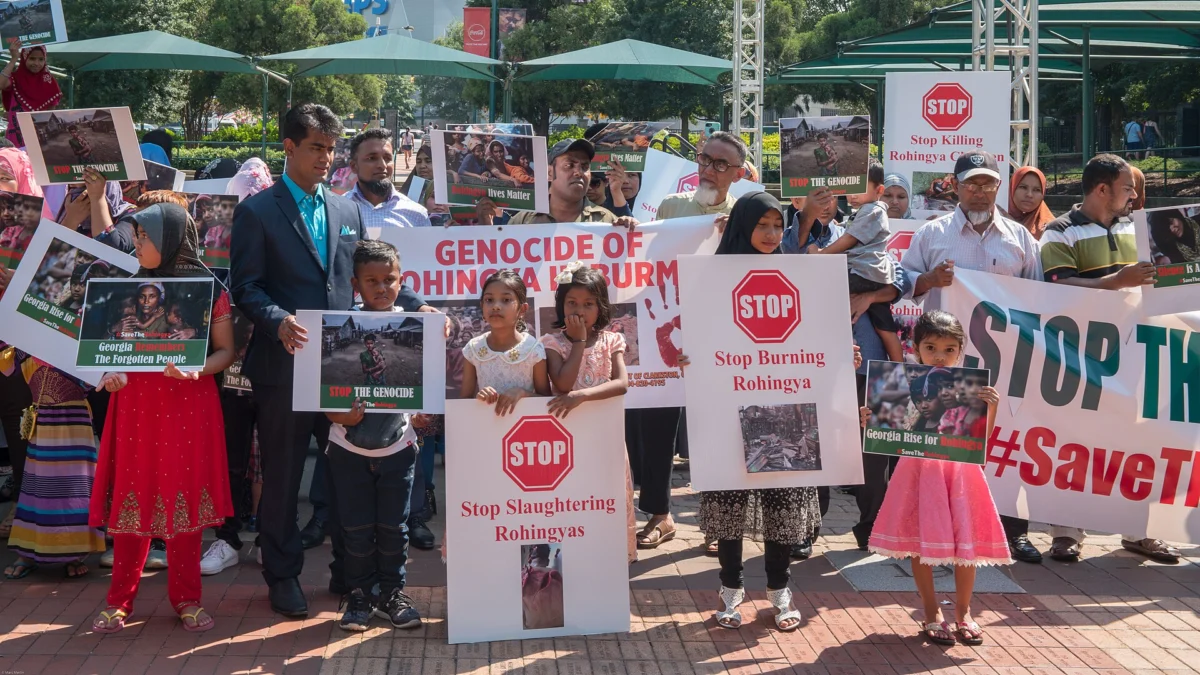
Bangladesh, currently hosting nearly one million refugees in the sprawling camps of Cox’s Bazar, has become increasingly vocal regarding the sustainability of the situation. While Dhaka has long advocated for a peaceful repatriation, it has also urged the UN and global powers to increase funding and logistical support. The burden of hosting such a massive population has strained Bangladesh’s resources, leading the government to press for a more proactive international role in forcing a resolution.
Malaysia and the Regional Conscience
Malaysia, a country with a significant Muslim population that has historically been sympathetic to the plight of the Rohingya, has expressed deep concern regarding the prolonged displacement. While Malaysia has commended Bangladesh for its humanitarian efforts, it has also faced internal challenges regarding its own treatment of refugees, illustrating the complexity of the crisis as it ripples across Southeast Asia.
Implications for International Law and Future Stability
The ongoing ICJ case represents more than just a legal battle; it is a litmus test for the effectiveness of international human rights law in the 21st century.
The Precedent of Accountability
If the ICJ finds Myanmar responsible for genocide, it would represent a historic triumph for international accountability. However, the enforcement of such a ruling remains a significant challenge. The ICJ does not possess an independent police force, and compliance relies heavily on the political will of the international community and the cooperation of the respondent state.
The Barrier of "Bilateralism"
Myanmar’s insistence on a bilateral approach is widely viewed by legal experts as a strategy to evade international oversight. By framing the return as a domestic administrative issue, the state seeks to bypass the requirements for international monitoring, safe passage, and the restoration of citizenship rights—conditions that the UN and various human rights bodies argue are non-negotiable for a safe and dignified return.
The Humanitarian Outlook
Without a resolution that addresses the fundamental issue of citizenship and security, the prospect of voluntary, safe, and sustainable repatriation remains bleak. The Rohingya refugees themselves remain caught in a cycle of limbo, unwilling to return to a country that refuses to recognize their identity and continues to defend the military actions that forced them to flee.
Conclusion: A Path Forward or a Strategic Delay?
The latest announcement from Myanmar appears to be a calculated diplomatic maneuver. By appearing to cooperate with Bangladesh on repatriation, the state hopes to signal a return to normalcy to the international community. However, as long as the underlying issues of state-sponsored discrimination, the denial of fundamental human rights, and the shadow of the ICJ proceedings loom, the crisis remains unresolved.
The international community now faces a critical junction. The pressure to provide humanitarian aid to Bangladesh is immediate, but the necessity for a long-term, rights-based solution in Myanmar is existential. Whether the ICJ’s final judgment will serve as a catalyst for genuine reform in Myanmar or merely as a condemnation remains the central question of this humanitarian catastrophe. Until the Rohingya are recognized as equal stakeholders in their own land, the cycle of displacement, suffering, and political friction is likely to persist, challenging the stability of the entire region.