Introduction: A Landscape Transformed into Ash
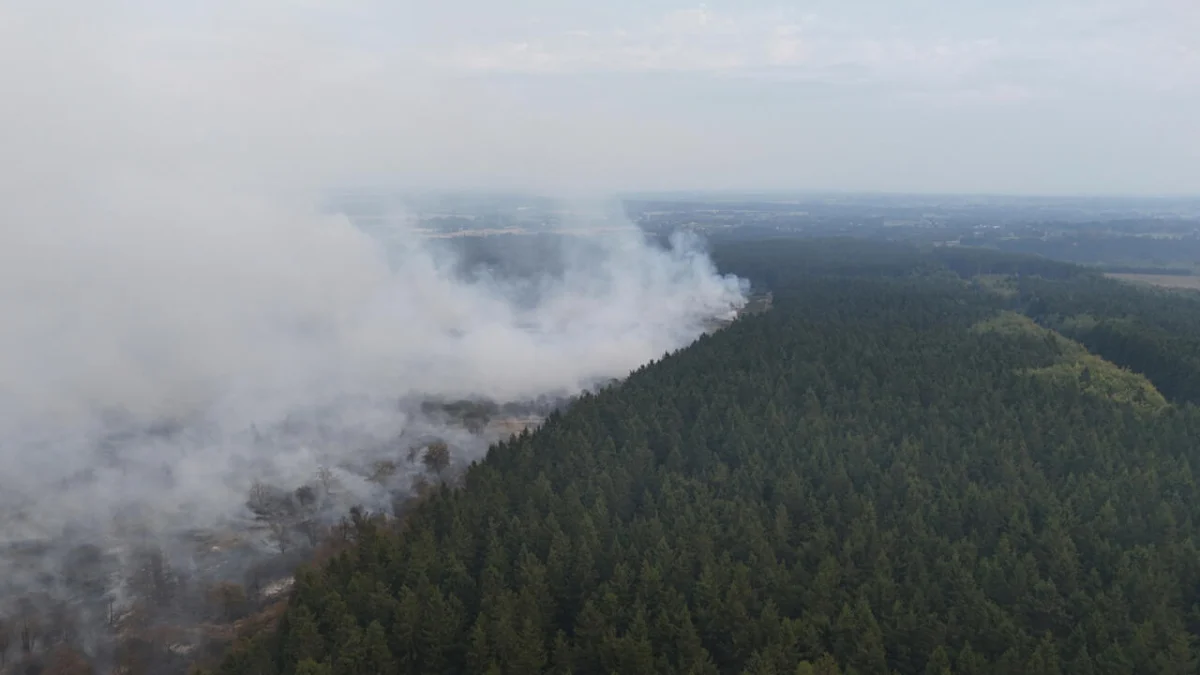
The High Fens (Hautes Fagnes), a sprawling nature reserve nestled in the eastern reaches of Belgium near the German border, has become the epicenter of a catastrophic environmental event. What began as a localized brush fire on Friday has rapidly metastasized into the largest wildfire in Belgium’s modern history, consuming over 2,700 hectares of fragile peatlands and ancient pine forests in less than 48 hours.
As thick, acrid smoke chokes the skyline and the horizon glows with an unnatural, pulsating orange, hundreds of residents have been forced to flee their homes. The blaze, which authorities describe as an unprecedented challenge due to the region’s rugged and inaccessible terrain, has prompted a massive international relief effort, underscoring the growing volatility of the European climate.
Chronology of a Crisis
The disaster unfolded with terrifying speed, catching both locals and emergency services off guard.
Friday: The Spark
The fire was first reported on Friday as temperatures across Belgium soared to a blistering 37 degrees Celsius. Initially, the blaze was estimated to cover only 80 hectares. However, the combination of extreme drought—which had dried out the moisture-rich peatlands—and high winds caused the fire to jump firebreaks with ease. Restaurant owners in the Waimes area reported ash raining down on dining tables, forcing them to shutter operations mid-service as the air quality plummeted.
Saturday: The Escalation
By Saturday morning, the scale of the destruction had ballooned. The fire, fueled by the highly combustible pine needles and the subsurface peat, surged from 80 hectares to over 2,700 hectares. As the flames encroached on the villages of Sourbrodt and Bütgenbach, regional authorities issued urgent evacuation orders. Approximately 600 people were displaced, many finding temporary sanctuary in a gymnasium in the nearby municipality of Malmedy.
Sunday: The Multi-National Response
As the weekend progressed, the Belgian government formally activated the European Union’s civil protection mechanism. This allowed for the rapid deployment of specialized aerial assets, including Dutch helicopters and Swedish water-bombing aircraft, to join the domestic firefighting teams who had been working in grueling, round-the-clock shifts.
Supporting Data: The Anatomy of a Record-Breaking Blaze
To understand the severity of this event, one must look at the unique topography of the High Fens. The area is a mosaic of heath, peat bogs, and raised wooden boardwalks, many of which have been completely incinerated.
- Land Area Destroyed: 2,700+ hectares (6,700+ acres).
- Historical Context: The last time this region suffered a fire of this magnitude was in 1911, during a similarly brutal heatwave. Experts note that the 1911 fire serves as a grim baseline, but the current event is occurring in an era of significantly higher atmospheric temperatures.
- Regional Impact: The proximity of this blaze to a separate, massive fire in western Germany—which has displaced 1,800 people—suggests a regional pattern of ecological stress linked to the ongoing European heatwave.
- Air Quality: Smoke plumes have been reported across several provinces, prompting health officials to advise residents to seal their homes and refrain from outdoor exercise.
Official Responses and Tactical Hurdles
The emergency response has been defined by a constant battle against geography. Nicolas Yernaux, spokesperson for the Wallonia regional authorities, candidly admitted that the fire is currently "not under control."
The Challenge of Inaccessibility
Firefighters have been forced to adopt a defensive posture. The nature of the High Fens—soft peat bogs and protected, remote wetlands—prevents the use of heavy traditional machinery. "We have had to pull back to the edge of the forest and allow parts of the heathland to burn simply because the area is inaccessible to ground crews," Yernaux explained.
Consequently, the entire suppression strategy has shifted to aerial bombardment. Water bombers and helicopters are now the only viable tools, but these are subject to the limitations of wind speed and visibility, both of which have been compromised by the dense, yellow smoke hanging over the burn zone.
The Human Element: Local Heroism
While state-led efforts have been monumental, the crisis has also mobilized the local agricultural community. In a display of grassroots solidarity, farmers have been seen driving tractors equipped with water tanks toward the front lines. These volunteers are working alongside professional crews to saturate the perimeters of homes and properties, creating makeshift buffer zones that have arguably saved dozens of structures from total destruction.
Interior Minister Bernard Quintin, upon visiting the site, expressed profound shock at the velocity of the fire. "We are grateful for the work done by our farmers," he noted. "They are acting as a secondary line of defense that the state alone could not provide."
Implications: A New Reality for Northern Europe
The scale of this disaster has ignited a fierce political debate regarding the "new normal" of climate change in Europe.
A Symptom of Climate Upheaval
European Commissioner Hadja Lahbib, addressing the press from the command center, framed the disaster within the broader context of a changing planet. "Never before has the wildfire season started so early in the year and reached such northern latitudes," she said.
For decades, the High Fens were considered a fire-resistant landscape due to their boggy, damp nature. The fact that these peatlands are now burning indicates a fundamental shift in the regional hydrology. The drying out of these "natural sponges" not only makes them vulnerable to fire but also permanently alters the local ecosystem, potentially leading to the loss of rare, climate-sensitive flora and fauna.
The Policy Shift
The reliance on the EU’s civil protection mechanism marks a turning point in how European nations view their internal security. Wildfires are no longer viewed as isolated, domestic concerns; they are now treated as trans-boundary threats requiring a unified continental response.
Looking forward, the disaster in the High Fens will likely trigger an overhaul of Belgian forest management. Questions are already being raised about the necessity of wider firebreaks, the management of pine plantations—which are more flammable than deciduous trees—and the need for more sophisticated early-detection systems in protected natural areas.
Conclusion: The Long Road to Recovery
As the sun sets over the charred landscape of eastern Belgium, the immediate threat to human life appears to have been mitigated by the mass evacuations and the heroic efforts of ground crews. However, the ecological scars will take decades, if not centuries, to heal.
The image of a "singed wasteland" where there was once a vibrant, protected nature reserve serves as a sobering reminder of the fragility of the natural world. For the hundreds of residents waiting to return to their homes, and for the policy-makers grappling with the aftermath, the fire in the High Fens is more than just a headline—it is a wake-up call that the environmental stability of the past is rapidly eroding, leaving behind a volatile and uncertain future.
The efforts to contain the final embers continue, but the lesson of this weekend is clear: in the face of record-breaking heat and environmental degradation, the line between safety and catastrophe is thinner than ever.