The already tenuous peace framework in Southern Lebanon, mediated by the United States, suffered a catastrophic blow this Saturday as a series of intense Israeli airstrikes resulted in the deaths of at least 11 people. The strikes, which targeted locations in the southern villages of Ansar and Deir El Zahrani, mark one of the deadliest escalations since the signing of the US-brokered peace agreement in June 2026. As the death toll rises and the humanitarian crisis deepens, both Israeli and Lebanese officials have traded blame, casting further doubt on the viability of a diplomatic resolution to the ongoing conflict.
The Anatomy of the Escalation
The violence erupted late Friday night and into Saturday morning, following a series of skirmishes involving Israeli soldiers stationed within the "security zone" currently occupied by the Israel Defense Forces (IDF) in Southern Lebanon.
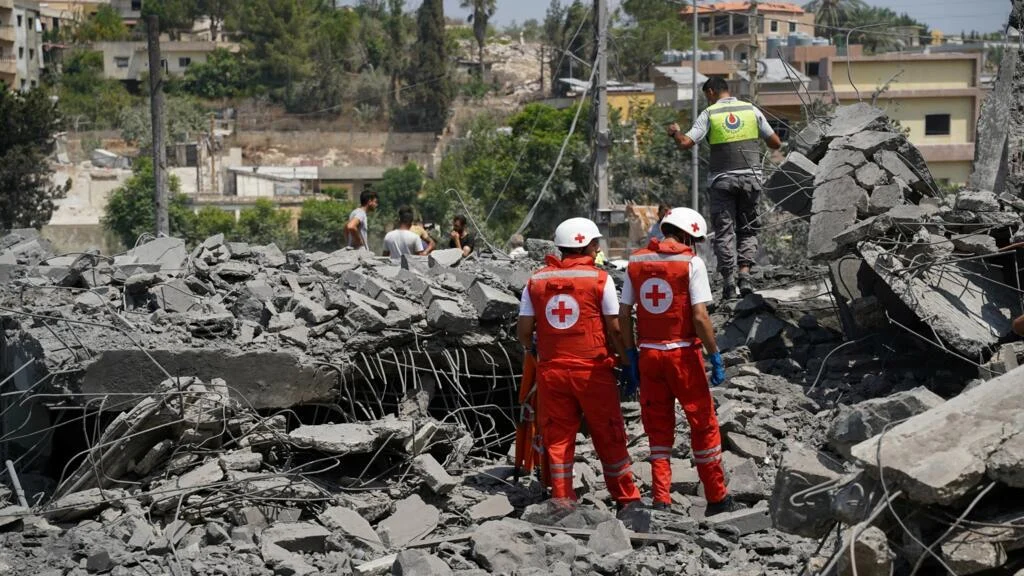
According to reports from Lebanon’s National News Agency (NNA), the most devastating strike occurred in the village of Ansar, where an Israeli warplane demolished a residential building. The strike resulted in seven fatalities, including three children and two women, and left 19 others wounded. A separate, concurrent strike on the village of Deir El Zahrani claimed the lives of four additional civilians.
The Israeli military has provided a markedly different account of the incident. In a statement released via the Prime Minister’s office on X (formerly Twitter), the IDF claimed it had targeted a "central headquarters" of Hezbollah’s elite Radwan Force. The military asserted that the strike resulted in the death of Ali Samir Al-Haj Hassan, a prominent commander within the unit.
"The IDF responded by striking the Hezbollah terror headquarters which ordered the attack," the statement read, referencing a previous incident that resulted in three injuries to Israeli soldiers. "Only later did the IDF learn that Hezbollah deliberately put civilians in that military compound." The Israeli military emphasized that while Hassan’s family was killed in the blast, they were not the intended targets of the operation, blaming Hezbollah’s tactical use of civilian infrastructure for the collateral damage.
A Chronology of Conflict
To understand the current volatility, one must look at the timeline of events that has defined the region’s instability throughout 2026:
- March 2, 2026: A new, intense round of hostilities breaks out, leading to the current wave of violence that has seen at least 4,300 deaths to date.
- Early 2026: Israel launches a significant military operation into Southern Lebanon following cross-border fire from Hezbollah, which occurred just two days into the wider Iran-Israel conflict.
- June 26, 2026: Lebanon, Israel, and the United States sign a framework agreement in Washington, aimed at establishing a ceasefire and a path toward disarming Hezbollah and restoring Lebanese state control in the south.
- August 13, 2026: Israeli Defense Minister Israel Katz visits the occupied zone in Southern Lebanon, reaffirming that Israel will not withdraw its forces until Hezbollah is fully disarmed.
- August 15, 2026: The strikes on Ansar and Deir El Zahrani occur, representing the deepest incursion by Israeli aircraft in two months and signaling a potential collapse of the June framework.
Supporting Data and Strategic Context
The scale of the devastation in Southern Lebanon is profound. With 4,300 lives lost since March, the region is facing a humanitarian emergency that continues to spiral. The strike on the valley adjacent to Ansar, which penetrated deep into Lebanese territory north of the Litani River, serves as a grim indicator of how far the military engagement has expanded.
The strategic importance of these strikes cannot be overstated. By targeting the Ali al-Taher hill and the Radwan Force command centers, Israel is attempting to dismantle the military architecture that allows Hezbollah to maintain a presence in the border region. However, the presence of Israeli troops remains the primary point of contention. While Israel insists on maintaining a presence to secure its northern border, the US State Department has signaled that a permanent Israeli military footprint is inconsistent with the spirit—and the text—of the June framework agreement.
Official Responses and Diplomatic Friction
The diplomatic fallout from Saturday’s strikes was immediate and visceral.
Lebanese Prime Minister Nawaf Salam took to social media to condemn the civilian deaths, stating, "The martyrs of the Israeli raid on the village of Ansar are not ‘military infrastructure’ and the women and children killed in it are not military targets."

Lebanese President Joseph Aoun described the attacks as a "clear message" intended to derail ongoing negotiations and undermine US-led efforts to implement the peace framework. Nabih Berri, the Speaker of the Lebanese Parliament and a long-standing ally of Hezbollah, issued a plea for national unity, calling upon the international sponsors of the peace talks to assume their responsibility in halting the bloodshed before the situation becomes irreversible.
On the other side, Israeli officials have framed the violence as a catalyst for more meaningful engagement. Doron Spielman, spokesperson for the Israeli Prime Minister’s Office, suggested that the strikes would "tighten up" the negotiations. "I think it should make the negotiations more serious and more real, because it highlights the whole reason we got into these negotiations in the first place," Spielman told Reuters.
Implications for Regional Stability
The implications of this escalation are multifaceted and perilous:
1. The Collapse of Trust
The June peace framework was built on a fragile foundation of mutual distrust. By conducting strikes that resulted in significant civilian casualties, Israel has arguably alienated the Lebanese public and weakened the position of the Lebanese government, which is struggling to assert authority while Hezbollah continues to reject the terms of the deal as "surrender."
2. The Role of External Actors
The conflict is not happening in a vacuum. With the United States mediating and Iran supporting Hezbollah, the situation in Southern Lebanon remains a proxy for broader geopolitical tensions. Recent threats from Donald Trump regarding a US takeover of the Strait of Hormuz—should Iran continue to assert its influence—suggest that the regional landscape is becoming increasingly unstable. Any miscalculation in Lebanon could trigger a chain reaction that impacts global energy security and maritime trade.
3. Hezbollah’s Retaliation
Hezbollah’s vow that the attacks would be "met with what they deserve" suggests that the coming days will likely see an increase in retaliatory rocket fire into Northern Israel. This creates a feedback loop of escalation that makes a return to the negotiating table increasingly difficult.
4. The Humanitarian Crisis
Beyond the political maneuvering, the humanitarian toll is the most urgent concern. With 4,300 deaths and counting, the infrastructure of Southern Lebanon is in ruins. The displacement of thousands of civilians and the destruction of residential areas create a long-term burden that will necessitate significant international aid, regardless of how the military conflict is resolved.
Conclusion
As the smoke clears over Ansar and the diplomatic rhetoric intensifies, the future of the US-mediated peace framework hangs by a thread. Israel’s demand for the total disarmament of Hezbollah, combined with its refusal to withdraw troops, remains diametrically opposed to the Lebanese insistence on sovereignty and an end to foreign occupation.
The events of this Saturday have demonstrated that as long as military force is used as a primary tool for "tightening" diplomatic negotiations, the path to peace will remain paved with casualties. Without a robust, immediate, and impartial intervention to enforce the terms of the existing agreement, the prospect of a lasting ceasefire appears increasingly like a distant memory rather than a tangible goal. The international community now faces a critical juncture: either move beyond the current cycle of retribution or watch as the fragile peace in Southern Lebanon descends into a wider, more devastating conflict.