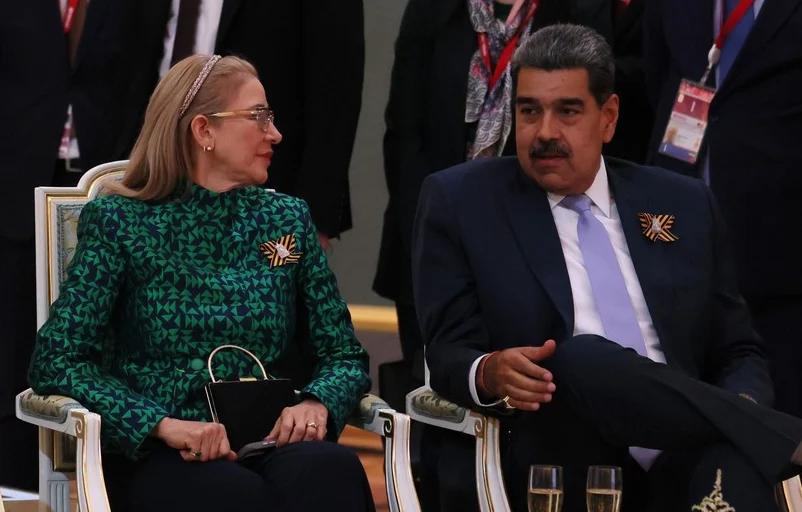
NEW YORK — In a landmark proceeding that has sent shockwaves through international diplomatic circles, a Manhattan federal court has officially scheduled the trial for Venezuelan President Nicolás Maduro and his wife, Cilia Flores, for June 1, 2027. The decision, handed down by U.S. District Judge Alvin K. Hellerstein on Wednesday, marks a significant escalation in the United States’ judicial pursuit of the Venezuelan leadership, a process that has moved from symbolic indictments to the physical detention of a sitting head of state.
The brief 15-minute hearing, characterized by a tense atmosphere, saw the prosecution and defense counsel reach a consensus on a timeline that will extend well into next year. The proceedings represent the latest chapter in a multi-decade federal investigation into what the U.S. Department of Justice (DOJ) describes as a sprawling, state-sponsored narco-terrorism enterprise.
The Judicial Timeline and Legal Strategy
Under the newly established schedule, the legal battle will officially move to the pretrial motion phase this September. Defense attorneys are expected to file substantive requests to challenge the foundational elements of the 2020 indictment. These motions are anticipated to focus on the jurisdictional legitimacy of the charges and the controversial circumstances of the defendants’ apprehension.
Judge Hellerstein has mandated that the couple return to the Southern District of New York on November 17, 2027, for oral arguments concerning these defense motions. The outcome of these arguments could fundamentally alter the scope of the trial, potentially resulting in the dismissal of specific counts or even the entire case if the defense successfully argues that the U.S. government violated international legal norms during the operation that brought the couple to New York.
During the hearing, Maduro, who appeared noticeably thinner than in his televised addresses from Caracas, remained silent, as did Cilia Flores. Their silence was punctuated only by their legal teams’ reiterated objections to the January 2026 U.S. military operation that resulted in their abduction from their residence in Caracas—a raid that the Venezuelan government claims resulted in the deaths of over 100 people.
Chronology of the Case: From Indictment to Abduction
The legal path to this trial has been long and fraught with geopolitical volatility. To understand the gravity of the upcoming June 2027 trial, one must look at the sequence of events that brought the case to this point:
- March 2020: The U.S. Department of Justice unseals an indictment against Nicolás Maduro and several high-ranking Venezuelan officials, charging them with narco-terrorism conspiracy, cocaine importation, and weapons-related offenses.
- March 2020: A $15 million bounty is placed on the head of the Venezuelan President, signaling the commencement of an aggressive U.S. "maximum pressure" campaign.
- 2020–2024: The investigation expands as federal prosecutors consolidate evidence regarding the "Cartel of the Suns," an alleged network of Venezuelan military and political figures facilitating drug trafficking.
- 2025: The U.S. government significantly escalates its posture, doubling the reward for information leading to the arrest of Maduro to $50 million. A massive military buildup in the Caribbean follows, ostensibly to target drug interdiction.
- January 2026: A U.S. military operation executes the detention of Maduro and Flores in Caracas. The operation is met with immediate international condemnation from allies of the Venezuelan government and sharp criticism regarding the violation of state sovereignty.
- January 2026: The couple makes their first appearance in Manhattan federal court, where they enter pleas of "not guilty" to all charges.
- July 2026: Judge Hellerstein formalizes the June 1, 2027, trial date, setting the stage for one of the most complex international trials in American history.
Supporting Data: The Charges and Evidence
The indictment against Maduro is comprehensive. Prosecutors allege that the Venezuelan state, under Maduro’s direction, acted as a conduit for the Revolutionary Armed Forces of Colombia (FARC) to transport tons of cocaine into the United States.
The charges against the couple are categorized as follows:
- Narco-terrorism Conspiracy: Specifically targeting Maduro, this charge carries the most severe penalties, potentially leading to a life sentence.
- Cocaine Importation Conspiracy: Filed against both defendants, this charge alleges that the couple used their political status to coordinate the movement of narcotics through Venezuela’s maritime and aerial infrastructure.
- Weapons Offenses: Both defendants are charged with the possession of machine guns and destructive devices during the commission of drug trafficking crimes.
The defense maintains that these allegations are politically motivated fabrications designed to facilitate a regime change. In his January 2026 statement, Maduro asserted, "I am president of the Republic of Venezuela… I was captured at my home in Caracas, Venezuela. I am a kidnapped president, prisoner of war. I am innocent."
Official Responses and Geopolitical Implications
The trial has divided global opinion, creating a complex diplomatic landscape.
The U.S. Stance
For the United States, the trial is a matter of law enforcement and national security. Officials in Washington have consistently argued that the Venezuelan leadership transformed the state into a criminal enterprise, fueling the American opioid epidemic and undermining regional stability. The Department of Justice views the trial as a necessary step in holding global leaders accountable for international crimes, regardless of their status.
The Venezuelan Diaspora and Opposition
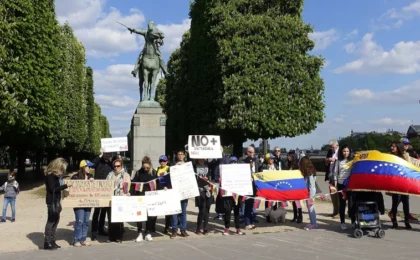
For many members of the Venezuelan diaspora, the ongoing trial represents a glimmer of hope. Following years of economic collapse, hyperinflation, and alleged human rights abuses, many supporters of the opposition see the trial as a necessary reckoning. They argue that the Maduro-Flores regime dismantled the rule of law in Venezuela, and therefore, the pursuit of justice in a neutral, international forum is justified.
International and Domestic Protests
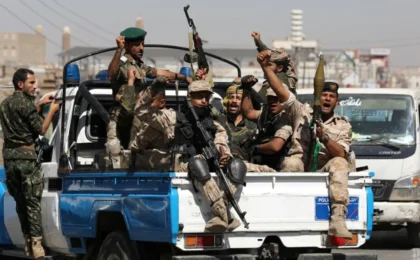
Conversely, the case has sparked protests outside the Manhattan federal courthouse and in major cities across the globe. Maduro’s supporters argue that the U.S. military operation was a flagrant act of aggression—a violation of the United Nations Charter and the principle of sovereign equality of states. These protestors characterize the trial as a "show trial" and an illegal overreach of U.S. extraterritorial jurisdiction.
Implications for Global Diplomacy
The implications of the June 2027 trial extend far beyond the courtroom in Manhattan. This is perhaps the first time a major world power has physically detained a sitting head of state from a sovereign nation to face criminal charges in its own domestic courts.
- Legal Precedent: The trial will set a global precedent for how international law handles heads of state accused of transnational crimes. It challenges traditional interpretations of "sovereign immunity," which have historically protected leaders from foreign prosecution while in office.
- Regional Instability: The removal of the Venezuelan leadership has left a power vacuum, leading to concerns about the future of the nation’s governance and the potential for prolonged civil unrest.
- U.S.-Latin American Relations: The operation in January 2026 has significantly strained relations between the United States and several Latin American partners, who view the U.S. military’s role in the detention as an ominous return to Cold War-era interventionism.
As the June 2027 date approaches, the eyes of the world will remain fixed on Judge Hellerstein’s courtroom. The proceedings promise to be a grueling exploration of statecraft, criminality, and the limits of international law. Whether the trial serves as a triumph for global justice or a cautionary tale about the dangers of extraterritorial military and legal action remains a subject of intense global debate. For now, the defendants remain in U.S. custody, and the legal teams on both sides are preparing for a trial that will undoubtedly redefine the boundaries of international diplomacy for years to come.