By Josh Broadwell
Published July 22, 2026
Since its release in 2025, Anno 117: Pax Romana has occupied a precarious position in the pantheon of grand strategy titles. Despite the pedigree of Ubisoft Mainz and the beloved foundation laid by Anno 1800, the title was met with a chorus of skepticism. Critics and players alike labeled it "empty," "dull," and a hollow shell of its predecessor. However, the release of the game’s first major expansion, Prophecies of Ash, serves as a critical inflection point. While it does not single-handedly transform the game into a masterpiece, it introduces a necessary friction that forces players to engage with the mechanics in ways the base game failed to demand.
The State of the Empire: Contextualizing the Backlash
To understand the significance of Prophecies of Ash, one must first understand the malaise currently infecting the Anno 117 player base. The game launched with a design philosophy that, while elegant, often felt listless. In the standard game loop, players reach the third population tier—the Equites—and find themselves in a perpetual, unchallenging expansion cycle.
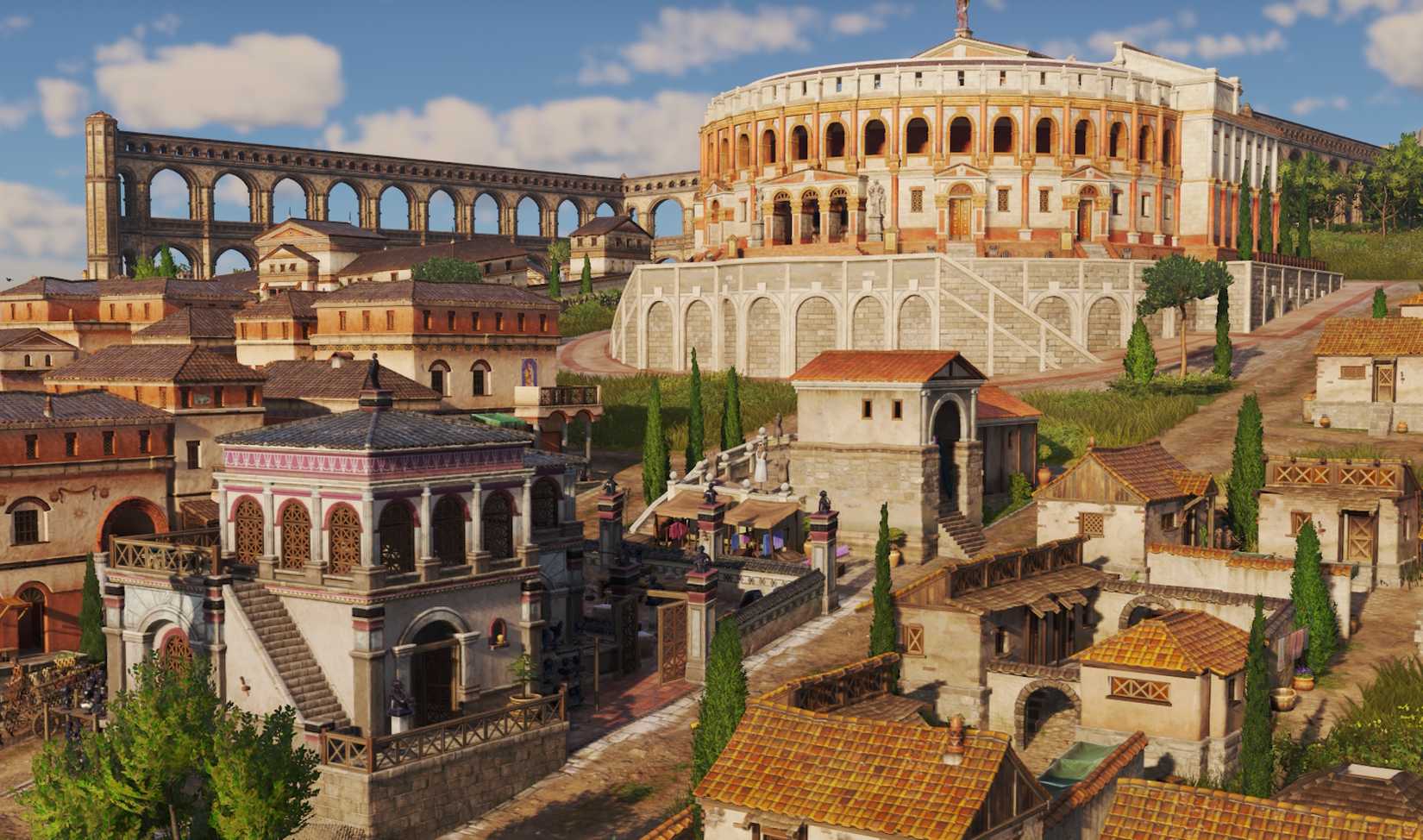
The transition from basic citizenry to the Roman upper-middle class was intended to be the game’s first major hurdle. Players were tasked with sourcing complex goods like cheese, concrete, and fine wines, often requiring inter-regional logistics chains between Latium and Albion. Yet, for many, this felt like busywork rather than strategic mastery. The "negative" consensus on Steam and Reddit suggested that Anno 117 lacked the "soul" of the Industrial Revolution-era 1800. It was a machine that worked, but one that lacked the tension required to make a city-builder truly addictive.
A Chronology of Chaos: The Eruption Mechanic
The core of the Prophecies of Ash DLC is the introduction of a volcanic eruption cycle, centered on the newly added island of Cinis and the influence of the prophetess Caecillia. The expansion does not force this chaos upon the player immediately; it acts as a mid-game accelerator.

The Buildup
The mechanics remain dormant until the player reaches a threshold of 500 Equites. This design choice is clever: it allows the player to master the standard logistical flow before introducing the "volcano-less" stress test. Once the threshold is crossed, the game introduces a series of pre-eruption quests. These involve stockpiling resources for ritual sacrifices and navigating the delicate balance of restricting public consumption to maintain a surplus for trade.
The Event
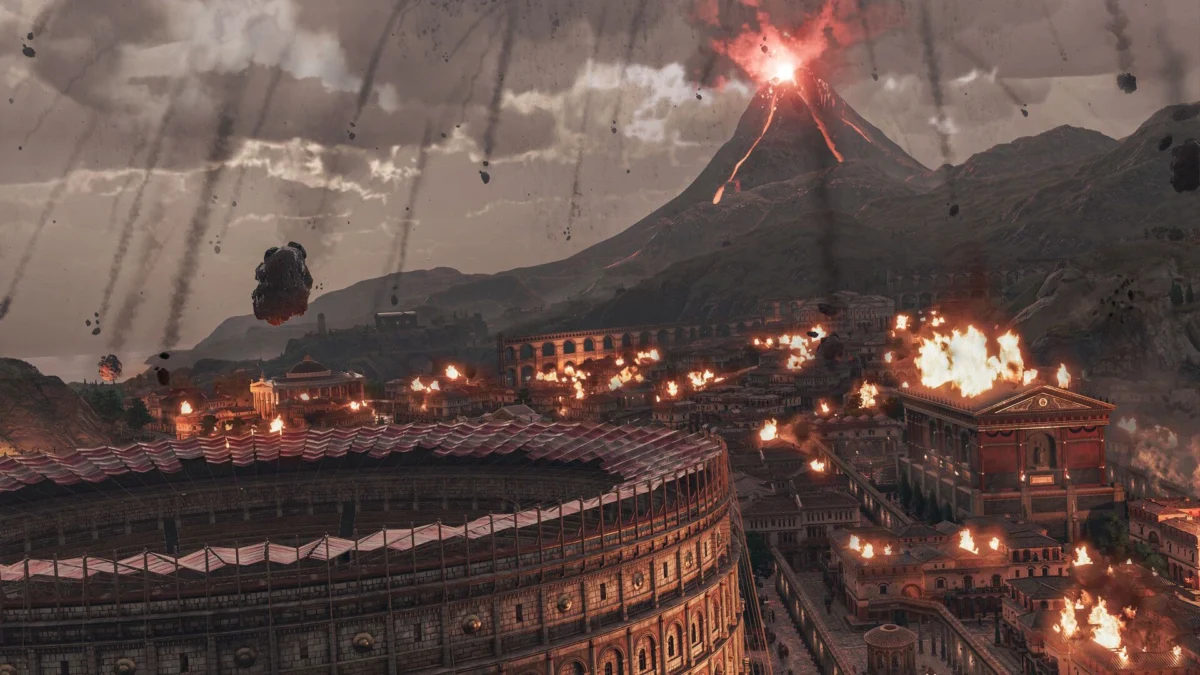
When the volcano finally triggers—the "Occasus" event—it fundamentally alters the game’s reality:
- Infrastructure Failure: Fire safety, typically a manageable metric, plummets to critical levels.
- Environmental Degradation: Acid rain strips the landscape of trees, effectively halting wood-dependent production.
- Social Unrest: With the populace terrified, the risk of riots increases exponentially.
- The Volcanic Winter: Following the eruption, agricultural and aquatic production drops to 25% of its standard output.
This period of scarcity is where the game’s new "hoarding" meta comes into play. Players who failed to prepare find their cities starving, while those who strategically limited consumption during the buildup phase survive the winter, only to be rewarded with rejuvenated, hyper-fertile soil post-eruption.
Supporting Data: Economic Shifts and Technological Triage
The expansion does not just add a disaster; it introduces a new economic layer involving obsidian. While the mineral is a byproduct of the eruption, it acts as a currency of desperation.
The Obsidian Economy
Obsidian allows players to trade with Caecillia for specialized citizens. These specialists provide fertility boosts to specific resources, often at 50% of the normal production cost. For a player struggling to find space on small, resource-poor islands, this is a game-changer. It permits the exploitation of rare goods (like snails for dye) on islands that previously would have been useless, effectively bypassing the need to build sprawling, inefficient trade networks for every minor good.

The Porridge Paradox: A New Approach to Population
Perhaps the most impactful, if unassuming, addition is the "porridge kitchen" tech node. Historically, Anno games have struggled with the "worker shortage" issue, often requiring players to overbuild housing to fill employment slots. The porridge kitchen allows for the rapid, concentrated growth of a population without the need for massive housing blocks. This enables the creation of small, efficient, single-purpose colonies—a massive quality-of-life improvement for players who find large-scale logistics management tedious.
Official Stance and Community Reception
Ubisoft Mainz has been relatively quiet regarding the "mostly negative" reviews, opting to let the DLC speak for itself. In promotional materials, the studio highlighted the expansion as a "narrative and systemic" evolution of the Roman setting.
The community, however, remains split. Detractors argue that the DLC is a "band-aid" for a fundamentally flawed base game. They point to the fact that the tech tree’s prestige stat remains largely irrelevant, serving only to recruit specialists rather than influencing the grander political landscape of the Roman Empire. Proponents, conversely, argue that the addition of the "Volcanic Winter" provides a necessary, high-stakes adrenaline spike that brings the game closer to the strategic depth of titles like Frostpunk.
Implications for the Future of Anno 117
The success of Prophecies of Ash lies in its ability to introduce meaningful failure. In the base game, the only way to lose was through sheer neglect. With the volcano, players face an external force that requires them to pivot, hoard, and adapt.
Remaining Hurdles
Despite these improvements, the "dangling threads" of Anno 117 remain. The Cult of Vulkan, for instance, offers mining bonuses but does little to make "religion" a compelling gameplay pillar. It remains a "like and subscribe" button for stat buffs rather than a deep, interactive social system.
The Path Forward
The implications for Ubisoft Mainz are clear: the player base wants systemic depth. They want the logistics of the Roman world to feel as heavy and significant as the industrial might of Anno 1800. Prophecies of Ash proves that the developers are listening to the critique regarding the game’s "emptiness." By adding the volcano, they have introduced a dynamic that forces the player to stop playing in a vacuum and start playing against the environment.
If the studio continues to release expansions that focus on adding these layers of "wrench-in-the-works" complexity, Anno 117 may yet recover its reputation. For now, the verdict is cautiously optimistic: the game is finally starting to catch fire, and for the first time, that is exactly what it needs.
Quick Summary Table: Key Changes in Prophecies of Ash
| Feature | Impact | Strategic Value |
|---|---|---|
| Occasus Event | High | Forces resource management and stockpiling. |
| Obsidian Trade | Moderate | Provides flexibility for island specialization. |
| Porridge Kitchens | Low | Reduces labor/housing bloat in remote colonies. |
| Volcanic Winter | High | Tests economic resilience and food security. |
Disclaimer: This analysis is based on the current state of the game as of July 2026. Future updates may alter the balance of the mechanics discussed herein.