In the modern era, the path to vehicle ownership has fundamentally shifted. The days of driving aimlessly from dealership to dealership, hoping to spot a model that catches the eye, have largely been replaced by the tactical efficiency of the digital showroom. Today, the internet serves as the primary gateway for millions of consumers, making automaker websites the critical "first touchpoint" in the multi-billion-dollar automotive industry.
A recent, comprehensive study by Emarketer, utilizing Comscore data, has shed light on which manufacturers are winning the battle for consumer attention. While the industry is vast, the data reveals a clear hierarchy of digital influence, with industry titans Toyota and Ford fighting a neck-and-neck battle for the top spot.
The Digital Hierarchy: Who Commands the Most Attention?
According to the latest figures for April, the digital footprint of major automakers is a reflection of both brand heritage and modern marketing reach. Toyota and Ford currently sit at the pinnacle of this digital traffic, separated by a margin so narrow it suggests that brand loyalty and search engine optimization (SEO) are becoming as vital to survival as manufacturing prowess.
The list of the top 10 most visited automaker websites underscores a fascinating shift in market perception:
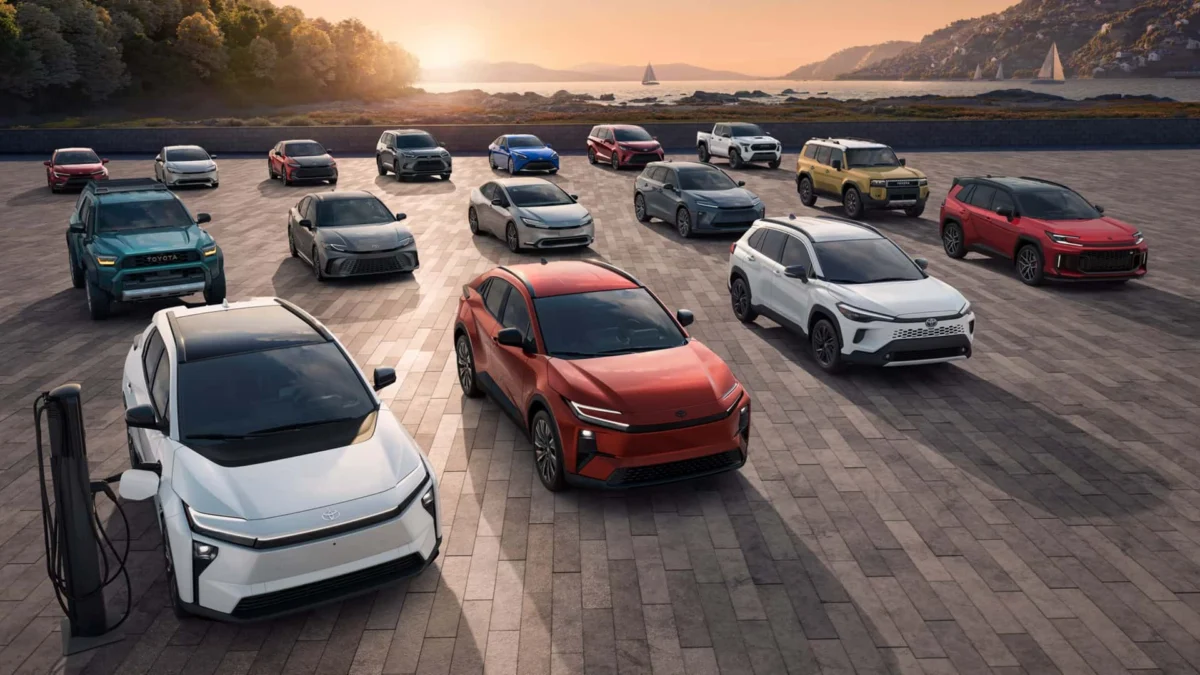
- Toyota: Leading the pack, Toyota’s digital dominance reflects its reputation for reliability and its aggressive expansion into hybrid and electric vehicle (EV) technologies.
- Ford: A close second, Ford’s digital traffic remains bolstered by its iconic truck lineup, most notably the F-Series, which continues to drive massive search volume.
- Hyundai-Kia: Perhaps the most significant surprise, the combined digital presence of the Korean giants now frequently eclipses legacy powerhouses like General Motors. This climb is indicative of their stellar sales growth and a pivot toward cutting-edge design and technology-forward interiors.
- General Motors (Chevrolet, GMC, Buick, Cadillac): Despite a massive portfolio, the collective GM web presence faces stiff competition from agile competitors.
- Honda: Maintaining a consistent, loyal audience interested in fuel efficiency and longevity.
- Nissan: A staple in the mid-market segment, driving consistent traffic through fleet and consumer-focused marketing.
- Stellantis (Jeep, Ram, Dodge, Chrysler): A complex digital ecosystem that manages to pull in significant traffic, largely driven by the high engagement of the Jeep community.
- Volkswagen: Retaining strong interest as the brand pushes further into the EV space with its ID. series.
- Subaru: Boasting one of the most dedicated niche audiences, with high click-through rates regarding safety and outdoor-oriented vehicle configurations.
- Tesla: While Tesla’s business model is almost entirely digital, it frequently fluctuates in these rankings due to its unique direct-to-consumer sales structure.
Chronology of the Digital Shift in Automotive Retail
To understand why these websites matter, one must look at the evolution of automotive retail over the past two decades.
- The Early 2000s (The Informational Era): Automaker websites were essentially glorified brochures. Users visited to look at static photos and read technical specifications. The dealer remained the ultimate gatekeeper of price and availability.
- 2010–2015 (The Configurator Era): This period saw the birth of the "Build and Price" tool. Manufacturers invested heavily in interactive media, allowing users to customize paint colors, trims, and wheels. This increased "dwell time" on sites, signaling a shift toward personalized digital experiences.
- 2016–2020 (The Mobile-First Transformation): As mobile internet usage exploded, automakers were forced to optimize their sites for tablets and smartphones. This period also saw the rise of third-party aggregators (like Autotrader and Cars.com), which forced OEMs to make their own sites more user-friendly to keep potential buyers in their ecosystem.
- 2021–Present (The Artificial Intelligence and Data Era): We are currently in the age of AI integration. Consumers are no longer just looking at one car; they are using sophisticated AI tools to compare safety ratings, cost of ownership, and performance metrics across multiple brands simultaneously.
Supporting Data: The Impact of AI on the Shopping Journey
The Emarketer study highlights a pivotal statistic: approximately 44 percent of consumers are now actively utilizing artificial intelligence to compare vehicles side-by-side. This is not merely a trend; it is a fundamental shift in consumer behavior.
Before the advent of generative AI and machine learning tools, a shopper might have spent hours navigating through multiple tabs, cross-referencing PDFs and brochure specs. Today, AI assistants can synthesize this data, offering consumers a "best-fit" recommendation based on their specific budget, family size, and driving habits.
This behavior places immense pressure on automakers to ensure that their website data is structured, transparent, and easy for AI scrapers and internal comparison engines to digest. If a brand’s website is clunky or lacks detailed pricing and feature transparency, it risks being omitted from the AI-generated "top picks" list that consumers are increasingly relying on.
Implications: The Gap Between "Clicks" and "Keys"
Despite the massive traffic figures, there is a critical disconnect between website visits and final transactions. As the Motor1 editorial team notes, while millions of users visit these portals daily, a surprisingly small percentage ultimately convert into buyers within the digital ecosystem.
The Challenge of Conversion
Automakers are currently grappling with "digital leakage." A consumer may spend three hours on a brand’s official site, researching the nuances of a new engine or infotainment system, only to ultimately purchase their vehicle through a third-party platform or a dealer-led financing portal.
The Role of Data Privacy
The auto industry is also facing a reckoning regarding customer data. As automakers attempt to capture more information about their site visitors—to personalize ads and follow-up emails—they have encountered significant pushback. Recent studies suggest that the industry is realizing that selling customer data is not worth the potential loss of brand trust. Transparency is now a competitive advantage.
Economic Hurdles
The financial barrier to entry is higher than ever. With new car payments now frequently exceeding $800 a month, the digital showroom is often the place where dreams go to meet reality. When consumers see the final "out-the-door" price online, many are forced to abandon their search, turning instead to the pre-owned market. This suggests that traffic volume may be a vanity metric if it does not correlate with affordability.
The Future of the Digital Dealership
What does this mean for the future of the automotive industry? As we move toward 2030, the digital experience will likely evolve in three distinct ways:
- Virtual Reality (VR) Showrooms: Expect automakers to move beyond static photos and into immersive VR, where users can sit inside a car, explore the cabin, and interact with the software before ever stepping foot in a physical dealership.
- Hyper-Personalization: Utilizing AI, websites will soon recognize returning users and immediately surface the specific vehicle configurations that align with their previous search history, financial profile, and regional availability.
- Unified Digital-to-Physical Transactions: The ultimate goal is a seamless "click-to-drive" experience. Manufacturers are striving to integrate their online configurators directly with local dealership inventory, allowing a user to reserve a car, secure financing, and schedule a delivery from the comfort of their home.
Final Analysis
The data from Emarketer and Comscore provides a snapshot of an industry in transition. Toyota and Ford have mastered the art of pulling the audience in, but the real challenge lies in the "middle of the funnel."
As AI continues to simplify the decision-making process, the brands that win will not necessarily be those with the flashiest websites, but those that provide the most honest, accessible, and actionable data. The internet has democratized the automotive research process, and in this new environment, the consumer is more informed, more skeptical, and more demanding than ever before.
The battle for the top spot in website traffic is just the beginning. The real victory will be claimed by the automakers who can translate that digital curiosity into long-term brand loyalty and, ultimately, satisfied drivers on the road. As we look ahead, the automotive website is no longer just a digital brochure; it is the battlefield where the future of the industry is being fought, one click at a time.