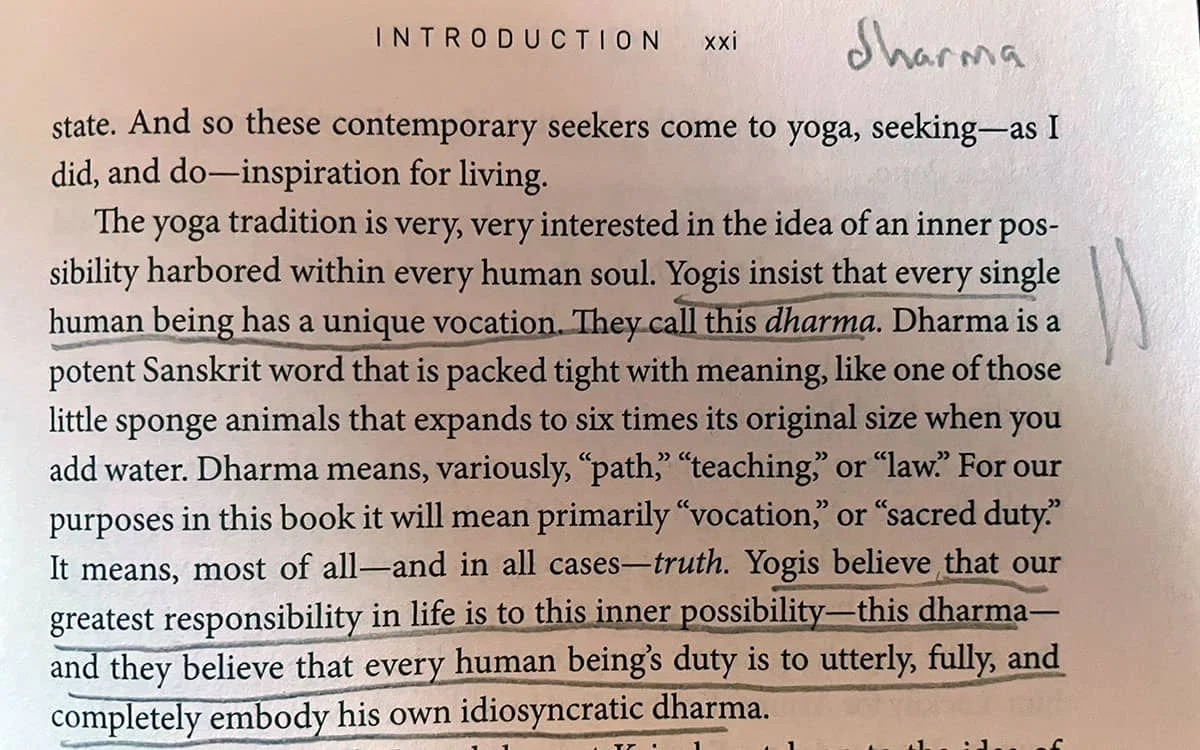
In an era defined by rapid professional shifts and the erosion of traditional career trajectories, many individuals find themselves adrift, searching for a framework to navigate the complexities of adulthood. Last week, we explored the transformative potential of Designing Your Life, a seminal work by Stanford design professors Bill Burnett and Dave Evans. The authors argue that the same iterative, prototyping-based methodology used to solve complex engineering challenges can be applied to the most daunting problem of all: how to craft a meaningful life.
This article details the initial stages of a longitudinal self-experiment, conducted in partnership with my long-term partner, Kim, and a longtime college peer, Craig. By working through the structured exercises within the book, we aim to move beyond abstract goal-setting and into the concrete territory of life architecture.
The Foundation: Starting Where You Are
The foundational principle of the Burnett-Evans methodology is simple yet profound: "Start where you are." This mirrors the core philosophy of financial wellness—one cannot plot a course toward fiscal freedom without first auditing current assets, debts, and spending habits. Similarly, life design requires a radical, data-driven honesty regarding one’s current state.
The authors mandate a self-assessment across four critical dimensions: health, love, play, and work. This is not intended to be an actionable roadmap immediately, but rather a diagnostic snapshot. Like a net worth statement, this assessment establishes a baseline. Once the current coordinates are mapped, the individual can begin the process of building a metaphorical compass.
Building the Compass: A Comparative Analysis of Values
The second chapter of the program tasks readers with drafting two critical documents: a "Workview" and a "Lifeview." These mini-essays serve as a North Star, articulating one’s core beliefs about the nature of labor and the broader purpose of existence.
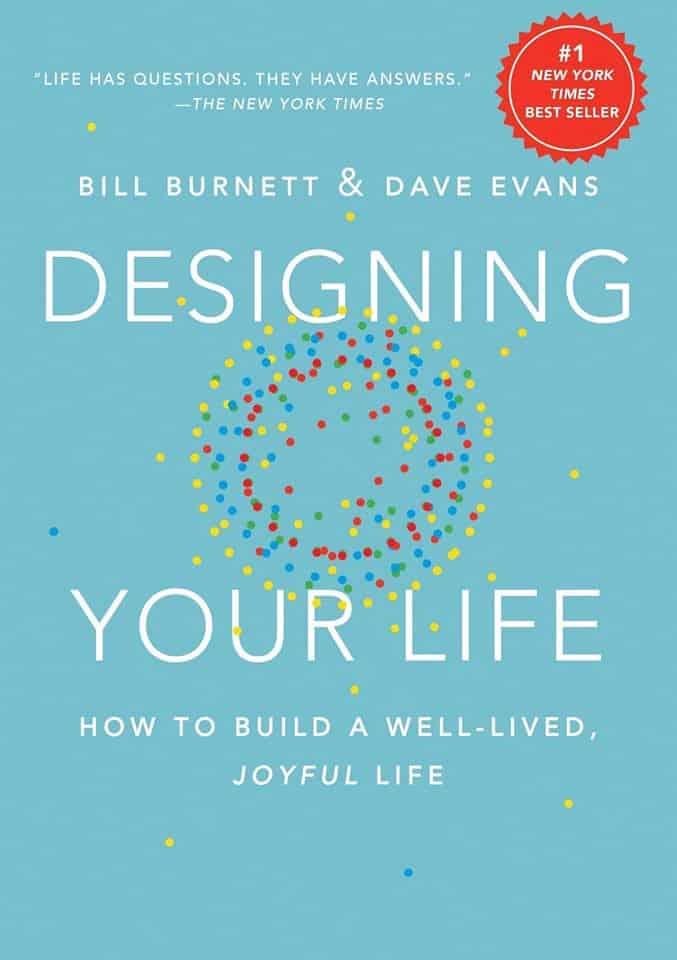
To test the efficacy of this exercise, I engaged in a deep-dive discussion with my former classmate, Craig. Despite the passage of years, our dialogue revealed a startling, almost eerie alignment in our fundamental values. By comparing our written reflections, we discovered that our respective philosophies on "right livelihood" and personal fulfillment were remarkably congruent.
The Evolution of Workview
Craig’s perspective on work is heavily influenced by the Buddhist concept of "Right Livelihood." He articulates a desire for work that is not only remunerative but restorative. "I work for money happily for a while," Craig notes, "but experience, learning, and growth are essential if I am to remain happy for long." His view emphasizes the importance of tangible outputs and a commitment to ecological stewardship.
In contrast, my own Workview focuses on the intersection of personal fulfillment and social utility. By applying the Japanese concept of ikigai—the intersection of what you love, what you are good at, what the world needs, and what you can be paid for—I have attempted to frame my professional endeavors through the lens of service. My objective is to transform my digital platforms into reliable, accessible resources that empower readers to master their financial lives. While income remains a functional requirement, the primary metric of success is the quality and reach of the impact on others.
Lifeview: The Search for Meaning
The exercise became even more profound when we exchanged our Lifeviews. Craig posits that there is no inherent divine mandate for our existence, yet finds comfort in the insignificance of our lives against the vastness of time and space. He argues that laughter is the most rational response to the vicissitudes of human existence, citing Jane Austen to emphasize the communal nature of life.
My Lifeview reflects a similar existential position: I believe that because life has no inherent meaning, the responsibility to create it rests entirely upon the individual. Morality, in my view, is defined not by dogma or political affiliation, but by the treatment of others—specifically those with whom we hold a power imbalance. By practicing "rational self-centeredness," I aim to secure my own well-being as a foundation from which I can provide support to my partner, my community, and, ultimately, the world at large.

The Willamette Connection: A Shared Intellectual Heritage
Why do two individuals, separated by time and career paths, arrive at such similar conclusions? A significant part of the answer may lie in our shared history at Willamette University. The institution’s motto, non nobis solum nati sumus ("not unto ourselves alone are we born"), appears to have left an indelible mark on our collective consciousness.
This phenomenon is not isolated. Many of my peers who share this philosophical framework—including contributors from the financial independence movement—often cite similar educational or community-based influences. This suggests that the "compass" we are building is not merely a product of individual introspection, but the result of a long-term integration of social capital and shared intellectual values.
Implications for Personal Development
The exercise of drafting a Workview and Lifeview has immediate, practical implications for the decision-making process. When one reaches a fork in the road, these documents provide a clear, objective set of criteria against which to measure potential opportunities. If an opportunity does not align with one’s stated values—be it in terms of environmental impact, personal growth, or social contribution—the path forward becomes much clearer.
Furthermore, this experiment demonstrates that the "gap" in many contemporary self-help programs is the lack of a bridge between abstract purpose and daily activity. By documenting these values, we are establishing a "moral ledger" that can be audited as frequently as one’s bank account.
Future Projections: The "Good Time Journal"
Having established our compasses, the next phase of our experiment involves granular, data-driven analysis. Over the coming weeks, both Craig and I will be maintaining a "Good Time Journal." This log tracks our daily activities and rates them based on two key metrics:
- Engagement: The degree to which we are fully absorbed and "in the flow" during an activity.
- Energy: The degree to which an activity leaves us feeling invigorated rather than drained.
Following the collection of this data, we intend to utilize mind-mapping techniques to identify patterns in our behavior. We hypothesize that by visualizing where our energy goes versus where our values lie, we will be able to identify specific "prototypes" for our future lives.
The Role of Social Capital
As we move forward, we remain cognizant of the fragility of modern social capital. As Robert Putnam observed in Bowling Alone, the decline of civic engagement has left many feeling isolated in their pursuit of meaning. Our experiment is, in itself, an attempt to reconstruct a small, meaningful community of practice. By sharing these exercises and holding one another accountable, we are not just designing our own lives—we are testing the hypothesis that meaningful life design is, fundamentally, a communal endeavor.
The process of designing one’s life is never truly finished. It is an iterative, lifelong cycle of testing, learning, and refining. As we move into the next phase of this project, the goal remains unchanged: to move with intention, to build with purpose, and to leave the world slightly better than we found it. Stay tuned as we dive into the data-gathering phase of our journey.