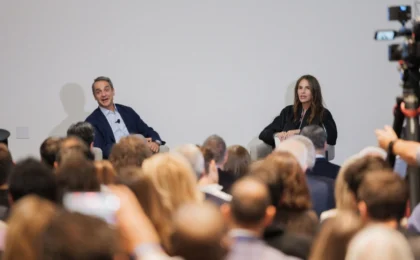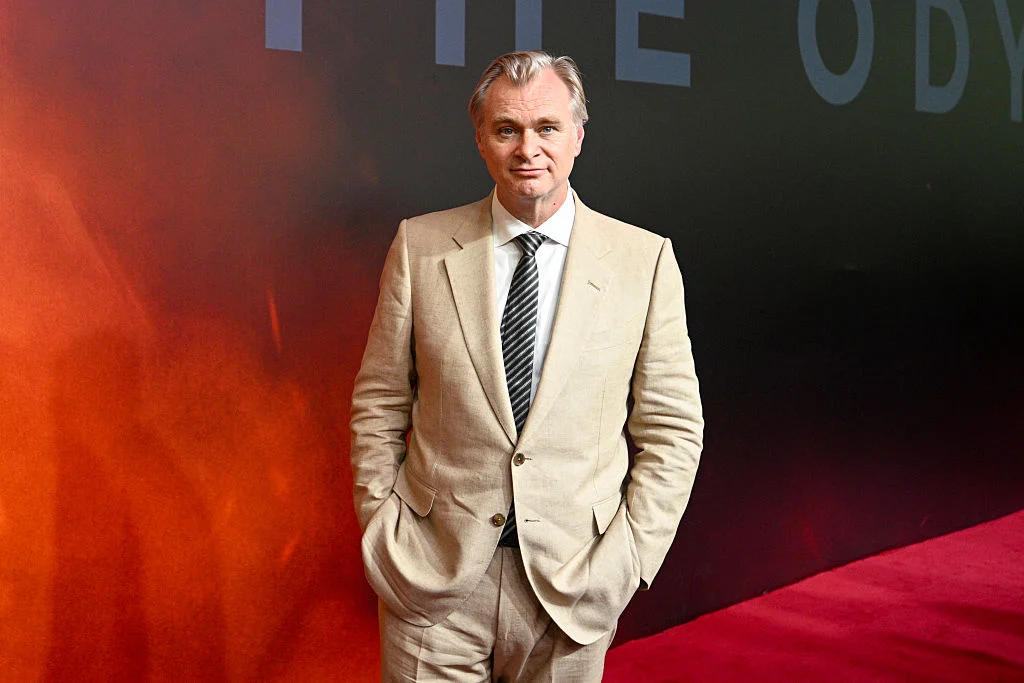
As Christopher Nolan’s latest cinematic achievement, a sprawling and visually audacious adaptation of Homer’s The Odyssey, continues to dominate the global box office, the director has turned his lens toward a different kind of epic conflict: humanity’s uneasy relationship with artificial intelligence. In a wide-ranging conversation with YouTube creator Hugo Travers, the Oscar-winning filmmaker offered a piercing critique of the rapid proliferation of AI, framing the technology not as a hidden threat, but as a "transparent horse" whose intentions are visible to all.
Nolan, whose career has been defined by his insistence on practical effects and the primacy of film stock, sees a rare silver lining in the current cultural landscape. He argues that the public—particularly the youth—have developed a profound, "healthy" skepticism toward AI, a reaction he believes is essential for maintaining human autonomy in an era of algorithmic saturation.
The Metaphor of the Glass Horse
The discussion began with a literary parallel. Travers, host of the popular HugoDécrypte channel, drew a comparison between the mythical Trojan horse—a gift that served as a vessel for destruction—and the modern integration of AI into daily life. He questioned whether society was inviting a "Trojan horse" into its homes, only to discover too late that it harbored something darker.
Nolan’s response was immediate and evocative. "I think AI is a Trojan horse that everybody knows the Greeks are inside," he remarked with a laugh. "It’s a transparent horse; it’s made of glass."
This imagery highlights Nolan’s core contention: unlike the subtle deceptions of the past, the mechanisms and potential risks of generative AI are now starkly visible. He noted that he has never witnessed a technology advance with such blistering speed while simultaneously being met with such immediate and widespread public resistance.
"Everybody’s suspicion of it is so extreme, particularly young people," Nolan observed. He pointed to the emergence of the term "AI slop"—a derogatory label coined by younger generations to describe the inundation of low-quality, AI-generated content online—as evidence that the public is not merely consuming this technology blindly, but is actively categorizing it as something to be managed, if not outright rejected.
A Chronology of the Conflict
The friction between creative industries and generative AI did not begin with Nolan’s recent comments; it has been a defining tension of the 2020s.
- 2023: The Great Work Stoppage: The catalyst for the current scrutiny of AI was the dual strike of the Writers Guild of America (WGA) and SAG-AFTRA. The core issue was not just compensation, but the existential threat posed by AI’s ability to mimic human writing and performances.
- 2024: The Regulatory Shift: Following the strikes, unions began codifying protections. The Directors Guild of America (DGA), under the leadership of Nolan and his colleagues, successfully negotiated contract terms that place guardrails on the use of generative AI in production.
- 2025: The Integration Era: As AI tools became standard in post-production and marketing, the "AI slop" phenomenon reached a tipping point, leading to the consumer fatigue Nolan identified.
- 2026: The Box Office Verdict: With the release of The Odyssey, Nolan has successfully championed a traditional, high-fidelity approach to filmmaking. His massive box-office success has served as a cultural referendum, suggesting that audiences still crave the human touch, even as the industry debates the utility of synthetic alternatives.
Supporting Data: Why Skepticism Prevails
Nolan’s observations align with broader sociological trends. While tech corporations often frame AI as an inevitable evolution of human creativity, independent analysis suggests a significant gap between corporate ambition and public sentiment.
The Rise of "Techno-Skepticism"
Nolan explicitly rejects the label of "technophobe." Instead, he identifies as a "techno-skeptic." His skepticism is rooted in the belief that new technology is frequently marketed as a replacement for superior, existing systems—a process he views as "throwing the baby out with the bathwater."
The Economic Context
The economic stakes are high. Generative AI threatens to devalue creative labor by flooding the market with automated content. Nolan’s career—specifically his fight to preserve the IMAX film format—serves as a template for his skepticism. He argues that film is more representative of the human eye’s perception than digital imaging, and he fears that the industry’s push for digital efficiency often comes at the cost of genuine artistic depth.
Official Responses and Industry Dynamics
Nolan’s stance has placed him at the center of a polarized industry. While he advocates for caution and human-centric workflows, other titans of industry have taken a more combative approach.
Elon Musk, for example, has publicly criticized The Odyssey, focusing his ire on the film’s inclusive casting choices. This distraction, according to industry analysts, serves to highlight the broader "culture war" surrounding major studio productions, where discussions of technology are often inextricably linked to debates over social representation and the future of corporate power.
Nolan remains focused on the underlying motive: "The motives of the people giving it [AI] to us also have to be viewed with skepticism," he stated. "That’s when we’ll get the best out of a new technology, rather than just blind faith that everything’s going to be great."
Implications: A Future of Conscious Adoption
The implications of Nolan’s "glass horse" philosophy are profound for both the entertainment sector and the broader tech industry.
1. The Value of Human Provenance
As AI-generated content becomes more prevalent, the "provenance" of creative work—the fact that it was conceived and executed by a human—may become a premium commodity. If the public continues to label automated content as "slop," there will be a natural market incentive to prioritize human-made art, mirroring the resurgence of vinyl records in the age of streaming.
2. Guardrails vs. Innovation
Nolan’s work with the DGA suggests that the future of Hollywood will not be an outright ban on AI, but a strictly regulated integration. By securing contractual protections, guilds are ensuring that AI remains a tool for, rather than a replacement of, the director’s vision.
3. The Generational Divide
Perhaps the most telling aspect of Nolan’s analysis is his focus on youth. If the generation most proficient with digital tools is also the most skeptical of AI’s creative output, we may be approaching a cultural correction. This skepticism suggests that the "digital native" generation is moving past the phase of uncritical wonderment and into a phase of critical evaluation.
4. A Philosophical Pivot
Ultimately, Nolan’s critique is a call for intellectual independence. By urging audiences to look through the "glass" of the Trojan horse, he is advocating for a society that demands transparency from tech giants. In his view, the best path forward involves using the gifts of technology to enhance our existing systems, rather than allowing those systems to be dismantled in the name of speed and efficiency.
As The Odyssey continues to fill theaters, it stands as a testament to Nolan’s philosophy: that the most powerful stories are still those told with a human hand, captured on film, and presented with an unwavering commitment to the tangible reality of the world. In the face of a technological tide that promises to wash away the old, Nolan reminds us that there is profound value in the things we have fought so hard to preserve.