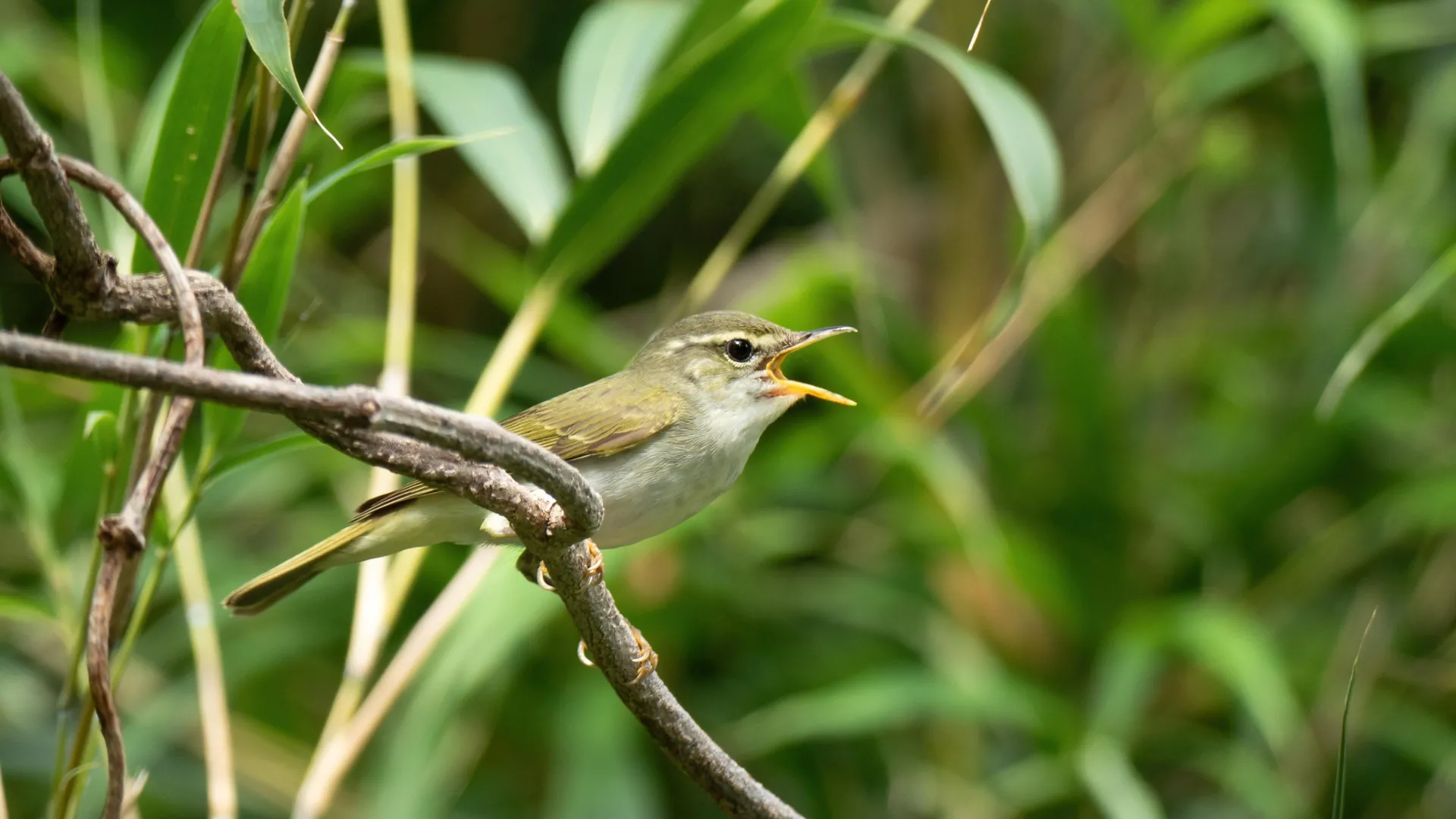
In a landmark discovery that has sent ripples through the ornithological community, scientists have officially identified a new bird species residing within the Japanese archipelago. The finding, which follows a decade of rigorous genetic and field research, marks the first time a new avian species has been described in Japan since 1982. The newly named Tokara Leaf Warbler (Phylloscopus tokaraensis) was long mistaken for its close relative, the Ijima’s Leaf Warbler (Phylloscopus ijimae), due to their nearly indistinguishable physical appearance.
This discovery serves as a poignant reminder of the "hidden" biodiversity that persists in our natural world, often masked by phenotypic similarities that defy traditional taxonomic classification. By leveraging advanced genomic sequencing, an international team of researchers—comprising experts from Uppsala University, the University of Gothenburg, and leading Japanese academic institutions—has successfully peeled back the layers of evolutionary history to reveal a distinct lineage that demands immediate conservation attention.
The Chronology of Discovery: A Decade-Long Investigation
The journey to identifying the Tokara Leaf Warbler was not an overnight success; it was a methodical, multi-year process that bridged the gap between historical museum archives and modern molecular science.
Initial Observations (2014–2016)
The investigation began over a decade ago when ornithologists noted subtle, yet persistent, differences in the vocalizations and genetic markers of leaf warblers inhabiting two disparate island groups: the Izu Islands, located south of Tokyo, and the Tokara Islands, situated approximately 1,000 kilometers to the southwest. While the birds appeared identical to the naked eye—displaying the same olive-green plumage and diminutive stature—preliminary genetic samples suggested a divergence that contradicted their classification as a single species.
Deep Genomic Analysis (2017–2021)
Recognizing the potential for a "cryptic" species, the researchers launched an exhaustive research program. This phase involved extensive fieldwork across the isolated island chains, where scientists captured and tagged birds to record their songs and collect non-invasive genetic samples. Simultaneously, the team conducted a comparative analysis of historical specimens held in museum collections. By sequencing the whole genomes of individuals from both populations, the team uncovered significant, stable genetic variations that confirmed the two populations had been evolving independently for a considerable period.
Formal Description and Peer Review (2022–2024)
With the genomic evidence solidified, the team turned their attention to the song patterns. Through sophisticated acoustic analysis, they confirmed that the Tokara Leaf Warbler possessed a distinct dialect compared to the Ijima’s Leaf Warbler. These findings, when combined with the genomic data, met the stringent criteria for the formal description of a new species. The official announcement of Phylloscopus tokaraensis represents the first addition to Japan’s list of endemic birds in over 40 years, following the description of the Okinawa Rail in 1982.
Supporting Data: Why DNA Outpaced the Naked Eye
The case of the Tokara Leaf Warbler is a quintessential example of "cryptic speciation," a phenomenon where two species are morphologically similar but genetically distinct. In the world of avian taxonomy, the inability to distinguish between these birds using traditional field observation led to decades of taxonomic ambiguity.
The Genomic Divide
The whole-genome analysis performed by the research team provided the "smoking gun." While physical appearance is often dictated by a small subset of genes that adapt to specific environments, the genomic landscape—the entirety of the bird’s DNA—revealed profound differences in the neutral mutations that accumulate over time. These mutations serve as a "molecular clock," indicating that the Tokara population split from their Izu counterparts thousands of years ago, likely as a result of geographical isolation and restricted gene flow.
Acoustic Evidence: The Song of Separation
In many passerine birds, song is the primary barrier to interbreeding. The research team’s acoustic analysis revealed that the Tokara Leaf Warbler utilizes a song structure that is slightly, but consistently, different from the Ijima’s Leaf Warbler. For a bird, this subtle variation is significant; it acts as a behavioral reproductive barrier, ensuring that members of the two species do not interbreed even if they were to come into contact.
Official Responses and Scientific Context
The discovery has been met with both celebration and a sense of urgency within the scientific community. The lead researchers emphasize that this is not merely a bureaucratic change in nomenclature, but a crucial step toward effective conservation.
Perspectives from the Field
Per Alström of Uppsala University, a primary contributor to the study, highlighted the importance of modern technology in today’s conservation landscape. "This shows how important it is to use genetic methods to reveal hidden biodiversity at a time of global biodiversity crisis," Alström stated. "These methods can help provide more complete knowledge on which to base future nature conservation efforts."
Alström noted the inherent difficulty in identifying these birds, stating, "The new species is a little cryptic and tricky to define. In terms of appearance, it doesn’t differ from the Ijima’s Leaf Warbler. It is DNA analyses and differences in song that show that this is a separate species."
A Historical Milestone for Japan
Japan’s biodiversity has been well-documented for centuries, making the discovery of a new species in 2024 a rare event. The last time the country experienced such a discovery, the scientific community was still years away from the era of high-throughput genomic sequencing. This finding underscores that even in well-studied nations, the natural world holds secrets waiting to be uncovered by the right combination of patience, fieldwork, and technology.
Implications: A Fragile Future for Island Endemics
While the identification of the Tokara Leaf Warbler is a scientific victory, it carries significant environmental weight. The habitat of this new species is remarkably constrained, raising immediate concerns about its long-term viability.
Limited Habitats and Genetic Bottlenecks
The Tokara Islands consist of a series of small landmasses with a total area of just over 100 square kilometers—a space smaller than many of the world’s minor island municipalities. Because the population is confined to these small, isolated patches, the birds are highly susceptible to "genetic bottlenecks," where low genetic diversity makes a species more vulnerable to disease, climate shifts, and sudden environmental catastrophes.
Conservation Status and Recommended Protection
The Ijima’s Leaf Warbler is already listed as "Vulnerable" by the International Union for Conservation of Nature (IUCN) and is protected in Japan as a "Natural Monument." The researchers argue that the Tokara Leaf Warbler, given its even smaller, highly fragmented range, should be granted an equivalent, if not higher, level of protection.
The recommendation is for both species to be classified as "Vulnerable" immediately. Furthermore, the scientists are calling for:
- Continued Monitoring: Establishing a longitudinal study to track population numbers annually.
- Habitat Preservation: Ensuring that the Tokara Islands remain free from industrial development or invasive species that could decimate the local warbler population.
- Educational Outreach: Raising awareness among local populations in the Tokara Islands to foster a sense of stewardship for their unique, endemic treasure.
Conclusion: The Hidden Biodiversity Crisis
The discovery of the Tokara Leaf Warbler is more than a footnote in an ornithological journal; it is a profound lesson on the state of global biodiversity. We exist in a time where we are losing species at an unprecedented rate, often before we have even had the chance to name them.
The fact that the Tokara Leaf Warbler lived "hidden in plain sight" for so long suggests that there may be countless other species—across the globe and within our own backyards—that are currently misclassified or overlooked. By investing in genomic research and supporting the painstaking work of field biologists, we can begin to map the true richness of life on Earth.
As the world grapples with the impacts of climate change and habitat loss, the Tokara Leaf Warbler stands as a symbol of both the fragility and the resilience of life. Protecting this bird is not just about saving one species; it is about acknowledging our responsibility to understand and preserve the intricate tapestry of life that makes our planet unique. The researchers have done their part by uncovering the truth—now, it falls to policymakers and conservationists to ensure that the Tokara Leaf Warbler does not become a casualty of the very biodiversity crisis that its discovery seeks to illuminate.