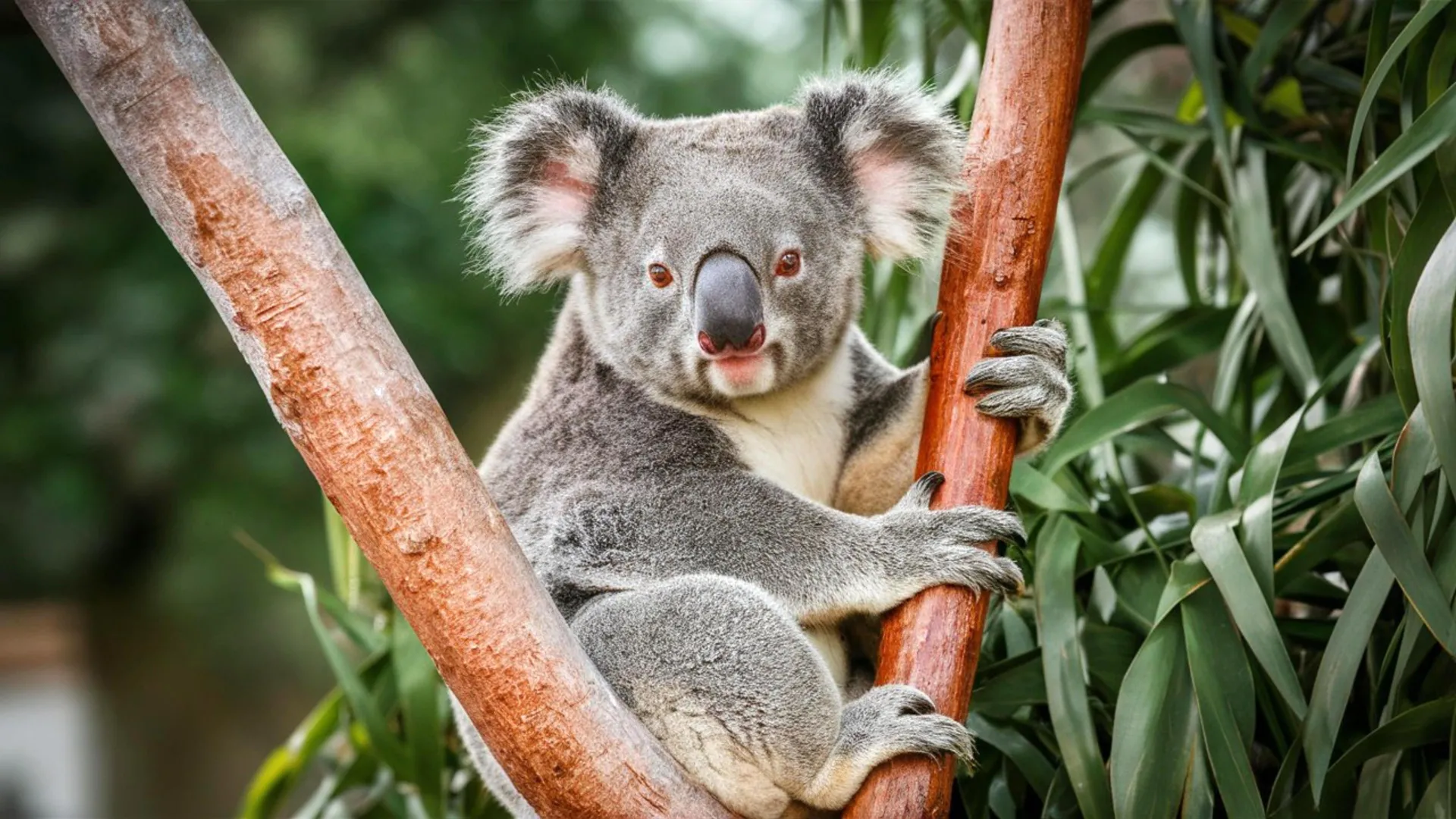
For generations, the evolutionary narrative of the koala (Phascolarctos cinereus) has been tethered to the arrival of humans in Australia. Conventional wisdom suggested that these iconic marsupials suffered a catastrophic population collapse roughly 65,000 years ago, a decline often attributed to the arrival of Indigenous populations and the subsequent environmental pressures they introduced. However, a landmark study published in the journal Molecular Biology and Evolution is fundamentally dismantling this timeline, revealing that the koala’s struggle for survival is a saga far older than previously imagined.
A collaborative research team led by the University of Sydney and Texas A&M University has utilized advanced genomic sequencing to prove that the koala’s most significant genetic bottleneck occurred roughly 100,000 years ago. This discovery suggests that the species was already navigating the precipice of extinction due to tectonic shifts and climatic volatility long before humans set foot on the continent.
The Genetic Clock: How Scientists Reconstructed History
The breakthrough was made possible by calculating, for the first time, the precise mutation rate of the koala genome. In genetics, a mutation rate refers to the frequency at which new genetic changes occur in an organism from one generation to the next. Because these rates vary significantly across the animal kingdom, researchers have historically relied on "proxies"—using mutation rates from humans or mice to estimate the timeline of marsupial evolution. These estimates, as it turns out, were fundamentally flawed.
"The study rewrites the timeline for the koala’s genetic history in Australia," explains PhD student Toby Kovacs, who led the research team. By sequencing the genomes of four parent-offspring trios, the researchers were able to observe the accumulation of new mutations in real-time. The results were startling: the koala’s mutation rate is approximately half that of a human.
When this corrected rate was applied to a massive dataset of 457 koala genomes, the researchers were able to look back through the "genetic record" with unprecedented clarity. This represents the first direct estimate of a mutation rate not only for the koala but for any member of the Diprotodontia order, a group that includes iconic Australian wildlife such as wombats, kangaroos, and possums. By calibrating this "molecular clock," scientists have finally established an accurate chronology of how koala populations expanded, contracted, and separated over the last 100,000 years.
A Chronology of Survival: From Pleistocene to Present
The study paints a vivid picture of a species defined by its resilience in the face of shifting landscapes. The koala’s evolutionary journey can be broken down into distinct environmental phases that dictated its survival.
1. The Pre-Human Collapse (100,000 – 60,000 years ago)
The research indicates that approximately 100,000 years ago, the koala population began a precipitous decline. This era coincided with the final stages of the Pleistocene, a period characterized by erratic and extreme climatic fluctuations. As the Australian tectonic plate continued its northward migration, the continent became increasingly arid. The most severe bottleneck occurred nearly 60,000 years ago, as the expansion of the Nullarbor Plain created a vast, inhospitable barrier of semi-arid shrubland. This geographical shift effectively severed the connection between eastern and western koala populations, leading to the eventual extinction of the western lineages.
2. The Resurgence (16,500 – 6,000 years ago)
As the planet transitioned out of the most recent glacial period into the current interglacial epoch, environmental conditions stabilized. Wetter, warmer climates allowed the surviving eastern populations to thrive once more. Between 16,500 and 6,000 years ago, these survivors radiated outward, eventually splitting into five genetically distinct groups. These are the ancestral lines that populate the eastern Australian coast today.
3. The Modern Crisis (Present Day)
The historical data serves as a sobering mirror to the modern experience. While the ancient koala survived the challenges of the Pleistocene through natural adaptation and migration, the threats they face today—land clearing, bushfires, hunting, and disease—are occurring at a rate that outpaces the species’ natural ability to recover.
The Weight of Evidence: Data and Methodology
The reliance on previous, less accurate mutation rates had led to a systemic misunderstanding of the koala’s past. By comparing their new findings with older studies, the research team identified a significant "gap" in the literature. Where previous models predicted a population decline starting 65,000 years ago, the new data pushes that date back by several millennia.
The sheer scale of the genomic data—457 genomes—provides a level of statistical power that was previously unattainable. By mapping the diversity of these genomes, researchers can distinguish between populations that are in healthy expansion and those suffering from inbreeding. The data confirms that while the koala has an inherent capacity to rebound from environmental shocks, the genetic diversity required for such a rebound is being systematically eroded by habitat fragmentation.
Implications for Conservation: A Scientific Mandate
Perhaps the most significant takeaway from this research is its application to modern conservation. As the koala continues to face the threat of extinction—having been listed as endangered in Queensland, New South Wales, and the Australian Capital Territory since 2022—the ability to assess genetic health in real-time has never been more critical.
"Understanding whether koala populations are shrinking helps conservationists act early, before populations lose genetic diversity and face increased risks from inbreeding," Mr. Kovacs notes. The study highlights a troubling contrast: while some populations in Victoria are showing signs of recovery, those in the northern states of Queensland and New South Wales continue to decline.
By studying how the species survived its ancient bottlenecks, conservationists hope to identify "genetic refugia"—areas with high enough diversity to act as anchors for species recovery. The research suggests that the koala’s historical success was tied to its ability to find and inhabit stable, high-quality forest pockets during times of extreme climate stress. Today’s conservation efforts are now focusing on identifying and protecting these high-value habitats, rather than merely relying on general land-use policies.
Looking Ahead: The Future of Genomic Biology
The implications of this study extend well beyond the koala. The researchers are now turning their attention to other Australian species, particularly those that were contemporaries of the extinct "megafauna." If the koala’s decline was driven by long-term climatic shifts rather than human intervention, it stands to reason that other species may have followed a similar evolutionary trajectory.
"Our team is generating enormous genomic resources for koalas, but to fully understand what these datasets can tell us, we also need to know how quickly new genetic changes arise in the species," says Kovacs. By establishing a rigorous, mutation-based framework for Australian wildlife, the team is creating a "genetic atlas" of the continent.
This research does not excuse or minimize the current impact of human activity on the koala. On the contrary, it clarifies the stakes: we now know that the koala is a species that has survived the most extreme environmental volatility the planet could throw at it, yet it is currently being pushed to the brink by factors within our control.
As climate change accelerates once again, the lesson from 100,000 years ago is clear: habitat connectivity and genetic diversity are the primary drivers of survival. If we are to honor the resilience of the koala, we must protect the very landscapes that allowed this species to survive for millennia. The genomic history of the koala is no longer a mystery; it is a roadmap for conservation in an era of rapid environmental change. By applying this new understanding, scientists and policymakers have a narrow, but vital, window to ensure that the koala’s next 100,000 years are not its last.