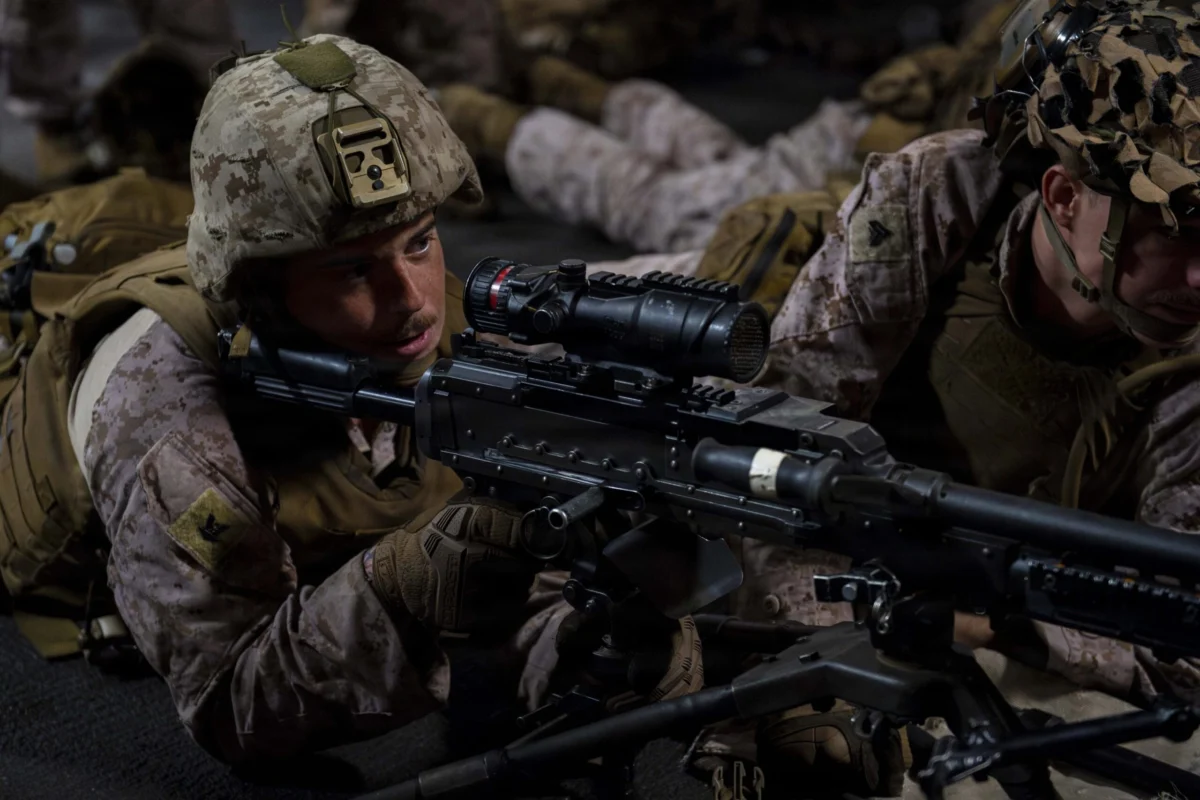
AMMAN/WASHINGTON D.C. — The Middle East stands at its most precarious geopolitical crossroads in decades following the deaths of U.S. service members at a military base in Jordan. The fatal engagement, attributed to Iranian-backed forces, marks the crossing of a definitive "red line" for the Trump administration and threatens to transform a week of high-intensity skirmishes into an unrestricted regional conflagration.
What began as a localized dispute over maritime transit rights in the Strait of Hormuz has rapidly metastasized into a direct confrontation between Washington and Tehran. With the collapse of a short-lived Memorandum of Understanding (MoU) and the resumption of a total U.S. naval blockade, the global energy market is bracing for a shock that could rival the crises of the 1970s.
Main Facts: A Spiral of Escalation
The current crisis reached a fever pitch on Saturday when U.S. Central Command (CENTCOM) confirmed a new wave of heavy airstrikes targeting Iranian infrastructure and military assets. These strikes were a direct response to a drone and missile attack on a U.S. installation in Jordan the previous night, which resulted in the first American combat fatalities in this specific theater of the conflict.
According to official statements, the U.S. military has moved beyond tactical strikes on missile launch sites to a broader campaign of strategic degradation. For several consecutive days, American bombers have pounded coastal fortifications near the Strait of Hormuz. However, the scope of the target list has recently expanded to include critical civilian-military dual-use infrastructure, such as railway networks used for transporting weaponry and energy facilities.
In retaliation, Tehran has leveraged its proximity to the world’s most vital oil artery. Iranian forces have launched a series of "tit-for-tat" strikes against commercial shipping and U.S. military assets across the Persian Gulf. Perhaps more alarmingly, the Islamic Revolutionary Guard Corps (IRGC) has begun targeting non-military regional infrastructure, including water desalination plants and energy grids of U.S. allies in the Gulf, signaling a "total war" footing.
Chronology: The Road to the Jordan Attack
The path to the current state of hostilities was paved by the disintegration of diplomatic efforts earlier this year.
1. The Failed Memorandum (Early Last Month)
Following a period of intense "Maximum Pressure," the U.S. and Iran entered into a tentative Memorandum of Understanding designed to de-escalate tensions in the Strait of Hormuz. The agreement was intended to allow for a limited flow of commerce in exchange for a reduction in regional proxy attacks. However, the MoU remained fragile, with both sides accusing the other of bad-faith interpretations.
2. The Resumption of the Blockade
By mid-month, the agreement collapsed entirely. President Trump, citing Iranian violations regarding shipping corridors, reinstated a full naval blockade. The U.S. Navy began intercepting Iranian oil exports, leading to a "shadow fleet" cat-and-mouse game that eventually turned violent.
3. The Week of "Upping the Ante"
Leading up to the Jordan attack, the region experienced seven days of escalating kinetic activity. The U.S. concentrated its fire on the Iranian coast, while Iran responded by harassing tankers. On Friday, the situation reached a breaking point when the U.S.-backed "alternate route" through the Strait—designed to bypass Iranian-controlled waters—saw zero traffic due to the threat of Iranian mines and drone swarms.
4. The Jordan Base Attack (Friday Night)
The catalyst for the current potential "all-out war" occurred on Friday night. Iranian-aligned militias launched a sophisticated strike on a U.S. base in Jordan. The deaths of American service members fundamentally altered the political calculus in Washington, moving the conflict from a maritime dispute to a direct matter of national honor and military retaliation.
5. Retaliation (Saturday)
By Saturday morning, CENTCOM announced a massive wave of strikes. "The strikes are designed to further degrade Iran’s ability to threaten commercial shipping… and swiftly punish IRGC forces," the command stated, marking a shift from defensive posturing to punitive warfare.
Supporting Data: The Economic and Maritime Toll
The conflict is not merely a military engagement; it is an economic war with global repercussions. The data emerging from the region paints a grim picture of the effectiveness of the blockade and the subsequent Iranian resistance.
Maritime Gridlock
According to data from MarineTraffic, the "Strait of Hormuz Bypass" established by the U.S. has effectively ceased to function. On Friday, no crossings via the U.S.-backed route were detected. Conversely, Iran’s approved corridor saw seven transits, suggesting that Tehran still maintains a degree of "veto power" over who moves through the narrow waterway. This indicates that despite a massive U.S.-Israeli bombardment campaign, the objective of "opening the Strait" remains unfulfilled.
Energy Market Volatility
Oil prices have surged in direct correlation with the intensification of the fighting. Global markets are particularly sensitive because consuming countries have drawn down their strategic oil stockpiles to the lowest levels in decades. With no "breathing room" left in global reserves, an extended closure of the Strait of Hormuz—which sees roughly 20% of the world’s liquid petroleum pass through it—could lead to an unprecedented price spike.
The Iranian Economy
Internal reports from Tehran suggest that while the Iranian military remains defiant, the economy is "reeling." Pragmatists within the Iranian government have privately admitted that the initial naval blockade "crushed" the nation’s ability to generate hard currency. However, the resumption of the blockade has not led to a surrender; instead, it has deepened a domestic rift between those pragmatists and hard-liners who argue that only "unforgettable lessons" (aggression) will force a U.S. withdrawal.
Official Responses: Defiance and Red Lines
The rhetoric from both capitals suggests that the window for diplomacy has all but slammed shut.
The White House and CENTCOM:
The Trump administration has maintained a stern, albeit brief, public profile since the casualties were announced. When pressed by reporters on whether the U.S. was returning to "all-out war," the White House deferred to CENTCOM’s statement. This silence is seen by analysts as a "calm before the storm," noting that President Trump had previously confided to aides that killing American troops would be the ultimate trigger for ending any ceasefire and returning to full-scale conflict.
Tehran’s Supreme Leader:
On Saturday, Iran’s Supreme Leader issued a scathing rebuke of U.S. actions. He described President Trump’s diplomatic signatures as "worthless and invalid" and warned that the United States would face "unforgettable lessons" if the strikes continued. This rhetoric aligns with the hard-line faction of the IRGC, which views the current conflict as an existential struggle for regional hegemony.
International Crisis Group:
Ali Vaez, the Iran Project Director at the International Crisis Group, offered a sobering assessment in a New York Times op-ed. He noted that while the immediate dispute is over the Strait of Hormuz, the stakes have evolved. "The collapse of even this minimal understanding could remove the last barrier between episodic confrontation and a forever war," Vaez wrote.
Implications: Escalation or a "Forever War"?
As the smoke clears over the Strait of Hormuz and the Jordan-Syria border, the strategic outlook remains bleak. Several key implications emerge from this week’s events:
1. The Failure of Deterrence
The primary goal of the U.S. strikes was to deter Iranian aggression and reopen the Strait. However, as Gregory Brew of the Eurasia Group points out, there may be "no military option" for fully reopening the waterway against a determined adversary. Iran’s conventional forces may be decimated, but their asymmetric "combat power" is sufficient to scare away commercial shipping and maintain high insurance premiums, effectively keeping the Strait closed.
2. The Domestic Rift in Iran
The U.S. strategy of "Maximum Pressure" has succeeded in battering the Iranian economy, but it has also marginalized the pragmatists who were willing to negotiate. The current escalation strengthens the IRGC hard-liners, who argue that the U.S. will only respect force. This internal dynamic makes a diplomatic "off-ramp" increasingly difficult to find.
3. The "Forever War" Paradox
President Trump campaigned on a platform of avoiding "endless wars" in the Middle East. Yet, the "tit-for-tat" nature of the current spiral is exactly the type of entanglement he sought to avoid. The administration now faces a binary choice: escalate to a level that forces a regime change (a move fraught with massive risk and cost) or attempt to cut a deal from a position of renewed hostility.
4. Global Economic Fragility
The world economy, already struggling with inflationary pressures, is ill-equipped for a long-term energy disruption. If the U.S. cannot secure the Strait and Iran continues to target desalination and energy infrastructure, the humanitarian and economic costs will extend far beyond the borders of the Middle East.
In the words of Gregory Brew: "The options are to escalate or cut a deal. And I think the administration is likely to do the first, see it fail, and end up with the second." The question remains how many more service members and how much more global stability will be lost before that realization takes hold. For now, the "unforgettable lessons" promised by Tehran and the "punishment" promised by Washington suggest that the path of escalation is the only one being traveled.