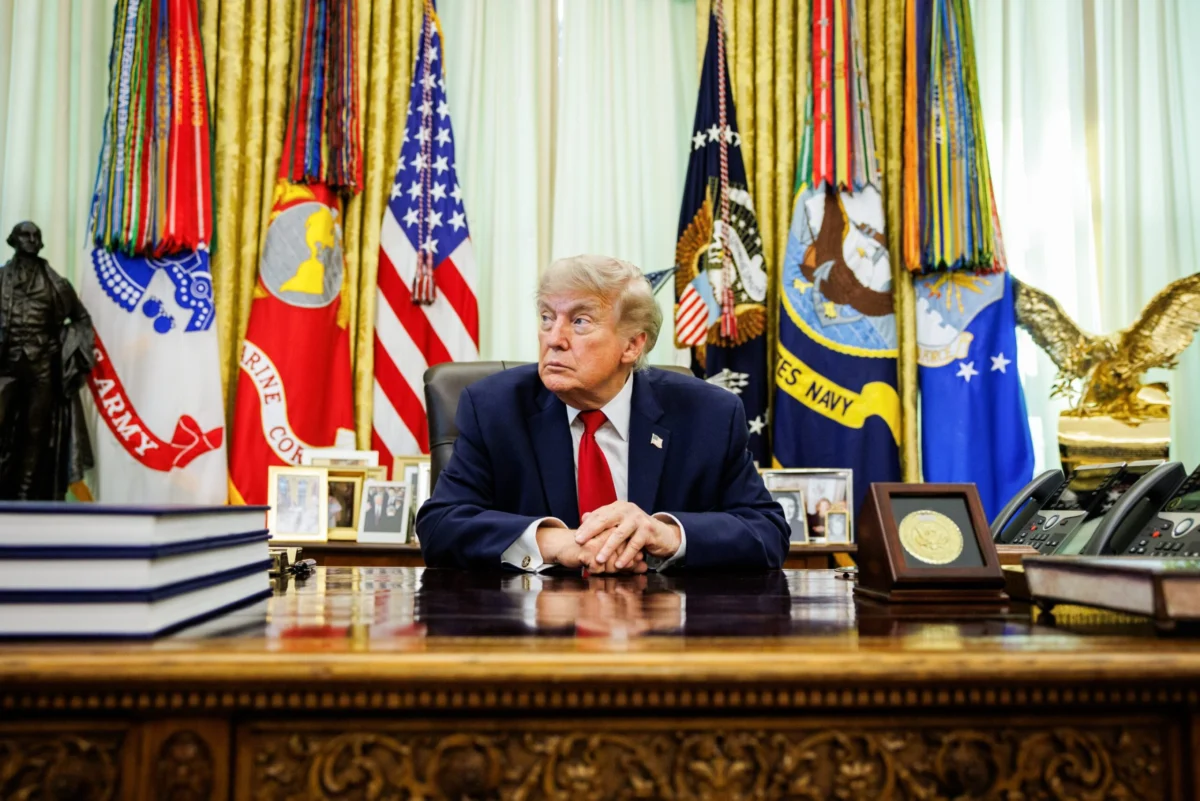
The release of President Donald Trump’s 2025 financial disclosure has sent shockwaves through the corridors of Washington, D.C., and the global financial community. Spanning a staggering 927 pages, the document provides an exhaustive, yet complex, look into the intersection of personal branding, global real estate, and executive power. While the White House maintains that the President’s business interests are insulated from his official duties, the sheer volume of income derived from merchandising—ranging from high-end watches to "God Bless the USA" bibles—presents a fiscal profile unlike any other in the history of the American presidency.
Main Facts: A Financial Portfolio Without Precedent
The core of the 2025 disclosure reveals a President who has successfully transformed his political movement into a diversified commercial empire. Unlike traditional presidential assets, which are typically tied to blind trusts or conservative index funds, Trump’s portfolio is heavily reliant on the "Trump" brand itself.
Key figures from the disclosure include:
- Merchandising Revenue: The President earned approximately $4.7 million from "Trump Watches" and nearly $36,000 in royalties from a specific "45" branded guitar.
- Literary Earnings: Publishing rights remain a cornerstone of the Trump family’s wealth. Titles such as Letters to Trump and Save America generated $2.4 million in the last year alone.
- Gift Valuation: The President reported receiving high-value gifts, including a $250,000 sculpture and tens of thousands of dollars in premium sports tickets from international organizations and corporate entities.
- Investment Scope: Despite the focus on branding, the disclosure lists eight major investment accounts containing shares in global giants such as Nvidia, Tesla, Apple, and Berkshire Hathaway.
The document’s length—927 pages—is perhaps its most striking feature. To put this in perspective, President Barack Obama’s 2015 disclosure was a mere eight pages, while President Joe Biden’s 2023 report totaled 11 pages. The complexity of Trump’s filing is a direct reflection of hundreds of limited liability companies (LLCs), licensing deals, and international holdings that comprise the Trump Organization.
Chronology: From Campaign Trail to Presidential Profit
The timeline of these earnings suggests a strategic synchronization between Trump’s political activities and his commercial ventures.
2023–2024: The Branding Blitz
During the height of the campaign season, the Trump brand expanded into non-traditional markets. The "Greenwood Bible," a special edition endorsed by Trump, was launched and marketed heavily to his base. By the end of 2024, this venture alone had earned him over $208,000. Simultaneously, the "Trump Sneaker" line and various fragrances were introduced, generating an initial $67,634 in the lead-up to the election.
Early 2025: Post-Inauguration Royalties
Following his return to the White House, the "45" guitar—an acoustic and electric instrument featuring American eagle motifs—began retailing for $1,500, with signed editions reaching $11,000. The disclosure notes that royalties from these sales began flowing into the President’s accounts almost immediately upon his resumption of office.
July 2025: The Disclosure Filing
The mandatory financial disclosure was submitted in mid-2025, capturing the first full fiscal year of his second term. This period also saw the rebranding of his photo book from the working title A MAGA Journey to its final title, Our Journey Together, which yielded over $552,000 in royalties.
Supporting Data: Merchandising and Market Holdings
The 2025 disclosure breaks down the President’s income into several distinct "buckets," each revealing a different facet of his financial strategy.
The Merchandising Powerhouse
The most controversial aspect of the disclosure is the direct monetization of the Trump name through consumer goods.
- Trump Watches: $4.7 million. This represents the single largest "new" merchandising category, suggesting a high-margin luxury play.
- The Greenwood Bible: $208,486. This venture highlighted the President’s influence within the evangelical and patriotic consumer segments.
- Guitars: $35,938 (Royalties). While a smaller figure, it represents a niche market of collectors and supporters.
- Books: $2.4 million (Combined). Letters to Trump and Save America continue to be best-sellers among his core constituency.
The Investment Portfolios
While the President does not personally manage these accounts, the disclosure lists significant holdings in the "Magnificent Seven" tech stocks and other blue-chip companies.
- Technology: High-volume holdings in Nvidia, Apple, Microsoft, and Amazon.
- Finance: Significant dividends from Bank of America and JPMorgan Chase.
- Energy and Conglomerates: Continued investment in Berkshire Hathaway and Tesla.
The disclosure clarifies that these eight investment accounts are managed by his sons, Donald Jr. and Eric Trump, though the President remains the ultimate beneficiary of the dividends and capital gains.
Gifts and "Perks" of Office
The disclosure also lists several "gifts" received by the President, which have drawn the attention of ethics watchdogs:
- "The Defiance Moment" Sculpture: Valued at $250,000, gifted by Anthony Constantino, CEO of Sticker Mule. The statue, depicting Trump with a raised fist, is currently housed at Trump International Golf Club in Scotland.
- FIFA World Cup Tickets: 10 tickets valued at $15,000, gifted by FIFA President Gianni Infantino.
- Super Bowl Tickets: 10 tickets valued at $50,000, gifted by New Orleans Saints owner Gayle Benson.
- U.S. Open and Ryder Cup Tickets: Gifts from Rolex ($25,000) and the PGA of America ($11,250), respectively.
Official Responses: The White House Defense
The White House has been proactive in defending the President’s financial arrangements, emphasizing a strict separation between his public service and his private wealth.
Anna Kelly, the White House deputy press secretary, issued a formal statement to the media: “Neither the President nor his family has ever engaged—or will ever engage—in conflicts of interest. The President’s assets are in a trust managed by his sons, and all business decisions are made independently of the administration.”
The White House legal counsel has also pointed out that many of the merchandising deals, such as the book royalties and the "Greenwood Bible" endorsement, were established prior to the President taking office for his second term. They argue that these are "passive income streams" that do not require the President’s active participation or influence.
Furthermore, regarding the gifts, the administration maintains that all items have been properly disclosed in accordance with the Ethics in Government Act. They assert that the tickets and sculptures are "tokens of respect" for the office of the presidency rather than attempts to curry favor for specific policy outcomes.
Implications: Ethics, Precedent, and the "Brand" Presidency
The 927-page disclosure raises profound questions about the evolution of the American presidency and the efficacy of current ethics laws.
1. The Blurring of Brand and State
The fact that a sitting president is earning millions from branded merchandise—watches, sneakers, and bibles—is a departure from historical norms. Critics argue that this creates a "pay-to-play" atmosphere where purchasing a $1,500 guitar or a $4.7 million watch becomes a way for individuals or entities to signal loyalty to the administration. This "merchandising of the presidency" could set a precedent for future leaders to view the office as a platform for personal commercial expansion.
2. Potential Conflicts of Interest
The President’s significant holdings in companies like Nvidia and Tesla create a complex web of potential conflicts. For instance, executive orders regarding artificial intelligence or electric vehicle subsidies could directly impact the stock prices of companies held within his "uncontrolled" investment accounts. While the White House claims he does not control these accounts, the fact remains that his net worth is intrinsically tied to the performance of these specific sectors.
3. The Emoluments Clause and Domestic Ethics
The $250,000 sculpture from a congressional candidate and tickets from the head of FIFA (a global organization with significant interests in the U.S. as a host nation) revive the debate over the Emoluments Clause. While the legal definition of "emolument" remains a subject of judicial debate, the optics of receiving high-value gifts from individuals and organizations with business before the federal government remain a point of intense public scrutiny.
4. The "Sons’ Management" Model
The decision to leave business management to Donald Jr. and Eric Trump, rather than a traditional blind trust, remains the most controversial aspect of the Trump financial structure. Ethics experts argue that as long as the President knows what assets he owns and is in regular contact with his children, the "wall" between the White House and the Trump Organization is largely symbolic.
Conclusion
Donald Trump’s 2025 financial disclosure is more than just a list of assets; it is a roadmap of a new kind of political economy. It reflects a world where political influence and commercial branding are inextricably linked. As the 927-page document continues to be parsed by analysts and investigators, it serves as a testament to the President’s unique position as both a global head of state and a multi-million-dollar consumer brand. Whether this model becomes the new standard for wealthy individuals entering public service, or remains a singular anomaly of the Trump era, will likely depend on the legal and political challenges that emerge in the coming years.