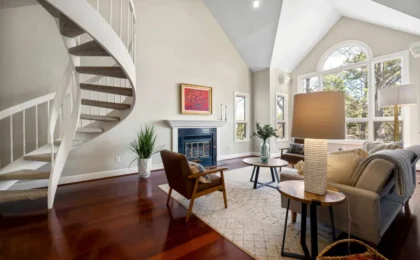
Selling a home is an exercise in perception. While many sellers focus their energy on setting the right price or adding aesthetic flair with throw pillows and trendy wall art, the reality of the modern real estate market is far more clinical. Buyers are not just looking for a house; they are looking for reasons to justify a lower offer—or to walk away entirely.
In a shifting economic landscape where, as of June 2026, nearly 60% of homes sold for less than their original listing price, the margin for error has vanished. When buyers sense that they have leverage, every sticky door, frayed carpet, or cluttered countertop becomes a negotiation chip they will use to drive down your final sale price.
The Psychology of the "Maintenance Gap"
The fundamental mistake many sellers make is confusing "decoration" with "preparation." Real estate experts suggest that homeowners suffer from a form of domestic blindness—they have lived in their spaces for so long that they no longer see the small, incremental failures of maintenance that have built up over years.
When a potential buyer walks through a home, they are subconsciously looking for evidence of deferred maintenance. If they see a loose handrail or a faucet that drips, they don’t just see a minor repair; they see a red flag. The psychological math for the buyer is simple: If the seller couldn’t be bothered to fix this visible, easy-to-repair issue, what else is hiding behind the drywall or under the floorboards?
The Chronology of Preparation
To maximize your home’s equity, you must follow a specific, disciplined timeline:
- The Audit Phase: Before buying a single decorative item, conduct a structural and functional audit. This involves testing every mechanical element—outlets, light switches, cabinet hinges, and plumbing fixtures.
- The Remediation Phase: Address the "inspection-ready" items. If a home inspector would write it up, fix it now. This removes the "fear factor" from the buyer’s offer.
- The Sanitation Phase: Deep cleaning is not just about vacuuming. It is about removing the sensory imprints of your daily life—pet dander, cooking odors, and dust on baseboards.
- The Staging Phase: Only after the home is structurally sound and spotlessly clean should you introduce decorative elements to highlight the space’s potential.
Expert Insights: Why Your Home Isn’t "Photo-Ready"
The importance of high-quality digital assets cannot be overstated. With over 80% of buyers beginning their journey online, your listing photos are your home’s first, and perhaps only, chance to make an impression.
Luke Nunnally, lead photographer and owner of Austin 360 Photography, warns that cameras are far less forgiving than the human eye. "One of the most common home staging mistakes sellers make is overlooking how a home will appear in professional listing photos," Nunnally explains. "Everything stands out. Your junk will show in its best light. There is no good light for junk."
Nunnally advises a "test shot" strategy. Before the professional photographer arrives, walk through your house and take photos with your smartphone. When you look at the digital screen, you will suddenly see the refrigerator magnets, the stack of mail on the counter, and the tangled cords behind the television that your brain has been filtering out as "normal."
The Economic Implications of Deferred Care
The financial cost of skipping these steps is rarely limited to the price of the repair. Kris Bowen, a prominent real estate broker with LPT Realty, notes that buyers frequently "over-calculate" the cost of repairs when making an offer.

"In 23 years and over 1,000 closings, I’ve watched buyers knock off far more than a repair actually costs," says Bowen. "They are pricing in their fear of what else was neglected." If a repair costs $200, a buyer might deduct $2,000 from their offer to compensate for the perceived risk. By failing to perform a $200 fix, you have essentially taxed your own sale price by $1,800.
The Three-Step Framework for Equity Protection
Christine Rae, founder of the CSP International Staging & Decorating Business Academy, emphasizes that staging is a strategic business decision, not a creative hobby. She advocates for a three-tiered approach to readying a property for the market:
- Condition: Ensure the "bones" of the house are in good working order.
- Maintenance: Address the "signs of life"—scuffs on walls, worn caulk in showers, and outdated light bulbs.
- Aesthetics: Only after the first two tiers are complete do you focus on the "curb appeal" and interior design elements that create emotional resonance for the buyer.
Eliminating Sensory Distractions
Beyond the physical repairs, there is the issue of "sensory clutter." Potential buyers are often deterred by things they cannot immediately define but feel intuitively. This includes odors, stagnant air, and visual noise.
Danielle Wellings-Carriere, CEO of ONESource Moving Solutions, points out that sellers become desensitized to their own environment. "There are certain things that we get desensitized to when living in our homes from day to day," she notes. "Deep cleaning isn’t just about looking clean; it’s about showing that you care about your home and keep it well managed."
When a home is professionally deep-cleaned—meaning every vent, baseboard, appliance, and window track—it sends a signal to the buyer. It suggests that the seller is a responsible steward of the property. This builds the exact kind of buyer confidence required to secure a full-price offer.
The Checklist for Success
To ensure your home stands out in a competitive market, follow this pre-listing checklist:
The Exterior
- Curb Appeal: Remove all trash bins from view. Pressure wash the driveway and sidewalks. Ensure the front door is clean and the hardware is polished.
- The First Photo: The front exterior is often the primary image in a listing. Ensure it is pristine.
The Interior
- The "Clean Slate" Rule: Remove all personal photos, religious items, and excess furniture. Your goal is to provide a blank canvas for the buyer.
- Lighting: Replace every burned-out bulb with a consistent temperature (daylight or warm white, but do not mix them). Open all curtains and blinds.
- Small Hardware: Tighten all loose cabinet pulls, towel racks, and door handles. A loose knob suggests a neglected house.
- De-cluttering: If you haven’t used an item in six months, pack it away. This includes clearing kitchen counters completely, leaving only one or two decorative items.
Conclusion: Preparing for Confidence
The goal of preparing your home for sale is not to deceive the buyer or to make the home look like an uninhabited museum. Rather, the goal is to remove the "friction" from the buying process.
When a buyer walks into a home that is physically sound, impeccably clean, and free of unnecessary distractions, they can focus on the emotional experience of living there. They are not busy calculating the cost of future repairs or wondering if the water pressure is low because of neglected pipes.
By investing the time to address these often-overlooked details, you are not just cleaning a house; you are protecting your equity and creating an environment where a buyer feels secure enough to pay your asking price. In a market where 59.5% of homes are selling below the list price, that level of preparation is your most effective competitive advantage. Treat your home as a product, address the maintenance as a business requirement, and you will find that the market responds with the confidence you deserve.