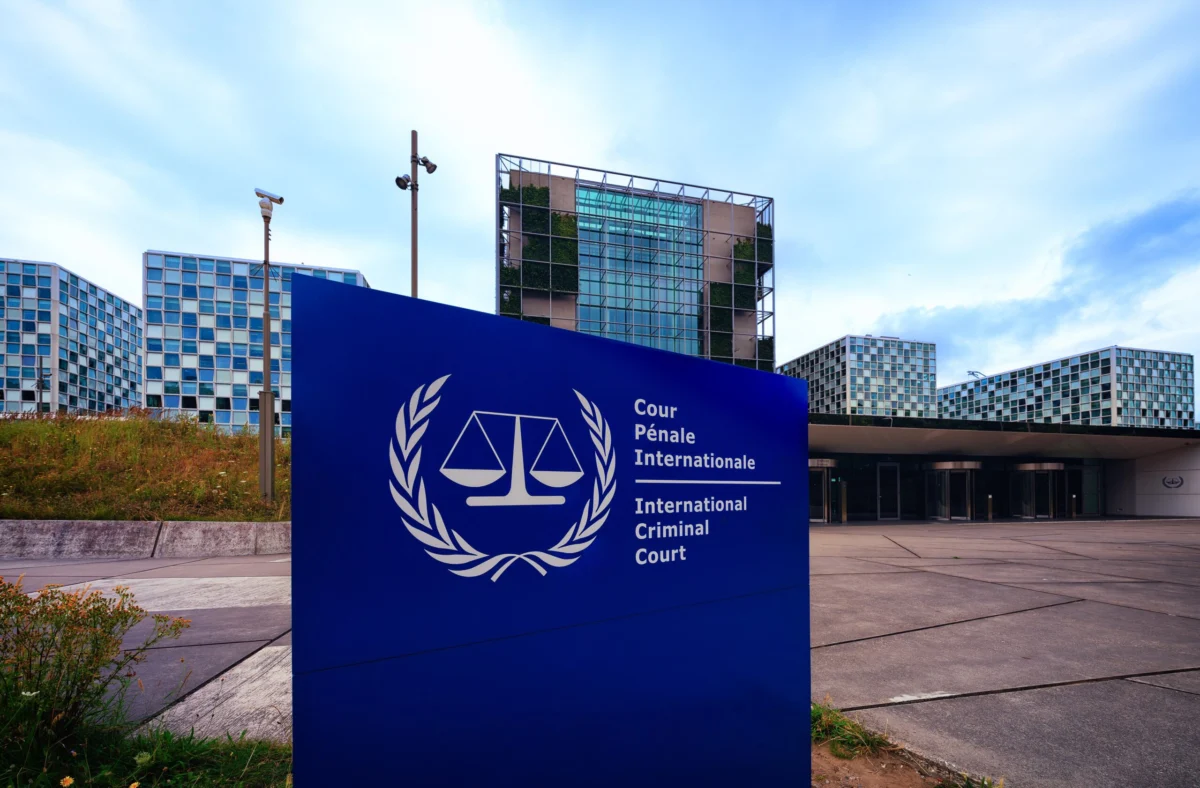
In a landmark legal challenge that pits the executive branch’s broad foreign policy powers against the bedrock principles of the First Amendment, two prominent human rights organizations have filed a lawsuit against the Trump administration. Democracy for the Arab World Now (DAWN) and the Taxpayer Alliance Against Genocide (TAAG) are seeking to dismantle an executive order that has effectively criminalized engagement with the International Criminal Court (ICC) and certain United Nations officials.
The lawsuit, filed in the U.S. District Court for the Southern District of New York, argues that the administration’s use of economic sanctions to isolate the ICC and its collaborators constitutes an unconstitutional suppression of political speech and advocacy. As the U.S. government adopts an increasingly aggressive stance toward international judicial institutions, this litigation marks a critical juncture in the struggle to define the limits of presidential authority in the realm of international human rights.
The Core of the Conflict: A Clash of Powers
At the heart of the dispute is a 2025 Executive Order (EO) that authorized the Treasury Department to impose severe economic penalties on individuals and entities deemed to be assisting the ICC in its investigations into U.S. military conduct in Afghanistan and the actions of Israeli officials, including Prime Minister Benjamin Netanyahu.
For DAWN and TAAG, the issue is not merely one of foreign policy, but of domestic civil liberties. The organizations contend that the EO’s language—specifically its prohibition on providing "any service" to sanctioned individuals—is dangerously vague. By labeling researchers, UN Special Rapporteurs, and court personnel as pariahs, the administration has effectively forced American citizens to choose between their professional advocacy and the risk of catastrophic financial and criminal penalties.
The plaintiffs assert that their ongoing collaboration with international bodies—which includes providing research, submitting amicus briefs, and engaging in public discourse—falls squarely under the protection of the First Amendment. By threatening these activities, the administration is accused of engaging in "chilling effects," compelling organizations to self-censor to avoid becoming targets of the state.
Chronology of Escalation: From Investigation to Confrontation
The legal battle over these sanctions did not emerge in a vacuum. It is the culmination of a multi-year trend of deteriorating relations between the United States and the international legal order.
- 2024 (November): The ICC issues an arrest warrant for Israeli Prime Minister Benjamin Netanyahu, triggering immediate condemnation from the White House and calls for retaliatory measures.
- 2025 (February): President Trump issues the Executive Order authorizing sanctions against ICC prosecutors and judges. The order is justified by the administration as a defense of national sovereignty.
- 2026 (February): The family of UN Special Rapporteur Francesca Albanese files a lawsuit, arguing that her inclusion on the sanctions list has decimated their livelihoods and unfairly targeted her for her human rights reporting.
- 2026 (May): A U.S. federal judge issues a temporary injunction blocking sanctions against Albanese, citing the high likelihood that the measures violate her free speech rights. The administration ignores the spirit of this ruling, subsequently re-listing her on the sanctions registry.
- 2026 (June): ICC judges, directly impacted by the economic freezing of their assets and the inability to interact with the U.S. financial system, file their own suit against the President.
- 2026 (July): Secretary of State Marco Rubio announces a formal diplomatic campaign to "dismantle the ICC brick by brick," signaling that the administration’s strategy is not a temporary measure but a structural assault on the court.
- 2026 (July 22): DAWN and TAAG file their federal lawsuit, arguing that the sanctions have made it impossible for them to fulfill their mission of documenting human rights abuses.
Supporting Data: The "Chilling Effect" and Statutory Overreach
The legal arguments presented by the plaintiffs focus on two primary pillars: the First Amendment and the International Emergency Economic Powers Act (IEEPA).
The First Amendment Violation
The plaintiffs argue that the sanctions act as a content-based restriction on speech. By designating specific individuals (such as Francesca Albanese) as targets, the government is essentially blacklisting the viewpoints associated with those individuals. If an advocacy group shares information or coordinates a strategy with a sanctioned official, they risk being accused of providing "material support," a term that carries grave implications under current federal regulations.
The IEEPA Interpretation
The IEEPA is a powerful tool, but it is not absolute. The "Berman Amendments" to the IEEPA specifically protect the flow of information and informational materials from executive interference. The plaintiffs argue that the administration has ignored these clear legislative guardrails. By attempting to use economic sanctions to silence the exchange of information between American NGOs and the ICC, the administration has exceeded the statutory boundaries granted by Congress.
Official Responses: A Divided Government
The rhetoric emanating from the administration has been defiant. Secretary of State Marco Rubio has framed the ICC as a rogue institution that threatens American sovereignty. In his recent op-ed, Rubio argued that international courts have no jurisdiction over the citizens or allies of the United States, and that the U.S. is "fully within its rights" to use its economic leverage to protect its personnel.
Conversely, the advocacy groups represent a growing coalition of legal scholars, human rights defenders, and international law experts who fear the consequences of this isolationist trajectory.
Omar Shakir, Executive Director of DAWN, characterized the administration’s actions as an attempt to "police the political expression of millions of Americans." He argues that the administration is leveraging the language of national security to "shield officials of a foreign government who have committed a genocide," thereby turning the U.S. sanctions regime into an instrument of political censorship.
The Broader Implications: The Future of the International Order
The implications of this lawsuit extend far beyond the courtroom in Manhattan. If the administration succeeds in its campaign to delegitimize the ICC, it will signal the end of the post-WWII consensus on international justice.
1. Erosion of Global Accountability
The ICC was designed to serve as a court of last resort, a mechanism to ensure that the most heinous crimes—genocide, war crimes, and crimes against humanity—do not go unpunished. By attempting to render the court ineffective, the U.S. is effectively signaling that there is a two-tiered system of justice: one for the "powerful" and their allies, and another for the rest of the world.
2. A Precedent for Executive Overreach
Should the court rule in favor of the Trump administration, it would set a chilling precedent for the executive branch’s ability to use economic warfare to silence domestic dissent. If an executive order can bypass the First Amendment by framing human rights advocacy as an "economic threat," the scope of presidential power would expand significantly, potentially impacting journalists, academics, and NGOs across a wide array of policy areas.
3. The International Reaction
The administration’s "brick by brick" campaign has already drawn fire from key U.S. allies in Europe, many of whom are signatories to the Rome Statute. This diplomatic friction risks alienating the U.S. from its traditional partners, potentially leaving the country isolated in its defense of its military and political actions.
Conclusion: A Test of Democratic Resilience
As the judiciary prepares to weigh in on the DAWN and TAAG lawsuit, the nation is forced to confront a fundamental question: Can a government committed to the preservation of human rights justify the systematic dismantling of the very institutions that seek to hold human rights abusers accountable?
The case represents a critical test for the American legal system. The outcome will determine whether the First Amendment remains a robust safeguard for political dissent, or if it will be successfully curtailed by the exigencies of a modern, aggressive foreign policy. For now, the plaintiffs remain steadfast, arguing that the defense of international law and the defense of American constitutional rights are inextricably linked—and that sacrificing one will inevitably lead to the loss of the other.
The courtroom proceedings, expected to unfold over the coming months, will be closely watched by international observers, constitutional scholars, and human rights organizations worldwide. Regardless of the immediate verdict, the dialogue sparked by this litigation has already highlighted the precarious nature of international justice in an era of resurgent nationalism.