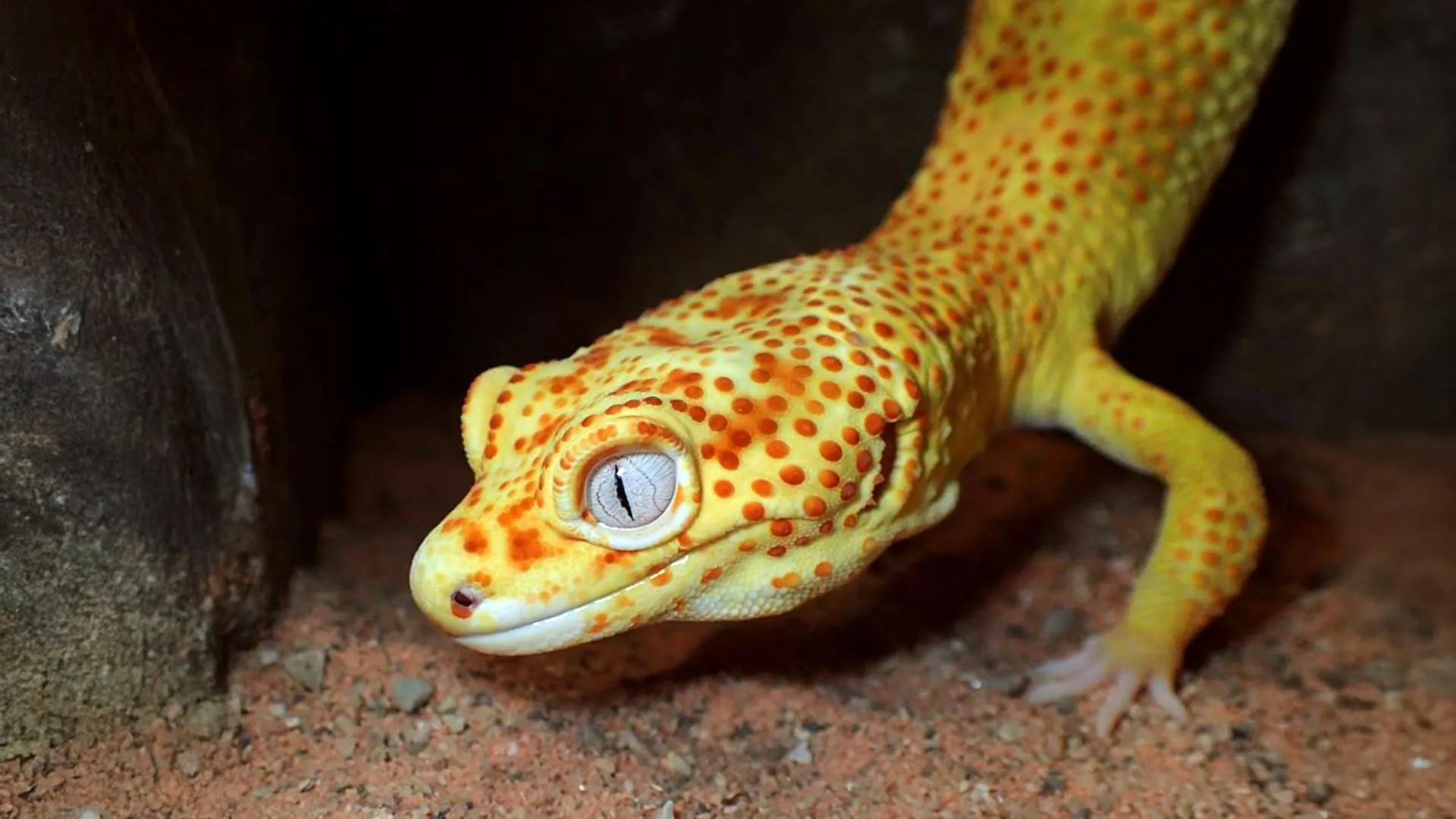
In the vast, intricate tapestry of the animal kingdom, some species possess an almost mystical resistance to disease. Elephants, for instance, rarely develop cancer despite their massive cell counts, while turtles and tortoises exhibit a biological resilience that has fascinated biologists for decades. Yet, at the opposite end of the spectrum, a striking, neon-bright reptile is forcing scientists to rethink the origins of oncogenesis.
The "Lemon Frost" leopard gecko, a popular morph in the international pet trade, has become the center of a groundbreaking scientific study. With a staggering 80% of these geckos developing aggressive, metastatic tumors, researchers are now looking at this colorful creature not just as a pet, but as a revolutionary model for understanding how cancer initiates, evolves, and spreads.
The Genesis of the Lemon Frost: A Genetic Trade-off
The story of the Lemon Frost gecko is one of unintended consequences born from the pursuit of aesthetic perfection. The morph originated from a spontaneous genetic mutation within a large, captive-bred colony of leopard geckos (Eublepharis macularius). Breeders were captivated by the reptile’s brilliant white and yellow pigmentation, a result of the unique genetic profile that gives the morph its name.
However, the rapid commercialization of the "Lemon Frost" trait soon revealed a dark biological trade-off. As these geckos matured, breeders observed an alarming trend: a high frequency of skin lesions that rapidly progressed into aggressive, malignant tumors. These tumors did not merely remain localized; they frequently metastasized, spreading to internal organs and significantly shortening the lifespan of the animals.
This tragic phenomenon, however, caught the attention of the scientific community. By occurring naturally—rather than being artificially induced through chemicals or genetic modification in a lab—the Lemon Frost provides a "natural experiment" that mirrors the complexity of human cancer in ways that standard laboratory models often fail to replicate.
Chronology of Discovery: From Pet Trade to Peer Review
The investigation into the Lemon Frost’s biology was spearheaded by an international team led by Dr. Ylenia Chiari of the University of Nottingham. The timeline of this research represents a shift in how medical science approaches comparative oncology:
- Initial Observations (Pre-2020): Hobbyists and breeders documented a high incidence of iridophoromas—tumors originating from the pigment-containing cells—in the Lemon Frost morph.
- Study Formation (2021–2022): Dr. Chiari and her colleagues assembled an international coalition, including experts from the University of Birmingham, Marquette University, the University of Florida, and the University of Trieste.
- Genomic Sequencing (2023): The team employed whole-genome sequencing to map the genetic landscape of both the tumor tissues and healthy tissues from the same geckos.
- Validation and Publication (2024): The findings, published in the journal BMC Biology, confirmed that the genetic mutations responsible for the gecko’s striking appearance were inextricably linked to the pathways governing cell proliferation and tumor suppression.
Unlocking the Genetic Code: Why the Gecko Matters
The core of the study involved comparing the genomic architecture of the Lemon Frost against non-affected geckos. What the researchers discovered was a profound overlap with human oncological pathways.
The Role of Shared Biological Pathways
The researchers identified a recurring set of genetic aberrations within the tumor samples. Many of these altered genes are directly associated with the same biological processes known to drive human cancers, such as uncontrolled cell division, the evasion of programmed cell death (apoptosis), and the hijacking of metabolic pathways to fuel tumor growth.
"The methodology used in this study is particularly significant," notes PhD researcher Brandon Hastings. "We demonstrated that the sophisticated genomic software programs developed specifically to analyze human cancers could be adapted to provide meaningful insights in diverse organisms. This cross-species application of bioinformatics proves that the fundamental ‘language’ of cancer is remarkably conserved across the tree of life."
The "Natural" Model Advantage
Traditional cancer research often relies on laboratory mice. While these models are invaluable, they frequently require scientists to artificially trigger tumor growth using radiation, carcinogens, or invasive genetic engineering. This artificiality can sometimes mask the complex, evolutionary interplay that occurs when cancer develops spontaneously in a living organism.
The Lemon Frost gecko offers a rare, "naturally occurring" model. Because these tumors develop at a relatively young age and exhibit clear patterns of metastasis, researchers can observe the entire lifecycle of the disease. This provides a window into the early stages of oncogenesis—a period that is notoriously difficult to capture in human clinical settings.
Official Responses and Expert Insights
The implications of the study have reverberated through both the veterinary and oncological communities.
Dr. Ylenia Chiari emphasizes the potential for long-term medical breakthroughs. "By studying why some animals are so susceptible to cancer while others are remarkably resistant, we hope to uncover the different ways species have evolved to deal with the disease. The Lemon Frost gecko could become an incredible model because the tumors appear naturally and early. If we can understand the mechanisms the gecko lacks—or the mutations it has gained—we might find new targets for human cancer prevention and treatment."
Dr. Scott Glaberman, of the University of Birmingham, points to the broader philosophical and environmental argument for such research. "We often look inward to solve human problems, but every species has something to teach us," Glaberman stated. "By studying both the vulnerable and the resilient, we gain a panoramic view of the disease. This is one of the many reasons why protecting biodiversity is not just an ecological necessity, but a medical imperative. Every species lost to extinction is a potential repository of biological knowledge that could have helped us understand human disease."
Implications for Future Oncology
The study of the Lemon Frost gecko serves as a case study for the value of "Comparative Oncology." By broadening the scope of animal models, science moves closer to a universal understanding of cancer.
1. Identifying New Therapeutic Targets
If the Lemon Frost’s cancer is driven by specific mutations that mirror human counterparts, it may serve as an ideal testbed for new drugs. Compounds that prove effective in slowing tumor growth in these geckos could potentially be fast-tracked for human clinical trials, having already been proven effective in a complex, living system.
2. The Power of Biodiversity
The research highlights that the key to curing human disease may be found in the genomic secrets of animals that are rarely considered "medical models." From the cancer-resistant naked mole-rat to the highly susceptible Lemon Frost gecko, the diversity of the animal kingdom represents a massive, untapped library of genetic strategies.
3. A Call for Ethical Research
While the Lemon Frost study provides immense scientific value, it also poses ethical questions regarding selective breeding. The "Lemon Frost" morph is a product of human intervention. The study serves as a stark reminder of the unintended consequences of breeding for aesthetic traits. It acts as a cautionary tale for the pet industry, underscoring the necessity of genetic screening to prevent the propagation of harmful mutations.
Conclusion: The Path Forward
The Lemon Frost gecko is a small creature that has cast a long shadow over the landscape of cancer research. By revealing the shared genetic vulnerabilities between reptiles and humans, the research team from the University of Nottingham and their international partners have provided a new framework for medical inquiry.
As we move forward, the integration of genomic data, evolutionary biology, and comparative medicine will be vital. The Lemon Frost is not just a scientific anomaly; it is a catalyst for a new era of cancer research—one that looks across the entire tree of life to find the keys to our own health.
The study confirms that while cancer is a formidable foe, the biological tools required to understand and eventually overcome it are already present in the natural world. Whether through the resilience of the tortoise or the tragic vulnerability of the Lemon Frost, nature continues to offer the most profound insights into the mechanics of life, disease, and the survival of species.